
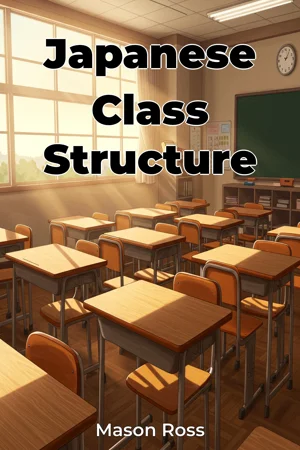
About This Book
Why does Japanese classroom management seem so orderly and effective, and what specific strategies contribute to its perceived success? *Japanese Class Structure* delves into the intricate world of Japanese education, providing a comprehensive examination of classroom organization, teaching methodologies, and their impact on student outcomes. This book explores how cultural values, pedagogical approaches, and structural elements converge to shape the learning environment in Japan. This book addresses three crucial areas: the historical context of Japanese education, the structure of classroom organization, and the application of specific teaching methodologies. Understanding the historical trajectory of education in Japan, from its Confucian roots to post-war reforms, provides essential context for interpreting current practices. The structure encompasses the physical layout of classrooms, the roles of teachers and students, and the systems in place that support learning. Finally, we analyze methodologies, including lesson planning, group work strategies, and assessment techniques, to reveal the practical aspects of Japanese pedagogy. The central argument of *Japanese Class Structure* is that the effectiveness of Japanese classrooms stems from a carefully cultivated interplay between structured organization and student-centered teaching. Effective instruction is less about innate cultural differences and more about replicable strategies and well-defined structures. This interplay fosters a supportive learning environment, promoting both academic achievement and social-emotional development. The book unfolds in three sections. First, it establishes the historical and cultural foundations of Japanese education. This section explores the evolution of educational philosophies and policies, highlighting key milestones and influences. Second, we analyze the structural components of Japanese classrooms, examining elements such as seating arrangements, rules and routines, and the use of space. Finally, we explore teaching methodologies, focusing on lesson design, student engagement techniques, and assessment practices. The culmination of these elements is then considered in the context of broader educational reforms. The evidence presented is derived from a combination of educational studies, statistical performance data, and direct observations of classroom practices. We incorporate data from standardized tests, surveys of student and teacher attitudes, and detailed case studies of instructional methods. We also draw on Japanese-language research and policy documents often overlooked in Western scholarship. *Japanese Class Structure* connects to several disciplines beyond education. Sociology provides a lens for understanding the cultural norms and social dynamics that influence classroom behavior. Psychology offers insights into student motivation, learning styles, and the impact of classroom environment on cognitive development. Anthropology helps us understand the cultural values embedded in educational practices and their impact on students' lives. This book distinguishes itself through its balance of theoretical analysis and practical application. It offers a nuanced perspective that moves beyond stereotypes, providing educators, policymakers, and researchers with a comprehensive understanding of Japanese educational practices. The writing style is academic yet accessible, aiming to inform and engage a broad audience. The intended audience includes educators at all levels, from pre-service teachers to experienced administrators. Educational researchers scholars interested in comparative education and international education systems. The broader public will gain insight into the inner workings behind one of world’s highly regarded education systems. As an academic textbook, *Japanese Class Structure* adheres to the conventions of scholarly research, providing thorough citations, rigorous analysis, and a balanced presentation of perspectives. While the book aims to provide a comprehensive overview of Japanese classroom structure, the scope is intentionally limited to public elementary and secondary schools. Future research could explore the nuances of private schools, higher education, or special education settings. The insights offered in *Japanese Class Structure* have numerous real-world applications. Educators can adapt and implement successful strategies from Japanese classrooms. Policymakers can draw lessons for designing educational reforms. Researchers can use the book as a starting point for further comparative studies. One debate in education revolves around the extent to which cultural factors determine educational outcomes. This book acknowledges the importance of culture but emphasizes the transferability of specific strategies and structures. The book seeks to navigate these debates by providing a balanced and nuanced understanding of the complexities of Japanese education.
Why does Japanese classroom management seem so orderly and effective, and what specific strategies contribute to its perceived success? *Japanese Class Structure* delves into the intricate world of Japanese education, providing a comprehensive examination of classroom organization, teaching methodologies, and their impact on student outcomes. This book explores how cultural values, pedagogical approaches, and structural elements converge to shape the learning environment in Japan. This book addresses three crucial areas: the historical context of Japanese education, the structure of classroom organization, and the application of specific teaching methodologies. Understanding the historical trajectory of education in Japan, from its Confucian roots to post-war reforms, provides essential context for interpreting current practices. The structure encompasses the physical layout of classrooms, the roles of teachers and students, and the systems in place that support learning. Finally, we analyze methodologies, including lesson planning, group work strategies, and assessment techniques, to reveal the practical aspects of Japanese pedagogy. The central argument of *Japanese Class Structure* is that the effectiveness of Japanese classrooms stems from a carefully cultivated interplay between structured organization and student-centered teaching. Effective instruction is less about innate cultural differences and more about replicable strategies and well-defined structures. This interplay fosters a supportive learning environment, promoting both academic achievement and social-emotional development. The book unfolds in three sections. First, it establishes the historical and cultural foundations of Japanese education. This section explores the evolution of educational philosophies and policies, highlighting key milestones and influences. Second, we analyze the structural components of Japanese classrooms, examining elements such as seating arrangements, rules and routines, and the use of space. Finally, we explore teaching methodologies, focusing on lesson design, student engagement techniques, and assessment practices. The culmination of these elements is then considered in the context of broader educational reforms. The evidence presented is derived from a combination of educational studies, statistical performance data, and direct observations of classroom practices. We incorporate data from standardized tests, surveys of student and teacher attitudes, and detailed case studies of instructional methods. We also draw on Japanese-language research and policy documents often overlooked in Western scholarship. *Japanese Class Structure* connects to several disciplines beyond education. Sociology provides a lens for understanding the cultural norms and social dynamics that influence classroom behavior. Psychology offers insights into student motivation, learning styles, and the impact of classroom environment on cognitive development. Anthropology helps us understand the cultural values embedded in educational practices and their impact on students' lives. This book distinguishes itself through its balance of theoretical analysis and practical application. It offers a nuanced perspective that moves beyond stereotypes, providing educators, policymakers, and researchers with a comprehensive understanding of Japanese educational practices. The writing style is academic yet accessible, aiming to inform and engage a broad audience. The intended audience includes educators at all levels, from pre-service teachers to experienced administrators. Educational researchers scholars interested in comparative education and international education systems. The broader public will gain insight into the inner workings behind one of world’s highly regarded education systems. As an academic textbook, *Japanese Class Structure* adheres to the conventions of scholarly research, providing thorough citations, rigorous analysis, and a balanced presentation of perspectives. While the book aims to provide a comprehensive overview of Japanese classroom structure, the scope is intentionally limited to public elementary and secondary schools. Future research could explore the nuances of private schools, higher education, or special education settings. The insights offered in *Japanese Class Structure* have numerous real-world applications. Educators can adapt and implement successful strategies from Japanese classrooms. Policymakers can draw lessons for designing educational reforms. Researchers can use the book as a starting point for further comparative studies. One debate in education revolves around the extent to which cultural factors determine educational outcomes. This book acknowledges the importance of culture but emphasizes the transferability of specific strategies and structures. The book seeks to navigate these debates by providing a balanced and nuanced understanding of the complexities of Japanese education.
Japanese education has garnered global attention for its seemingly effective classroom management and positive student outcomes. *Japanese Class Structure* offers an in-depth exploration of the organizational frameworks, teaching methodologies, and cultural values that contribute to this success. The book argues that well-defined structures and replicable strategies, rather than innate cultural differences, are key to fostering a supportive learning environment. For example, the book examines how seating arrangements and classroom routines impact student engagement, and it also delves into the historical context of Japanese education, tracing its evolution from Confucian roots to modern reforms. This academic textbook uniquely balances theoretical analysis with practical application, providing educators, researchers, and policymakers with a comprehensive understanding of Japanese classroom practices. The book unfolds across three sections: the historical and cultural foundations, the structural components of classrooms, and teaching methodologies. By examining elements like lesson planning and assessment techniques, the book reveals the practical aspects of Japanese pedagogy, while also considering broader educational reforms.
Book Details
ISBN
9788233995508
Publisher
Publifye AS
Your Licenses
You don't own any licenses for this book
Purchase a license below to unlock this book and download the EPUB.
Purchase License
Select a tier to unlock this book
Need bulk licensing?
Contact us for enterprise agreements.