
About This Book
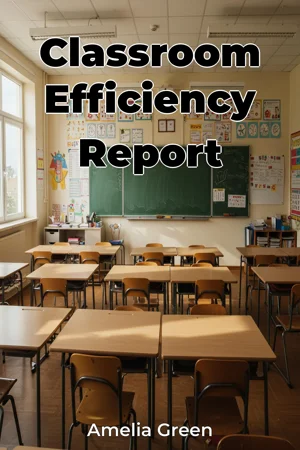
Are classrooms truly reaching their full potential, or are hidden inefficiencies silently eroding school performance? This book, "Classroom Efficiency Report," delves into the intricate relationship between classroom practices, teaching methods, and overall school effectiveness. It serves as a crucial resource for educators, administrators, and policymakers seeking actionable insights to optimize learning environments and improve educational outcomes. This report primarily investigates two key areas: the tangible impact of various teaching methodologies on student engagement and academic achievement, and the identification and mitigation of inefficiencies within classroom management strategies. We emphasize the importance of data-driven decision-making in education, advocating for a shift from traditional, intuition-based approaches to evidence-based practices. The core idea is that by analyzing and refining classroom operations, schools can significantly boost their performance metrics. "Classroom Efficiency Report" builds upon decades of educational research, drawing from pioneering studies in pedagogy, behavioral psychology, and organizational management within academic settings. It assumes the reader has a basic understanding of educational principles and statistical literacy, as it presents findings supported by quantitative data. Our central argument posits that a school’s overall effectiveness is, to a significant degree, determined by the aggregation of individual classroom efficiencies. By focusing on optimizing teaching methodologies and classroom management, schools can create a synergistic effect that positively impacts student performance, teacher satisfaction, and resource allocation. This argument challenges the common tendency to focus solely on macro-level school reforms without addressing the fundamental building blocks of education: the classrooms themselves. The book is structured in four parts. The first part introduces the core concepts of classroom efficiency, defining key performance indicators (KPIs) relevant to assessing teaching effectiveness and student engagement. The second part analyzes diverse teaching methods, examining observational studies and pilot programs to determine their comparative impacts. Specific chapters are dedicated to collaborative learning, differentiated instruction, and technology-enhanced learning. The third part delves into classroom management strategies, offering practical guidelines for creating conducive learning environments. This section focuses on minimizing disruptions, fostering positive student-teacher relationships, and implementing effective behavior management systems. The final part culminates in a synthesis of the findings, providing a framework for schools to conduct their own efficiency audits and implement customized improvement plans. It details practical applications, including case studies of schools that have successfully enhanced performance through focusing on classroom-level improvements. The evidence presented relies heavily on data collected from observational studies conducted in diverse classroom settings, supplemented by quantitative data from pilot programs designed to test the effectiveness of various interventions. We incorporate statistical analyses of student performance data, survey results from teachers and students, and cost-benefit analyses of different classroom management systems. This multi-faceted approach ensures a comprehensive and robust evaluation of classroom efficiency. The book draws connections between education, business management, and organizational psychology. It applies business management principles, such as process optimization and performance measurement, to the unique context of the classroom. It also incorporates insights from organizational psychology on team dynamics and motivation to address challenges in collaborative learning environments. "Classroom Efficiency Report" offers a unique perspective by treating each classroom as a mini-organization. By applying management science tools, the report provides a framework for continuous improvement, tailored to the specific needs and contexts of individual classrooms. The tone is academically rigorous, yet accessible to a broad audience of educational practitioners. We use clear, concise language, avoiding jargon while maintaining a professional and informative style. The target audience includes school administrators, curriculum developers, teacher trainers, and policymakers. It will also be valuable to educators pursuing advanced degrees in educational leadership or management. This book provides a practical guide for improving school performance through classroom-level interventions, appealing to those seeking evidence-based solutions. As a non-fiction book in the business management and academic genres, "Classroom Efficiency Report" adheres to principles of clarity, accuracy, and evidence-based argumentation. The book's scope is intentionally limited to classroom-level factors influencing school performance, recognizing that broader systemic issues also play significant roles. It does not delve into socio-economic factors or policy debates beyond their direct impact on classroom practices. The concepts presented can be readily applied by schools to identify areas for improvement and implement targeted interventions. For example, schools can use the framework provided to conduct their own classroom efficiency audits, assess the effectiveness of different teaching methods, and develop customized professional development programs for teachers. While the benefits of optimized classroom management may be obvious, the debate persists regarding which specific methodologies yield the best outcomes across diverse student populations. This book addresses these debates by presenting a balanced perspective, acknowledging the limitations of existing research, and encouraging educators to adapt strategies based on their unique contexts and student needs.
Are classrooms truly reaching their full potential, or are hidden inefficiencies silently eroding school performance? This book, "Classroom Efficiency Report," delves into the intricate relationship between classroom practices, teaching methods, and overall school effectiveness. It serves as a crucial resource for educators, administrators, and policymakers seeking actionable insights to optimize learning environments and improve educational outcomes. This report primarily investigates two key areas: the tangible impact of various teaching methodologies on student engagement and academic achievement, and the identification and mitigation of inefficiencies within classroom management strategies. We emphasize the importance of data-driven decision-making in education, advocating for a shift from traditional, intuition-based approaches to evidence-based practices. The core idea is that by analyzing and refining classroom operations, schools can significantly boost their performance metrics. "Classroom Efficiency Report" builds upon decades of educational research, drawing from pioneering studies in pedagogy, behavioral psychology, and organizational management within academic settings. It assumes the reader has a basic understanding of educational principles and statistical literacy, as it presents findings supported by quantitative data. Our central argument posits that a school’s overall effectiveness is, to a significant degree, determined by the aggregation of individual classroom efficiencies. By focusing on optimizing teaching methodologies and classroom management, schools can create a synergistic effect that positively impacts student performance, teacher satisfaction, and resource allocation. This argument challenges the common tendency to focus solely on macro-level school reforms without addressing the fundamental building blocks of education: the classrooms themselves. The book is structured in four parts. The first part introduces the core concepts of classroom efficiency, defining key performance indicators (KPIs) relevant to assessing teaching effectiveness and student engagement. The second part analyzes diverse teaching methods, examining observational studies and pilot programs to determine their comparative impacts. Specific chapters are dedicated to collaborative learning, differentiated instruction, and technology-enhanced learning. The third part delves into classroom management strategies, offering practical guidelines for creating conducive learning environments. This section focuses on minimizing disruptions, fostering positive student-teacher relationships, and implementing effective behavior management systems. The final part culminates in a synthesis of the findings, providing a framework for schools to conduct their own efficiency audits and implement customized improvement plans. It details practical applications, including case studies of schools that have successfully enhanced performance through focusing on classroom-level improvements. The evidence presented relies heavily on data collected from observational studies conducted in diverse classroom settings, supplemented by quantitative data from pilot programs designed to test the effectiveness of various interventions. We incorporate statistical analyses of student performance data, survey results from teachers and students, and cost-benefit analyses of different classroom management systems. This multi-faceted approach ensures a comprehensive and robust evaluation of classroom efficiency. The book draws connections between education, business management, and organizational psychology. It applies business management principles, such as process optimization and performance measurement, to the unique context of the classroom. It also incorporates insights from organizational psychology on team dynamics and motivation to address challenges in collaborative learning environments. "Classroom Efficiency Report" offers a unique perspective by treating each classroom as a mini-organization. By applying management science tools, the report provides a framework for continuous improvement, tailored to the specific needs and contexts of individual classrooms. The tone is academically rigorous, yet accessible to a broad audience of educational practitioners. We use clear, concise language, avoiding jargon while maintaining a professional and informative style. The target audience includes school administrators, curriculum developers, teacher trainers, and policymakers. It will also be valuable to educators pursuing advanced degrees in educational leadership or management. This book provides a practical guide for improving school performance through classroom-level interventions, appealing to those seeking evidence-based solutions. As a non-fiction book in the business management and academic genres, "Classroom Efficiency Report" adheres to principles of clarity, accuracy, and evidence-based argumentation. The book's scope is intentionally limited to classroom-level factors influencing school performance, recognizing that broader systemic issues also play significant roles. It does not delve into socio-economic factors or policy debates beyond their direct impact on classroom practices. The concepts presented can be readily applied by schools to identify areas for improvement and implement targeted interventions. For example, schools can use the framework provided to conduct their own classroom efficiency audits, assess the effectiveness of different teaching methods, and develop customized professional development programs for teachers. While the benefits of optimized classroom management may be obvious, the debate persists regarding which specific methodologies yield the best outcomes across diverse student populations. This book addresses these debates by presenting a balanced perspective, acknowledging the limitations of existing research, and encouraging educators to adapt strategies based on their unique contexts and student needs.
"Classroom Efficiency Report" examines how classroom practices directly influence school effectiveness, providing educators and administrators with actionable strategies for improvement. It highlights the critical role of data-driven decision-making, advocating for evidence-based practices over traditional methods. The book uniquely applies management science principles to the classroom, treating each as a "mini-organization" to optimize performance. The report investigates the impact of various teaching methodologies on student engagement and academic achievement, while also addressing inefficiencies in classroom management. It emphasizes that a school's overall success largely depends on the collective effectiveness of its individual classrooms. By focusing on improving teaching methods and classroom management, schools can create a synergistic effect that benefits both students and teachers. Structured in four parts, the book introduces key performance indicators, analyzes diverse teaching methods, delves into classroom management strategies, and culminates in a framework for school-led efficiency audits. "Classroom Efficiency Report" offers a comprehensive guide for enhancing educational outcomes through targeted, classroom-level improvements, making it a valuable resource for those seeking practical, evidence-based solutions in education.
Book Details
ISBN
9788233995485
Publisher
Publifye AS
Your Licenses
You don't own any licenses for this book
Purchase a license below to unlock this book and download the EPUB.
Purchase License
Select a tier to unlock this book
Need bulk licensing?
Contact us for enterprise agreements.