
About This Book
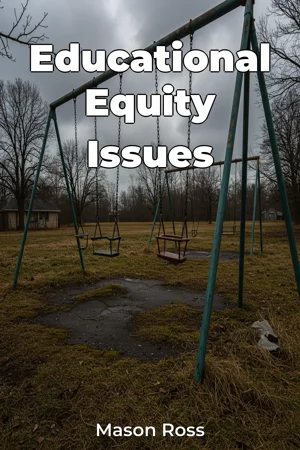
Is equitable access to quality education truly attainable, or does it remain an elusive ideal undermined by systemic barriers? *Educational Equity Issues* delves into the persistent challenges that hinder fair access to quality education for all, focusing on the interplay of socioeconomic factors and policy effectiveness. This book explores the nuanced relationship between resource distribution, educational outcomes, and social mobility, offering a critical analysis of current strategies and proposing pathways toward a more just educational landscape. The core of this work orbits around three central themes: the socioeconomic determinants of educational inequality, the efficacy of current policies aimed at promoting equity, and the practical implications of these factors on student achievement and future opportunities. These themes are paramount because educational disparities perpetuate cycles of poverty and limit social advancement, impacting not only individual lives but also the overall well-being of society. Understanding these issues is crucial for educators, policymakers, and anyone invested in fostering a more equitable future. This exploration is grounded in decades of research documenting the impact of poverty, race, and geographic location on educational attainment. The book builds upon foundational studies in sociology and economics that demonstrate how unequal access to resources, quality instruction, and supportive learning environments disproportionately affects marginalized communities. While no specific prerequisite knowledge is required, familiarity with basic social science concepts will enhance the reader's understanding of the presented arguments. The central argument posits that genuine educational equity necessitates moving beyond superficial reforms and addressing the root causes of inequality embedded within social and economic structures. This argument is vital because it challenges conventional approaches that often focus on symptom management rather than systemic change. By exposing the limitations of these approaches, the book advocates for a more holistic and transformative vision of educational justice. The book unfolds in a structured manner. It begins by establishing the theoretical framework and introducing key concepts such as opportunity gaps, resource disparities, and implicit bias. It then delves into specific areas, including the impact of school funding models on educational quality, the effectiveness of interventions designed to support at-risk students, and the role of family and community engagement in promoting student success. The culmination of the argument synthesizes the evidence presented and offers actionable recommendations for policymakers, educators, and community stakeholders. Practical applications and implications are explored, focusing on strategies for implementing equitable policies, creating inclusive learning environments, and fostering collaborative partnerships. The evidence presented draws from a wide range of sources, including large-scale longitudinal studies, policy evaluations, and qualitative research examining the lived experiences of students from diverse backgrounds. Furthermore, the book analyzes data from national assessments and surveys to track trends in educational achievement and identify persistent disparities. *Educational Equity Issues* naturally connects to several other fields. It shares connections with sociology through examining social stratification and mobility, with economics through analyzing resource allocation and its impact on human capital development, and with political science through exploring policy formation and implementation. These interdisciplinary connections enrich the analysis and provide a more comprehensive understanding of the multifaceted challenges involved in achieving educational equity. This book distinguishes itself by adopting a critical and analytical approach that goes beyond descriptive accounts of educational inequality. The argument provides a comprehensive overview of the structural and systemic barriers that perpetuate educational disparities, and the focus on evidence-based solutions offers practical guidance for creating meaningful change. The tone is academic yet accessible, designed to engage a broad audience of scholars, practitioners, and policymakers. The writing style prioritizes clarity, precision, and objectivity, ensuring that the arguments are well-supported and easy to follow. The target audience includes educational researchers, policymakers, school administrators, teachers, graduate students in education and related fields, and anyone concerned with social justice and equity. This book offers valuable insights and practical strategies for creating a more equitable educational system. As an academic work, the book upholds the standards of rigor and objectivity expected in scholarly publications. It adheres to established conventions of citation and referencing, ensuring that all sources are properly acknowledged. The scope of the book is limited to the examination of educational equity issues within the context of the United States, although the principles and concepts discussed may be relevant to other countries facing similar challenges. The information in this book can be practically applied to inform policy decisions, improve teaching practices, design effective interventions, and promote advocacy efforts aimed at advancing educational equity. The book addresses ongoing debates surrounding issues such as school choice, standardized testing, and affirmative action, offering a balanced and nuanced perspective on these contested topics. It contributes to the broader conversation about educational reform by providing a comprehensive analysis of the challenges and opportunities involved in creating a truly equitable educational system.
Is equitable access to quality education truly attainable, or does it remain an elusive ideal undermined by systemic barriers? *Educational Equity Issues* delves into the persistent challenges that hinder fair access to quality education for all, focusing on the interplay of socioeconomic factors and policy effectiveness. This book explores the nuanced relationship between resource distribution, educational outcomes, and social mobility, offering a critical analysis of current strategies and proposing pathways toward a more just educational landscape. The core of this work orbits around three central themes: the socioeconomic determinants of educational inequality, the efficacy of current policies aimed at promoting equity, and the practical implications of these factors on student achievement and future opportunities. These themes are paramount because educational disparities perpetuate cycles of poverty and limit social advancement, impacting not only individual lives but also the overall well-being of society. Understanding these issues is crucial for educators, policymakers, and anyone invested in fostering a more equitable future. This exploration is grounded in decades of research documenting the impact of poverty, race, and geographic location on educational attainment. The book builds upon foundational studies in sociology and economics that demonstrate how unequal access to resources, quality instruction, and supportive learning environments disproportionately affects marginalized communities. While no specific prerequisite knowledge is required, familiarity with basic social science concepts will enhance the reader's understanding of the presented arguments. The central argument posits that genuine educational equity necessitates moving beyond superficial reforms and addressing the root causes of inequality embedded within social and economic structures. This argument is vital because it challenges conventional approaches that often focus on symptom management rather than systemic change. By exposing the limitations of these approaches, the book advocates for a more holistic and transformative vision of educational justice. The book unfolds in a structured manner. It begins by establishing the theoretical framework and introducing key concepts such as opportunity gaps, resource disparities, and implicit bias. It then delves into specific areas, including the impact of school funding models on educational quality, the effectiveness of interventions designed to support at-risk students, and the role of family and community engagement in promoting student success. The culmination of the argument synthesizes the evidence presented and offers actionable recommendations for policymakers, educators, and community stakeholders. Practical applications and implications are explored, focusing on strategies for implementing equitable policies, creating inclusive learning environments, and fostering collaborative partnerships. The evidence presented draws from a wide range of sources, including large-scale longitudinal studies, policy evaluations, and qualitative research examining the lived experiences of students from diverse backgrounds. Furthermore, the book analyzes data from national assessments and surveys to track trends in educational achievement and identify persistent disparities. *Educational Equity Issues* naturally connects to several other fields. It shares connections with sociology through examining social stratification and mobility, with economics through analyzing resource allocation and its impact on human capital development, and with political science through exploring policy formation and implementation. These interdisciplinary connections enrich the analysis and provide a more comprehensive understanding of the multifaceted challenges involved in achieving educational equity. This book distinguishes itself by adopting a critical and analytical approach that goes beyond descriptive accounts of educational inequality. The argument provides a comprehensive overview of the structural and systemic barriers that perpetuate educational disparities, and the focus on evidence-based solutions offers practical guidance for creating meaningful change. The tone is academic yet accessible, designed to engage a broad audience of scholars, practitioners, and policymakers. The writing style prioritizes clarity, precision, and objectivity, ensuring that the arguments are well-supported and easy to follow. The target audience includes educational researchers, policymakers, school administrators, teachers, graduate students in education and related fields, and anyone concerned with social justice and equity. This book offers valuable insights and practical strategies for creating a more equitable educational system. As an academic work, the book upholds the standards of rigor and objectivity expected in scholarly publications. It adheres to established conventions of citation and referencing, ensuring that all sources are properly acknowledged. The scope of the book is limited to the examination of educational equity issues within the context of the United States, although the principles and concepts discussed may be relevant to other countries facing similar challenges. The information in this book can be practically applied to inform policy decisions, improve teaching practices, design effective interventions, and promote advocacy efforts aimed at advancing educational equity. The book addresses ongoing debates surrounding issues such as school choice, standardized testing, and affirmative action, offering a balanced and nuanced perspective on these contested topics. It contributes to the broader conversation about educational reform by providing a comprehensive analysis of the challenges and opportunities involved in creating a truly equitable educational system.
Educational Equity Issues explores the pervasive challenges hindering equal access to quality education, emphasizing socioeconomic factors and policy effectiveness. The book examines how resource distribution relates to educational outcomes and social mobility. It highlights that factors such as poverty, race, and geographic location significantly impact educational attainment, perpetuating cycles of inequality. One intriguing insight is the book's argument that genuine educational equity requires addressing the root causes of inequality embedded within social and economic structures, moving beyond mere superficial reforms. The approach taken in *Educational Equity Issues* involves a structured progression, beginning with a theoretical framework and key concepts like opportunity gaps and resource disparities. Later chapters delve into specific areas, such as the impact of school funding and the effectiveness of interventions for at-risk students. Ultimately, the book synthesizes evidence and offers actionable recommendations for policymakers and educators, distinguishing itself through its critical analysis and focus on evidence-based solutions to promote social justice and equal access to education.
Book Details
ISBN
9788233995232
Publisher
Publifye AS
Your Licenses
You don't own any licenses for this book
Purchase a license below to unlock this book and download the EPUB.
Purchase License
Select a tier to unlock this book
Need bulk licensing?
Contact us for enterprise agreements.