
About This Book
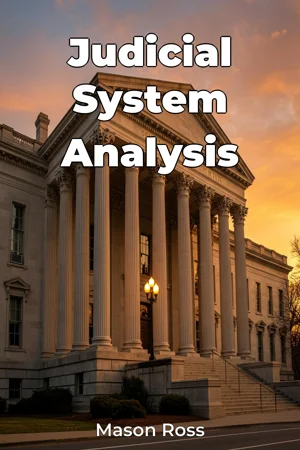
How effectively does a nation's judicial system uphold the principles of justice and fairness for all its citizens? "Judicial System Analysis" delves into the intricate organization and multifaceted function of a nation’s judicial system, employing the dual lens of established legal frameworks and comprehensive reform studies. This book rigorously examines the architecture of justice, its operational mechanisms, and the constant endeavors to refine its processes. The book concentrates primarily on two significant areas. The first involves the analysis of the structural components of the judicial system, encompassing the hierarchy of courts, the roles of various legal professionals (judges, lawyers, prosecutors), and the administrative bodies that support judicial operations. The second focus area is an examination of specific legal frameworks, including constitutional provisions, statutory laws, and procedural rules that govern the actions of the courts and the rights of individuals within the legal system. These topics are relevant because a clear understanding of both structure and framework is essential to evaluating the system’s effectiveness to ensure equitable outcomes. The analysis accounts for the historical development of the judicial system to understand how past legal precedents and societal changes have molded its current form. It also considers the influence of political ideologies and social movements on judicial reforms. Readers should ideally possess a basic understanding of legal terminology and government structures to appreciate fully the nuances of the analysis. The book’s central argument posits that a judicial system’s legitimacy and effectiveness are directly proportional to its ability to adapt and reform in response to societal needs and evolving legal standards. The argument's importance lies in its challenge to the status quo, advocating for continuous evaluation and improvement of judicial processes to meet contemporary demands for fairness, efficiency, and accountability. The content unfolds as follows: Initially, the book introduces the fundamental concepts underpinning judicial systems, providing a comparative overview of different models worldwide. Then, it develops its core arguments through chapters dedicated to specific aspects of judicial organization (e.g., court administration, judicial selection) and legal frameworks (e.g., criminal procedure, civil rights). A dedicated section will explore case studies of judicial reforms to identify successful strategies and potential pitfalls. Finally, the book culminates in a discussion of the practical implications of its findings, presenting recommendations for policymakers and legal professionals aimed at enhancing the judicial system’s performance. The research integrates legal scholarship, statistical data on court caseloads and outcomes, and empirical studies on judicial behavior. Reform studies conducted by government agencies, academic institutions, and non-governmental organizations are extensively cited. The book connects to other fields like political science (exploring the relationship between the judiciary and other branches of government), sociology (examining the social impact of judicial decisions), and economics (analyzing the costs and benefits of different judicial policies). This book adopts an analytical and evidence-based approach, carefully dissecting the complexities of the judicial system while maintaining an objective and scholarly tone. It is primarily designed for legal scholars, policymakers, law students, and anyone with an interest in understanding how justice is administered in a nation. The book’s scope encompasses a comprehensive examination of the judicial system's structure and function, while intentionally limiting its focus to general principles and overarching trends, rather than delving into the specific details of individual cases or legal jurisdictions.
How effectively does a nation's judicial system uphold the principles of justice and fairness for all its citizens? "Judicial System Analysis" delves into the intricate organization and multifaceted function of a nation’s judicial system, employing the dual lens of established legal frameworks and comprehensive reform studies. This book rigorously examines the architecture of justice, its operational mechanisms, and the constant endeavors to refine its processes. The book concentrates primarily on two significant areas. The first involves the analysis of the structural components of the judicial system, encompassing the hierarchy of courts, the roles of various legal professionals (judges, lawyers, prosecutors), and the administrative bodies that support judicial operations. The second focus area is an examination of specific legal frameworks, including constitutional provisions, statutory laws, and procedural rules that govern the actions of the courts and the rights of individuals within the legal system. These topics are relevant because a clear understanding of both structure and framework is essential to evaluating the system’s effectiveness to ensure equitable outcomes. The analysis accounts for the historical development of the judicial system to understand how past legal precedents and societal changes have molded its current form. It also considers the influence of political ideologies and social movements on judicial reforms. Readers should ideally possess a basic understanding of legal terminology and government structures to appreciate fully the nuances of the analysis. The book’s central argument posits that a judicial system’s legitimacy and effectiveness are directly proportional to its ability to adapt and reform in response to societal needs and evolving legal standards. The argument's importance lies in its challenge to the status quo, advocating for continuous evaluation and improvement of judicial processes to meet contemporary demands for fairness, efficiency, and accountability. The content unfolds as follows: Initially, the book introduces the fundamental concepts underpinning judicial systems, providing a comparative overview of different models worldwide. Then, it develops its core arguments through chapters dedicated to specific aspects of judicial organization (e.g., court administration, judicial selection) and legal frameworks (e.g., criminal procedure, civil rights). A dedicated section will explore case studies of judicial reforms to identify successful strategies and potential pitfalls. Finally, the book culminates in a discussion of the practical implications of its findings, presenting recommendations for policymakers and legal professionals aimed at enhancing the judicial system’s performance. The research integrates legal scholarship, statistical data on court caseloads and outcomes, and empirical studies on judicial behavior. Reform studies conducted by government agencies, academic institutions, and non-governmental organizations are extensively cited. The book connects to other fields like political science (exploring the relationship between the judiciary and other branches of government), sociology (examining the social impact of judicial decisions), and economics (analyzing the costs and benefits of different judicial policies). This book adopts an analytical and evidence-based approach, carefully dissecting the complexities of the judicial system while maintaining an objective and scholarly tone. It is primarily designed for legal scholars, policymakers, law students, and anyone with an interest in understanding how justice is administered in a nation. The book’s scope encompasses a comprehensive examination of the judicial system's structure and function, while intentionally limiting its focus to general principles and overarching trends, rather than delving into the specific details of individual cases or legal jurisdictions.
"Judicial System Analysis" offers a comprehensive exploration of a nation's judicial system, focusing on its organization, function, and ongoing efforts to refine its processes. Using legal frameworks and reform studies, the book examines the structure of justice, including the roles of legal professionals like judges and lawyers, and the administrative bodies supporting judicial operations. It highlights how a judicial system's legitimacy hinges on its ability to adapt and reform in response to evolving societal needs and legal standards, advocating for continuous evaluation to meet demands for fairness and accountability. The book navigates the complexities of the court system analysis by integrating legal scholarship, statistical data on court caseloads, and empirical studies on judicial behavior. For example, the influence of political ideologies and social movements on judicial reforms is considered throughout the book, as well as the historical development of the judicial system. The content progresses from introducing fundamental concepts and comparative models to exploring specific aspects of judicial organization and legal frameworks, such as criminal procedure and civil rights. Culminating in practical recommendations for policymakers and legal professionals, this book connects to fields like political science and sociology, examining the relationship between the judiciary and other branches of government, and the social impact of judicial decisions. It adopts an analytical, evidence-based approach, making it valuable for legal scholars, policymakers, law students, and anyone interested in understanding justice administration.
Book Details
ISBN
9788233995041
Publisher
Publifye AS
Your Licenses
You don't own any licenses for this book
Purchase a license below to unlock this book and download the EPUB.
Purchase License
Select a tier to unlock this book
Need bulk licensing?
Contact us for enterprise agreements.