
About This Book
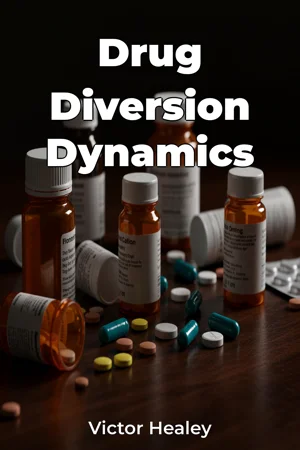
How do legally manufactured and prescribed medications end up fueling the black market and contributing to the opioid crisis? "Drug Diversion Dynamics" provides a comprehensive investigation into the ways prescription drugs are diverted from legitimate medical use into the hands of individuals for whom they were not intended, resulting in misuse, addiction, and other adverse public health outcomes. This book is vital because it uncovers the often-overlooked mechanisms that transform necessary medications into sources of harm, affecting individuals, families, and communities. This book examines the multifaceted nature of drug diversion, focusing on three key areas: physician-related diversion, pharmacy-level vulnerabilities, and patient-driven schemes. Understanding these mechanisms is crucial for designing effective intervention strategies and informing policy decisions. The diversion of prescription drugs isn’t a new problem, but its scale and impact have grown significantly in recent decades, fueled by increased prescribing rates and the proliferation of potent opioid medications. The book will contextualize the current crisis within this historical framework, examining how shifts in medical practice, pharmaceutical marketing, and regulatory oversight have contributed to the problem. No prior expertise in pharmacology or law enforcement is required to understand the concepts presented. The central argument of "Drug Diversion Dynamics" is that prescription drug diversion is not solely a problem of individual malfeasance but is instead a systemic issue rooted in vulnerabilities across the healthcare system and beyond. Addressing this phenomenon requires a comprehensive, multi-pronged approach that targets each stage of the diversion pathway. The content proceeds logically, beginning with an introduction to the various forms of diversion. Subsequent chapters are dedicated to exploring physician-related diversion, highlighting cases of over-prescription, fraudulent billing, and direct dispensing of drugs for illicit purposes. Pharmacy-level vulnerabilities are then examined, with case studies of theft, falsified records, and "doctor shopping" facilitated by inadequate monitoring systems. Patient-driven diversion schemes, including prescription forgery, theft, and the exploitation of legitimate prescriptions, are discussed in detail. The argument culminates in a practical discussion of potential solutions and policy recommendations for reducing diversion rates and mitigating its consequences. The analysis within relies heavily on data gathered from public health reports, including those from the CDC and SAMHSA, as well as law enforcement studies conducted by agencies such as the DEA and local police departments. The book also incorporates case studies and investigative journalism to illustrate the human impact of drug diversion and the challenges faced by those working to combat it. "Drug Diversion Dynamics" connects to several other fields of study, including criminology, public policy, and healthcare administration. Criminological theories are applied to understand the motivations and behaviors of individuals involved in drug diversion. Connections to public policy appear through analysis of the effectiveness of different regulatory approaches. The link to healthcare administration emerges via the exploration of how hospital and clinic policies can be strengthened to prevent diversion. This book takes a balanced and evidence-based approach to a complex issue, avoiding sensationalism and focusing on data-driven insights. It seeks to provide a nuanced understanding of the motivations, methods, and consequences of drug diversion, challenging simplistic narratives that often dominate public discussions. The intended audience includes healthcare professionals, policymakers, law enforcement officials, and anyone interested in understanding the root causes of the opioid crisis and other drug-related problems. It will be valuable to students and researchers in public health, criminal justice, and related fields. It adheres to the conventions of the public health and true crime genres by presenting factual information in an accessible and engaging manner, using real-world examples to illustrate key concepts. The book focuses primarily on the diversion of prescription opioid medications in the United States, although examples from other countries and drug classes are included where relevant. It does not delve deeply into the treatment of addiction, focusing instead on prevention and intervention strategies related to diversion. The information in this book can be applied directly by healthcare providers to improve prescribing practices and enhance security measures in their practices. Policymakers can use the findings to inform the development of more effective regulations and to allocate resources to combat drug diversion. Law enforcement officials can utilize the insights to target diversion schemes and disrupt the flow of illicit drugs. Drug diversion is a topic of ongoing debate and controversy, with discussions centered on the role of pharmaceutical companies, the adequacy of regulatory oversight, and the effectiveness of different treatment approaches. This book will acknowledge these debates and provide a balanced perspective on the various viewpoints.
How do legally manufactured and prescribed medications end up fueling the black market and contributing to the opioid crisis? "Drug Diversion Dynamics" provides a comprehensive investigation into the ways prescription drugs are diverted from legitimate medical use into the hands of individuals for whom they were not intended, resulting in misuse, addiction, and other adverse public health outcomes. This book is vital because it uncovers the often-overlooked mechanisms that transform necessary medications into sources of harm, affecting individuals, families, and communities. This book examines the multifaceted nature of drug diversion, focusing on three key areas: physician-related diversion, pharmacy-level vulnerabilities, and patient-driven schemes. Understanding these mechanisms is crucial for designing effective intervention strategies and informing policy decisions. The diversion of prescription drugs isn’t a new problem, but its scale and impact have grown significantly in recent decades, fueled by increased prescribing rates and the proliferation of potent opioid medications. The book will contextualize the current crisis within this historical framework, examining how shifts in medical practice, pharmaceutical marketing, and regulatory oversight have contributed to the problem. No prior expertise in pharmacology or law enforcement is required to understand the concepts presented. The central argument of "Drug Diversion Dynamics" is that prescription drug diversion is not solely a problem of individual malfeasance but is instead a systemic issue rooted in vulnerabilities across the healthcare system and beyond. Addressing this phenomenon requires a comprehensive, multi-pronged approach that targets each stage of the diversion pathway. The content proceeds logically, beginning with an introduction to the various forms of diversion. Subsequent chapters are dedicated to exploring physician-related diversion, highlighting cases of over-prescription, fraudulent billing, and direct dispensing of drugs for illicit purposes. Pharmacy-level vulnerabilities are then examined, with case studies of theft, falsified records, and "doctor shopping" facilitated by inadequate monitoring systems. Patient-driven diversion schemes, including prescription forgery, theft, and the exploitation of legitimate prescriptions, are discussed in detail. The argument culminates in a practical discussion of potential solutions and policy recommendations for reducing diversion rates and mitigating its consequences. The analysis within relies heavily on data gathered from public health reports, including those from the CDC and SAMHSA, as well as law enforcement studies conducted by agencies such as the DEA and local police departments. The book also incorporates case studies and investigative journalism to illustrate the human impact of drug diversion and the challenges faced by those working to combat it. "Drug Diversion Dynamics" connects to several other fields of study, including criminology, public policy, and healthcare administration. Criminological theories are applied to understand the motivations and behaviors of individuals involved in drug diversion. Connections to public policy appear through analysis of the effectiveness of different regulatory approaches. The link to healthcare administration emerges via the exploration of how hospital and clinic policies can be strengthened to prevent diversion. This book takes a balanced and evidence-based approach to a complex issue, avoiding sensationalism and focusing on data-driven insights. It seeks to provide a nuanced understanding of the motivations, methods, and consequences of drug diversion, challenging simplistic narratives that often dominate public discussions. The intended audience includes healthcare professionals, policymakers, law enforcement officials, and anyone interested in understanding the root causes of the opioid crisis and other drug-related problems. It will be valuable to students and researchers in public health, criminal justice, and related fields. It adheres to the conventions of the public health and true crime genres by presenting factual information in an accessible and engaging manner, using real-world examples to illustrate key concepts. The book focuses primarily on the diversion of prescription opioid medications in the United States, although examples from other countries and drug classes are included where relevant. It does not delve deeply into the treatment of addiction, focusing instead on prevention and intervention strategies related to diversion. The information in this book can be applied directly by healthcare providers to improve prescribing practices and enhance security measures in their practices. Policymakers can use the findings to inform the development of more effective regulations and to allocate resources to combat drug diversion. Law enforcement officials can utilize the insights to target diversion schemes and disrupt the flow of illicit drugs. Drug diversion is a topic of ongoing debate and controversy, with discussions centered on the role of pharmaceutical companies, the adequacy of regulatory oversight, and the effectiveness of different treatment approaches. This book will acknowledge these debates and provide a balanced perspective on the various viewpoints.
"Drug Diversion Dynamics" investigates how legally manufactured prescription drugs fuel the black market and the opioid crisis. It reveals the mechanisms by which necessary medications are diverted for unintended use, leading to misuse, addiction, and public health crises. The book examines physician-related diversion, pharmacy-level vulnerabilities, and patient-driven schemes. For instance, increased prescribing rates and potent opioid medications have significantly worsened diversion in recent decades. The book argues that prescription drug diversion is a systemic issue rooted in healthcare system vulnerabilities, not just individual malfeasance. Chapters explore over-prescription and fraudulent billing, pharmacy theft and falsified records, and prescription forgery. By presenting data from public health reports, law enforcement studies, and case studies, the book offers a balanced, evidence-based approach to understanding the motivations, methods, and consequences of drug diversion, providing valuable insights for healthcare professionals, policymakers, and law enforcement.
Book Details
ISBN
9788233994679
Publisher
Publifye AS
Your Licenses
You don't own any licenses for this book
Purchase a license below to unlock this book and download the EPUB.
Purchase License
Select a tier to unlock this book
Need bulk licensing?
Contact us for enterprise agreements.