
About This Book
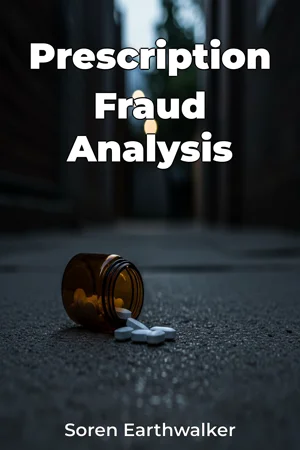
How easily can a prescription pad become a tool for deception, fueling a crisis that extends far beyond individual misuse? "Prescription Fraud Analysis" delves into the pervasive issue of prescription fraud, exploring its methods, prevalence, and far-reaching implications within the realms of both politics and true crime. This book undertakes a comprehensive examination of how prescription fraud operates, why it persists, and what consequences it carries for individuals, communities, and the healthcare system as a whole. At its core, this analysis centers on three key topics: the diverse methodologies employed in prescription fraud, ranging from simple forgeries to sophisticated schemes involving multiple actors; the statistical prevalence of these fraudulent activities, offering a data-driven understanding of its scope; and the cascading implications, impacting public health, law enforcement, and the integrity of pharmaceutical regulations. These topics are vital because prescription fraud not only diverts essential medications into illicit channels but also contributes significantly to the opioid crisis, escalates healthcare costs, and undermines public trust in medical professionals. To fully grasp the dimensions of prescription fraud, this book provides essential context rooted in the history of pharmaceutical regulation, the evolving landscape of drug enforcement, and the socio-economic factors that can drive individuals to engage in or fall victim to these crimes. Readers will gain an understanding of the Controlled Substances Act, the role of regulatory bodies like the DEA, and the influence of economic disparities on drug-seeking behaviors. "Prescription Fraud Analysis" argues that effectively combating prescription fraud requires a multi-faceted approach that combines enhanced regulatory oversight, improved data analytics, and a deeper understanding of the motivations and methods behind these crimes. This argument is critical in a time when the opioid epidemic continues to claim lives and resources, demonstrating an urgent need for more informed and proactive strategies. This book is structured to guide readers through a clear and logical progression of understanding. First, it introduces the fundamental concepts of prescription fraud, including definitions, classifications, and the key players involved. It then develops these ideas through major sections that explore specific types of fraud, analyze prevalence data across different demographics and regions, and examine the legal and public health consequences. The book culminates in a discussion of potential solutions and preventative measures, emphasizing the importance of inter-agency collaboration and technological advancements. It also explores practical applications of this knowledge, offering insights that can inform policy development, law enforcement strategies, and healthcare provider education. The evidence and research presented are drawn from a variety of sources, including legal case studies, enforcement agency reports, and epidemiological data. This book synthesizes information from the DEA, CDC, and various state and local law enforcement agencies to provide a comprehensive and data-rich perspective. Moreover, it incorporates analyses of prescription drug monitoring programs (PDMPs) to assess their effectiveness in detecting and deterring fraud. The book also draws interdisciplinary connections, linking prescription fraud to fields such as criminology, public health, and healthcare economics. Criminological theories help explain the motivations behind fraudulent behaviors, while public health perspectives highlight the societal costs of drug diversion. Connections to healthcare economics demonstrate the financial burden imposed by fraud on the healthcare system and insurance providers. "Prescription Fraud Analysis" adopts a fact-based tone, presenting information in a clear and accessible manner suitable for both academic and general audiences. The target audience includes policymakers, law enforcement professionals, healthcare administrators, legal experts, and anyone interested in understanding the complexities of prescription drug abuse and fraud. This book stands out by providing a holistic analysis that integrates legal, statistical, and practical perspectives, offering a unique contribution to the existing literature. The book's scope is intentionally broad, covering various aspects of prescription fraud across different geographic regions and demographic groups within the United States. While it acknowledges international dimensions of pharmaceutical crime, its primary focus remains on the domestic landscape. The information can be applied practically by readers in developing fraud prevention programs, enhancing law enforcement training, and improving pharmaceutical oversight. This book also addresses ongoing debates and controversies surrounding the best approaches to tackling prescription fraud, including discussions on the balance between patient access to pain medication and the need to prevent drug diversion, and the effectiveness of different regulatory strategies.
How easily can a prescription pad become a tool for deception, fueling a crisis that extends far beyond individual misuse? "Prescription Fraud Analysis" delves into the pervasive issue of prescription fraud, exploring its methods, prevalence, and far-reaching implications within the realms of both politics and true crime. This book undertakes a comprehensive examination of how prescription fraud operates, why it persists, and what consequences it carries for individuals, communities, and the healthcare system as a whole. At its core, this analysis centers on three key topics: the diverse methodologies employed in prescription fraud, ranging from simple forgeries to sophisticated schemes involving multiple actors; the statistical prevalence of these fraudulent activities, offering a data-driven understanding of its scope; and the cascading implications, impacting public health, law enforcement, and the integrity of pharmaceutical regulations. These topics are vital because prescription fraud not only diverts essential medications into illicit channels but also contributes significantly to the opioid crisis, escalates healthcare costs, and undermines public trust in medical professionals. To fully grasp the dimensions of prescription fraud, this book provides essential context rooted in the history of pharmaceutical regulation, the evolving landscape of drug enforcement, and the socio-economic factors that can drive individuals to engage in or fall victim to these crimes. Readers will gain an understanding of the Controlled Substances Act, the role of regulatory bodies like the DEA, and the influence of economic disparities on drug-seeking behaviors. "Prescription Fraud Analysis" argues that effectively combating prescription fraud requires a multi-faceted approach that combines enhanced regulatory oversight, improved data analytics, and a deeper understanding of the motivations and methods behind these crimes. This argument is critical in a time when the opioid epidemic continues to claim lives and resources, demonstrating an urgent need for more informed and proactive strategies. This book is structured to guide readers through a clear and logical progression of understanding. First, it introduces the fundamental concepts of prescription fraud, including definitions, classifications, and the key players involved. It then develops these ideas through major sections that explore specific types of fraud, analyze prevalence data across different demographics and regions, and examine the legal and public health consequences. The book culminates in a discussion of potential solutions and preventative measures, emphasizing the importance of inter-agency collaboration and technological advancements. It also explores practical applications of this knowledge, offering insights that can inform policy development, law enforcement strategies, and healthcare provider education. The evidence and research presented are drawn from a variety of sources, including legal case studies, enforcement agency reports, and epidemiological data. This book synthesizes information from the DEA, CDC, and various state and local law enforcement agencies to provide a comprehensive and data-rich perspective. Moreover, it incorporates analyses of prescription drug monitoring programs (PDMPs) to assess their effectiveness in detecting and deterring fraud. The book also draws interdisciplinary connections, linking prescription fraud to fields such as criminology, public health, and healthcare economics. Criminological theories help explain the motivations behind fraudulent behaviors, while public health perspectives highlight the societal costs of drug diversion. Connections to healthcare economics demonstrate the financial burden imposed by fraud on the healthcare system and insurance providers. "Prescription Fraud Analysis" adopts a fact-based tone, presenting information in a clear and accessible manner suitable for both academic and general audiences. The target audience includes policymakers, law enforcement professionals, healthcare administrators, legal experts, and anyone interested in understanding the complexities of prescription drug abuse and fraud. This book stands out by providing a holistic analysis that integrates legal, statistical, and practical perspectives, offering a unique contribution to the existing literature. The book's scope is intentionally broad, covering various aspects of prescription fraud across different geographic regions and demographic groups within the United States. While it acknowledges international dimensions of pharmaceutical crime, its primary focus remains on the domestic landscape. The information can be applied practically by readers in developing fraud prevention programs, enhancing law enforcement training, and improving pharmaceutical oversight. This book also addresses ongoing debates and controversies surrounding the best approaches to tackling prescription fraud, including discussions on the balance between patient access to pain medication and the need to prevent drug diversion, and the effectiveness of different regulatory strategies.
"Prescription Fraud Analysis" uncovers the complex web of deceit surrounding prescription medications, exploring its methods, scale, and impact on politics and true crime. This book highlights how easily prescription pads become tools for deception, fueling the opioid crisis and escalating healthcare costs. Discover how simple forgeries to sophisticated schemes involving multiple actors contribute to the diversion of essential medications into illicit channels. The analysis delves into the history of pharmaceutical regulation, the role of the DEA, and the socio-economic factors driving drug-seeking behaviors, providing context to the pervasive issue of prescription fraud. The book guides readers through the fundamental concepts, progressing into specific fraud types, prevalence data, and legal repercussions. It argues for a multi-faceted approach combining enhanced regulatory oversight, improved data analytics, and a deeper understanding of criminal motivations. By drawing from legal case studies, enforcement agency reports, and epidemiological data, "Prescription Fraud Analysis" offers insights for policy development, law enforcement strategies, and healthcare provider education, emphasizing the urgent need for proactive strategies in combating prescription fraud.
Book Details
ISBN
9788233994662
Publisher
Publifye AS
Your Licenses
You don't own any licenses for this book
Purchase a license below to unlock this book and download the EPUB.
Purchase License
Select a tier to unlock this book
Need bulk licensing?
Contact us for enterprise agreements.