
About This Book
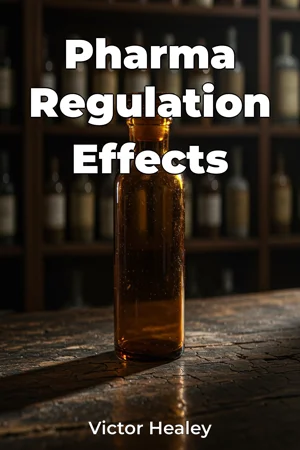
Can pharmaceutical regulations truly strike a balance between ensuring drug safety and minimizing misuse, or are we perpetually caught in a cycle of unintended consequences? "Pharma Regulation Effects" delves into this critical question, offering a comprehensive analysis of how policies shape drug safety outcomes and influence rates of misuse. This book examines the intricate dance between regulatory frameworks, public health, and individual behavior, providing readers with a nuanced understanding of the forces at play. The book focuses on three primary areas: the evolution of pharmaceutical regulations, the measurable impact of these regulations on drug safety, and their unintended consequences regarding drug misuse. Understanding these topics is vital in an era where access to medication is both a lifeline and a potential hazard. The regulatory landscape is constantly shifting, making it essential for policymakers, healthcare professionals, and the public to understand these complexities. To provide context, the book traces the history of pharmaceutical regulation, from early, largely unregulated markets to today’s complex web of laws and guidelines. This includes landmark legislation, like the 1906 Pure Food and Drug Act and subsequent amendments following events like the Thalidomide tragedy, which highlighted the need for stricter controls. Readers will gain a foundational understanding of the regulatory processes, including drug approval pathways, post-market surveillance, and the roles of agencies like the Food and Drug Administration (FDA) and the European Medicines Agency (EMA). The central argument is that pharmaceutical regulations, while intended to protect public health, often have complex and sometimes paradoxical effects on drug safety and misuse. The book contends that an overemphasis on restriction can inadvertently drive misuse by creating black markets and limiting access to necessary medications. It highlights the need for adaptive policies that respond to evolving scientific knowledge and societal needs, advocating for a more holistic approach that considers both the benefits and risks of pharmaceutical interventions. The book is structured to guide the reader through this complex topic step by step. It begins with an introduction to key concepts in pharmaceutical regulation and public health. It then develops its arguments through three major sections. First, it analyzes the direct impact of specific regulations on drug safety, using case studies and statistical data to quantify the effects of policies such as prescription drug monitoring programs, risk evaluation and mitigation strategies (REMS), and drug labeling requirements. Second, it explores unintended consequences, examining how regulations can contribute to drug shortages, increased costs, and the development of illicit markets. Third, it examines the rise of opioid and other drug epidemics. The concluding chapters synthesize these findings, offering recommendations for improving regulatory strategies and promoting safer medication use. The evidence presented draws from a wide range of sources, including policy evaluations conducted by government agencies, epidemiological studies on drug use and misuse, and regulatory reports from national and international organizations. The book also incorporates data from academic research in pharmacology, public health, and economics, providing a multidisciplinary perspective on the issue. The book connects to fields such as public policy, healthcare administration, and behavioral economics. Public policy is vital for understanding the creation and implementation of regulations, healthcare administration provides insight into the practical challenges of implementing and enforcing these regulations, and behavioral economics offers insights into how individuals respond to regulatory interventions. The book promotes a holistic perspective, linking regulatory actions to real-world outcomes, providing practical insights for professionals and stakeholders. "Pharma Regulation Effects" is written in an academic yet accessible style, making it suitable for students, researchers, policymakers, healthcare professionals, and anyone interested in the intersection of public health, law, and medicine. It is particularly valuable for those seeking a deeper understanding of pharmaceutical regulation and its impact on society. The scope of the book is intentionally broad, covering a range of pharmaceutical regulations and drug types. However, it focuses primarily on the United States and Europe, recognizing that regulatory landscapes vary significantly across different regions. The information in this book can be applied in several practical ways. Policymakers can use its findings to inform the development of more effective and evidence-based regulations. Healthcare professionals can use it to improve their understanding of the regulatory context in which they practice. And patients and caregivers can use it to become more informed consumers of medication. The book also addresses ongoing debates in the field, such as the tension between promoting innovation and ensuring drug safety, and exploring the role of pharmaceutical companies in shaping regulatory agendas. By critically examining these debates, the book provides readers with a balanced and nuanced perspective on the complex challenges of pharmaceutical regulation.
Can pharmaceutical regulations truly strike a balance between ensuring drug safety and minimizing misuse, or are we perpetually caught in a cycle of unintended consequences? "Pharma Regulation Effects" delves into this critical question, offering a comprehensive analysis of how policies shape drug safety outcomes and influence rates of misuse. This book examines the intricate dance between regulatory frameworks, public health, and individual behavior, providing readers with a nuanced understanding of the forces at play. The book focuses on three primary areas: the evolution of pharmaceutical regulations, the measurable impact of these regulations on drug safety, and their unintended consequences regarding drug misuse. Understanding these topics is vital in an era where access to medication is both a lifeline and a potential hazard. The regulatory landscape is constantly shifting, making it essential for policymakers, healthcare professionals, and the public to understand these complexities. To provide context, the book traces the history of pharmaceutical regulation, from early, largely unregulated markets to today’s complex web of laws and guidelines. This includes landmark legislation, like the 1906 Pure Food and Drug Act and subsequent amendments following events like the Thalidomide tragedy, which highlighted the need for stricter controls. Readers will gain a foundational understanding of the regulatory processes, including drug approval pathways, post-market surveillance, and the roles of agencies like the Food and Drug Administration (FDA) and the European Medicines Agency (EMA). The central argument is that pharmaceutical regulations, while intended to protect public health, often have complex and sometimes paradoxical effects on drug safety and misuse. The book contends that an overemphasis on restriction can inadvertently drive misuse by creating black markets and limiting access to necessary medications. It highlights the need for adaptive policies that respond to evolving scientific knowledge and societal needs, advocating for a more holistic approach that considers both the benefits and risks of pharmaceutical interventions. The book is structured to guide the reader through this complex topic step by step. It begins with an introduction to key concepts in pharmaceutical regulation and public health. It then develops its arguments through three major sections. First, it analyzes the direct impact of specific regulations on drug safety, using case studies and statistical data to quantify the effects of policies such as prescription drug monitoring programs, risk evaluation and mitigation strategies (REMS), and drug labeling requirements. Second, it explores unintended consequences, examining how regulations can contribute to drug shortages, increased costs, and the development of illicit markets. Third, it examines the rise of opioid and other drug epidemics. The concluding chapters synthesize these findings, offering recommendations for improving regulatory strategies and promoting safer medication use. The evidence presented draws from a wide range of sources, including policy evaluations conducted by government agencies, epidemiological studies on drug use and misuse, and regulatory reports from national and international organizations. The book also incorporates data from academic research in pharmacology, public health, and economics, providing a multidisciplinary perspective on the issue. The book connects to fields such as public policy, healthcare administration, and behavioral economics. Public policy is vital for understanding the creation and implementation of regulations, healthcare administration provides insight into the practical challenges of implementing and enforcing these regulations, and behavioral economics offers insights into how individuals respond to regulatory interventions. The book promotes a holistic perspective, linking regulatory actions to real-world outcomes, providing practical insights for professionals and stakeholders. "Pharma Regulation Effects" is written in an academic yet accessible style, making it suitable for students, researchers, policymakers, healthcare professionals, and anyone interested in the intersection of public health, law, and medicine. It is particularly valuable for those seeking a deeper understanding of pharmaceutical regulation and its impact on society. The scope of the book is intentionally broad, covering a range of pharmaceutical regulations and drug types. However, it focuses primarily on the United States and Europe, recognizing that regulatory landscapes vary significantly across different regions. The information in this book can be applied in several practical ways. Policymakers can use its findings to inform the development of more effective and evidence-based regulations. Healthcare professionals can use it to improve their understanding of the regulatory context in which they practice. And patients and caregivers can use it to become more informed consumers of medication. The book also addresses ongoing debates in the field, such as the tension between promoting innovation and ensuring drug safety, and exploring the role of pharmaceutical companies in shaping regulatory agendas. By critically examining these debates, the book provides readers with a balanced and nuanced perspective on the complex challenges of pharmaceutical regulation.
"Pharma Regulation Effects" investigates the complex relationship between pharmaceutical regulations, drug safety, and the unintended consequences of drug misuse. It examines how policies designed to protect public health can sometimes lead to paradoxical outcomes. For example, while stricter regulations aim to prevent harm, they can inadvertently fuel black markets or limit access to essential medications. The book explores the history of pharmaceutical regulation, including landmarks like the 1906 Pure Food and Drug Act, and analyzes the roles of key agencies like the FDA and EMA. The book examines the direct impact of regulations, such as prescription drug monitoring programs, on drug safety using case studies and statistical data. It then delves into unintended consequences, like drug shortages and increased costs. By examining the rise of opioid and other drug epidemics, it highlights the need for adaptive policies that balance benefits and risks. The book progresses from introducing key concepts to analyzing the effects of specific regulations and offering recommendations for improving regulatory strategies and promoting safer medication use.
Book Details
ISBN
9788233994631
Publisher
Publifye AS
Your Licenses
You don't own any licenses for this book
Purchase a license below to unlock this book and download the EPUB.
Purchase License
Select a tier to unlock this book
Need bulk licensing?
Contact us for enterprise agreements.