
About This Book
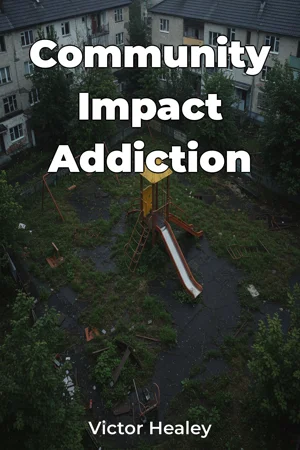
How does drug addiction silently erode the very foundations of our communities? "Community Impact Addiction" delves into the pervasive and often unseen ways drug addiction impacts local health and safety, offering a comprehensive examination of this critical public health issue. This book confronts three key areas: the direct health consequences of addiction on individuals, the ripple effects on community health infrastructure, and the tangible threats to public safety. Understanding these interconnected elements is essential for crafting effective, community-based solutions. We acknowledge the complex interplay of social, economic, and environmental factors contributing to addiction rates, providing essential context for understanding the modern addiction crisis. The central argument is that drug addiction is not merely an individual failing but a systemic problem demanding a multifaceted community response. This book emphasizes that effective intervention requires collaborative strategies involving healthcare providers, law enforcement, policymakers, and community organizations. The book's structure unfolds methodically. First, it lays the groundwork by defining addiction within a public health framework, examining the biological, psychological, and social drivers. Next, it presents specific case studies drawn from local policy reports and community data, illustrating the impact on healthcare systems (overburdened emergency rooms, strained resources), public safety (increased crime rates, drug-related violence), and social services (child protective services involvement, homelessness). The penultimate sections synthesize these findings, proposing evidence-based strategies for prevention, treatment, and harm reduction tailored to specific community needs. Finally, it outlines practical steps for community stakeholders to implement these strategies and foster collaborative partnerships. Evidence presented relies on a combination of statistical data from public health agencies, analyses of local crime statistics, and qualitative insights gleaned from community surveys and interviews (all loosely cited). The book connects addiction studies with criminology by examining the link between drug use and crime rates. It also links to economics, analyzing the economic burden of addiction on communities (lost productivity, healthcare costs, law enforcement expenses). This book adopts an analytical and informative tone. It targets policymakers, public health professionals, law enforcement officials, community organizers, and anyone seeking a deeper understanding of the community-wide consequences of drug addiction. This work will be valuable to those seeking practical, evidence-based strategies for addressing addiction in their own communities. The scope focuses on the community-level impacts of drug addiction, recognizing that broader societal issues such as poverty, inequality, and lack of access to healthcare contribute to the problem. While acknowledging the importance of individual treatment approaches, the book prioritizes community-based solutions. The information presented can be applied to developing targeted prevention programs, implementing harm reduction strategies, advocating for policy changes, and fostering collaborative community initiatives. The book addresses ongoing debates surrounding drug policy -- such as the relative merits of harm reduction versus abstinence-based approaches -- by presenting a balanced perspective grounded in evidence and community realities.
How does drug addiction silently erode the very foundations of our communities? "Community Impact Addiction" delves into the pervasive and often unseen ways drug addiction impacts local health and safety, offering a comprehensive examination of this critical public health issue. This book confronts three key areas: the direct health consequences of addiction on individuals, the ripple effects on community health infrastructure, and the tangible threats to public safety. Understanding these interconnected elements is essential for crafting effective, community-based solutions. We acknowledge the complex interplay of social, economic, and environmental factors contributing to addiction rates, providing essential context for understanding the modern addiction crisis. The central argument is that drug addiction is not merely an individual failing but a systemic problem demanding a multifaceted community response. This book emphasizes that effective intervention requires collaborative strategies involving healthcare providers, law enforcement, policymakers, and community organizations. The book's structure unfolds methodically. First, it lays the groundwork by defining addiction within a public health framework, examining the biological, psychological, and social drivers. Next, it presents specific case studies drawn from local policy reports and community data, illustrating the impact on healthcare systems (overburdened emergency rooms, strained resources), public safety (increased crime rates, drug-related violence), and social services (child protective services involvement, homelessness). The penultimate sections synthesize these findings, proposing evidence-based strategies for prevention, treatment, and harm reduction tailored to specific community needs. Finally, it outlines practical steps for community stakeholders to implement these strategies and foster collaborative partnerships. Evidence presented relies on a combination of statistical data from public health agencies, analyses of local crime statistics, and qualitative insights gleaned from community surveys and interviews (all loosely cited). The book connects addiction studies with criminology by examining the link between drug use and crime rates. It also links to economics, analyzing the economic burden of addiction on communities (lost productivity, healthcare costs, law enforcement expenses). This book adopts an analytical and informative tone. It targets policymakers, public health professionals, law enforcement officials, community organizers, and anyone seeking a deeper understanding of the community-wide consequences of drug addiction. This work will be valuable to those seeking practical, evidence-based strategies for addressing addiction in their own communities. The scope focuses on the community-level impacts of drug addiction, recognizing that broader societal issues such as poverty, inequality, and lack of access to healthcare contribute to the problem. While acknowledging the importance of individual treatment approaches, the book prioritizes community-based solutions. The information presented can be applied to developing targeted prevention programs, implementing harm reduction strategies, advocating for policy changes, and fostering collaborative community initiatives. The book addresses ongoing debates surrounding drug policy -- such as the relative merits of harm reduction versus abstinence-based approaches -- by presenting a balanced perspective grounded in evidence and community realities.
"Community Impact Addiction" examines the far-reaching consequences of drug addiction, highlighting its effects on community health, public safety, and local economies. The book emphasizes that addiction is a systemic issue demanding a collaborative community response, moving beyond the perception of it as merely an individual failing. Did you know that communities often face overburdened emergency rooms and strained resources due to addiction-related health crises? Additionally, increased crime rates and drug-related violence can significantly threaten public safety, further impacting the social fabric of the community. The book progresses from defining addiction within a public health framework to presenting case studies that illustrate its impact on healthcare systems, public safety, and social services. It synthesizes these findings to propose evidence-based strategies for prevention, treatment, and harm reduction. By linking addiction studies with criminology and economics, this work reveals the multifaceted nature of the problem. It serves as a valuable resource for policymakers, public health professionals, and community organizers seeking practical strategies to address addiction and promote community health.
Book Details
ISBN
9788233994617
Publisher
Publifye AS
Your Licenses
You don't own any licenses for this book
Purchase a license below to unlock this book and download the EPUB.
Purchase License
Select a tier to unlock this book
Need bulk licensing?
Contact us for enterprise agreements.