
About This Book
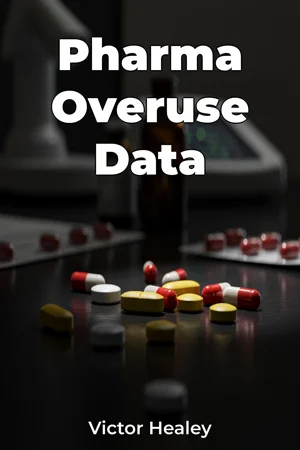
Are we medicating ourselves into a public health crisis? *Pharma Overuse Data* delves into the pervasive issues of overprescription and unnecessary medication consumption, offering a data-driven examination of trends, regulatory failures, and industry practices that fuel this growing concern. This book is vital because the overuse of pharmaceuticals not only jeopardizes individual health through adverse effects and drug interactions but also strains healthcare systems and contributes to antibiotic resistance, a threat to global health security. This book explores three core topics. First, it investigates the statistical trends in the prescription and consumption of commonly overused medications, such as opioids, antibiotics, and certain psychiatric drugs. Second, it analyzes the regulatory frameworks governing pharmaceutical prescription and marketing, identifying loopholes or inefficiencies that contribute to overuse. Third, it dissects the role of pharmaceutical industry practices, including marketing strategies and lobbying efforts, in shaping prescribing behaviors. Understanding the current state of pharmaceutical overuse requires acknowledging the historical context of drug development, regulatory evolution, and the changing landscape of healthcare delivery. The reader should have a basic understanding of how medications are approved and regulated, but no specialized medical knowledge is needed. The central argument of *Pharma Overuse Data* is that a confluence of regulatory shortcomings, aggressive industry practices, and insufficient oversight mechanisms have created a system that incentivizes and perpetuates the overuse of medications, with significant consequences for public health and economic stability. The book begins by introducing foundational concepts related to medication regulation, pharmaceutical marketing, and healthcare economics. It proceeds with three major sections: (1) analyzing the existing data regarding medication overuse trends using statistical analysis of national prescription databases and healthcare utilization records; (2) a critical evaluation of regulatory policies and enforcement mechanisms, drawing upon government reports and legal case studies, to reveal systemic weaknesses; and (3) an investigation into the impact of pharmaceutical marketing and lobbying on prescribing practices, utilizing industry reports, financial disclosures, and academic research. The concluding chapters synthesize these findings to propose evidence-based policy recommendations and practical strategies for mitigating medication overuse. The evidence presented in *Pharma Overuse Data* relies heavily on quantitative data from government agencies, such as the CDC and FDA, as well as industry reports and academic studies. Statistical analyses of prescription databases, claims data, and survey results are used to quantify the extent of medication overuse and identify at-risk populations. The book also incorporates qualitative insights from interviews with healthcare professionals, policymakers, and patients. This book connects to several interdisciplinary fields. Firstly, it is linked with public health by examining the health consequences of medication overuse and evaluating interventions to promote responsible medication use. Secondly, it engages with political science by analyzing the influence of lobbying and campaign contributions on pharmaceutical regulation. Thirdly, it connects with economics by assessing the costs associated with medication overuse and the economic incentives shaping prescribing behaviors. *Pharma Overuse Data* provides a unique perspective by combining rigorous statistical analysis with critical policy analysis and industry scrutiny. Its strength lies in its ability to translate complex data into actionable insights for policymakers, healthcare professionals, and the public. The tone is professional and accessible, using clear language and avoiding jargon whenever possible. The writing style is fact-based and analytical, presenting evidence in a logical and persuasive manner. The target audience includes healthcare professionals, policymakers, public health researchers, and informed citizens who are concerned about the impact of medication overuse on individual and societal well-being. The book would be valuable to them because it provides a comprehensive and data-driven analysis of an issue with significant public health and economic implications. As a work of public health and political science, *Pharma Overuse Data* adheres to the conventions of evidence-based analysis and objective reporting. It acknowledges the complexities of the issue and presents multiple perspectives while maintaining a commitment to rigorous data analysis and transparent methodology. The book's scope is limited to the United States, but the lessons learned from this analysis have implications for other countries facing similar challenges. While the book covers a broad range of medications, it focuses primarily on those that are most commonly overused or associated with significant risks. The information in this book can be applied practically by policymakers to develop more effective regulations, by healthcare professionals to improve prescribing practices, and by patients to make informed decisions about their medication use. The book also addresses ongoing debates about the role of the pharmaceutical industry in healthcare and offers recommendations for promoting greater transparency and accountability.
Are we medicating ourselves into a public health crisis? *Pharma Overuse Data* delves into the pervasive issues of overprescription and unnecessary medication consumption, offering a data-driven examination of trends, regulatory failures, and industry practices that fuel this growing concern. This book is vital because the overuse of pharmaceuticals not only jeopardizes individual health through adverse effects and drug interactions but also strains healthcare systems and contributes to antibiotic resistance, a threat to global health security. This book explores three core topics. First, it investigates the statistical trends in the prescription and consumption of commonly overused medications, such as opioids, antibiotics, and certain psychiatric drugs. Second, it analyzes the regulatory frameworks governing pharmaceutical prescription and marketing, identifying loopholes or inefficiencies that contribute to overuse. Third, it dissects the role of pharmaceutical industry practices, including marketing strategies and lobbying efforts, in shaping prescribing behaviors. Understanding the current state of pharmaceutical overuse requires acknowledging the historical context of drug development, regulatory evolution, and the changing landscape of healthcare delivery. The reader should have a basic understanding of how medications are approved and regulated, but no specialized medical knowledge is needed. The central argument of *Pharma Overuse Data* is that a confluence of regulatory shortcomings, aggressive industry practices, and insufficient oversight mechanisms have created a system that incentivizes and perpetuates the overuse of medications, with significant consequences for public health and economic stability. The book begins by introducing foundational concepts related to medication regulation, pharmaceutical marketing, and healthcare economics. It proceeds with three major sections: (1) analyzing the existing data regarding medication overuse trends using statistical analysis of national prescription databases and healthcare utilization records; (2) a critical evaluation of regulatory policies and enforcement mechanisms, drawing upon government reports and legal case studies, to reveal systemic weaknesses; and (3) an investigation into the impact of pharmaceutical marketing and lobbying on prescribing practices, utilizing industry reports, financial disclosures, and academic research. The concluding chapters synthesize these findings to propose evidence-based policy recommendations and practical strategies for mitigating medication overuse. The evidence presented in *Pharma Overuse Data* relies heavily on quantitative data from government agencies, such as the CDC and FDA, as well as industry reports and academic studies. Statistical analyses of prescription databases, claims data, and survey results are used to quantify the extent of medication overuse and identify at-risk populations. The book also incorporates qualitative insights from interviews with healthcare professionals, policymakers, and patients. This book connects to several interdisciplinary fields. Firstly, it is linked with public health by examining the health consequences of medication overuse and evaluating interventions to promote responsible medication use. Secondly, it engages with political science by analyzing the influence of lobbying and campaign contributions on pharmaceutical regulation. Thirdly, it connects with economics by assessing the costs associated with medication overuse and the economic incentives shaping prescribing behaviors. *Pharma Overuse Data* provides a unique perspective by combining rigorous statistical analysis with critical policy analysis and industry scrutiny. Its strength lies in its ability to translate complex data into actionable insights for policymakers, healthcare professionals, and the public. The tone is professional and accessible, using clear language and avoiding jargon whenever possible. The writing style is fact-based and analytical, presenting evidence in a logical and persuasive manner. The target audience includes healthcare professionals, policymakers, public health researchers, and informed citizens who are concerned about the impact of medication overuse on individual and societal well-being. The book would be valuable to them because it provides a comprehensive and data-driven analysis of an issue with significant public health and economic implications. As a work of public health and political science, *Pharma Overuse Data* adheres to the conventions of evidence-based analysis and objective reporting. It acknowledges the complexities of the issue and presents multiple perspectives while maintaining a commitment to rigorous data analysis and transparent methodology. The book's scope is limited to the United States, but the lessons learned from this analysis have implications for other countries facing similar challenges. While the book covers a broad range of medications, it focuses primarily on those that are most commonly overused or associated with significant risks. The information in this book can be applied practically by policymakers to develop more effective regulations, by healthcare professionals to improve prescribing practices, and by patients to make informed decisions about their medication use. The book also addresses ongoing debates about the role of the pharmaceutical industry in healthcare and offers recommendations for promoting greater transparency and accountability.
*Pharma Overuse Data* examines the critical issue of pharmaceutical overuse in the United States, a growing public health concern fueled by regulatory failures and aggressive industry practices. The book presents a data-driven analysis of trends in prescription and consumption of commonly overused medications, such as opioids and antibiotics, highlighting how this overuse jeopardizes individual health and strains healthcare systems. Notably, the rise in antibiotic resistance, a direct consequence of overuse, poses a significant threat to global health security. The book uniquely combines statistical analysis with policy examination to reveal systemic weaknesses in medication regulation and the impact of pharmaceutical marketing. It begins by establishing foundational concepts before analyzing data from prescription databases to reveal overuse trends. It then critically evaluates regulatory policies and investigates the impact of industry lobbying. By connecting public health, political science, and healthcare economics themes, it is valuable to policymakers, healthcare professionals, and informed citizens. Through its evidence-based approach, relying on data from government agencies and industry reports, *Pharma Overuse Data* offers actionable insights. The book progresses from foundational concepts to data analysis, policy evaluation, and industry scrutiny, concluding with evidence-based policy recommendations and practical strategies for mitigating medication overuse. This comprehensive examination offers a unique perspective on the intersection of public health and politics in the pharmaceutical landscape.
Book Details
ISBN
9788233994556
Publisher
Publifye AS
Your Licenses
You don't own any licenses for this book
Purchase a license below to unlock this book and download the EPUB.
Purchase License
Select a tier to unlock this book
Need bulk licensing?
Contact us for enterprise agreements.