
About This Book
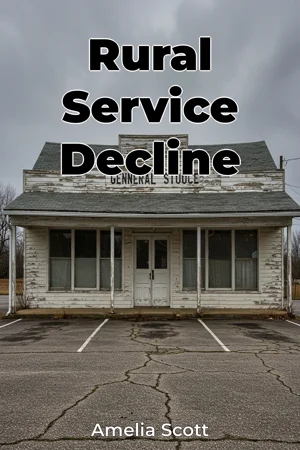
What happens when the lifeblood of a community slowly drains away, leaving behind a shell of what once was? "Rural Service Decline" examines the multifaceted erosion of public services and economic opportunities in rural areas, a phenomenon increasingly documented by demographic and regional studies but often overlooked in broader economic and political discourse. This book delves into the complex interplay of factors contributing to this decline, offering a comprehensive analysis of its causes, consequences, and potential solutions. This book hinges on three central themes: the contraction of essential public services like healthcare, education, and infrastructure; the stagnation or outright decline of economic opportunities, leading to out-migration and a shrinking tax base; and the demographic shifts, particularly aging populations and the loss of younger residents, that exacerbate these challenges. Understanding these dynamics is crucial for policymakers, community leaders, and anyone concerned about the future of rural America. We begin by establishing a historical context, tracing the evolution of rural communities from agricultural hubs to their present-day struggles. We examine the impact of globalization, technological advancements, and changing economic landscapes on rural areas, providing the reader with the necessary background to understand the current crisis. Our central argument is that the decline in rural services and economic opportunities is not simply a matter of market forces but a systemic issue rooted in policy choices, unequal resource allocation, and a lack of attention to the unique needs of rural communities. We contend that a concerted effort, involving both top-down policy interventions and bottom-up community initiatives, is necessary to reverse this trend and ensure the long-term viability of rural areas. The book is structured into three main sections. Part one provides a detailed overview of the key challenges facing rural areas, supported by statistical data and case studies. This section introduces concepts such as "spatial inequality" and "rural resilience," providing a framework for understanding the complexities of rural decline. Part two delves into the specific factors contributing to the decline, including government policies, market failures, and demographic shifts. We examine how these factors interact to create a downward spiral, making it increasingly difficult for rural communities to thrive. Part three focuses on potential solutions, exploring innovative approaches to service delivery, economic development, and community revitalization. We highlight successful examples from around the world to demonstrate that rural decline is not inevitable. Our analysis relies heavily on quantitative data from government sources, academic research, and regional studies. We also incorporate qualitative insights from interviews with residents, policymakers, and community leaders to provide a nuanced and human-centered perspective on the challenges facing rural areas. This book connects to several other fields of study, including sociology, geography, and urban planning. By drawing on insights from these disciplines, we offer a more holistic understanding of the issues at hand. For example, sociological research on social capital and community cohesion helps explain why some rural communities are more resilient than others. Geographical analysis of spatial patterns and regional disparities sheds light on the uneven distribution of resources and opportunities. What sets this book apart is its focus on the interconnectedness of public services, economic opportunities, and demographic trends. Rather than treating these as separate issues, we demonstrate how they are mutually reinforcing, creating a complex web of challenges that require a comprehensive and integrated approach. The tone is academic and data-driven, yet accessible to a broad audience. While grounded in rigorous research, the book avoids jargon and technical language, making it easy for readers to understand the key concepts and arguments. The target audience includes policymakers, academics, community leaders, and anyone interested in rural development and social justice. This book provides valuable insights for those seeking to understand the challenges facing rural areas and develop effective strategies for addressing them. It fits squarely within the genres of Politics and Economics, offering a data-supported analysis of policy and market impact. The scope of this book is limited to the United States, although we draw on international examples to illustrate potential solutions. We acknowledge that rural decline is a global phenomenon with unique manifestations in different countries. The information in this book can be applied practically by policymakers seeking to develop more effective rural development strategies, by community leaders seeking to build stronger and more resilient communities, and by researchers seeking to further our understanding of the challenges facing rural areas. The book directly addresses the ongoing debate about the role of government in supporting rural communities. Some argue that market forces should be allowed to operate freely, even if this leads to the decline of some areas. We contend that government intervention is necessary to ensure that all communities have access to essential services and opportunities.
What happens when the lifeblood of a community slowly drains away, leaving behind a shell of what once was? "Rural Service Decline" examines the multifaceted erosion of public services and economic opportunities in rural areas, a phenomenon increasingly documented by demographic and regional studies but often overlooked in broader economic and political discourse. This book delves into the complex interplay of factors contributing to this decline, offering a comprehensive analysis of its causes, consequences, and potential solutions. This book hinges on three central themes: the contraction of essential public services like healthcare, education, and infrastructure; the stagnation or outright decline of economic opportunities, leading to out-migration and a shrinking tax base; and the demographic shifts, particularly aging populations and the loss of younger residents, that exacerbate these challenges. Understanding these dynamics is crucial for policymakers, community leaders, and anyone concerned about the future of rural America. We begin by establishing a historical context, tracing the evolution of rural communities from agricultural hubs to their present-day struggles. We examine the impact of globalization, technological advancements, and changing economic landscapes on rural areas, providing the reader with the necessary background to understand the current crisis. Our central argument is that the decline in rural services and economic opportunities is not simply a matter of market forces but a systemic issue rooted in policy choices, unequal resource allocation, and a lack of attention to the unique needs of rural communities. We contend that a concerted effort, involving both top-down policy interventions and bottom-up community initiatives, is necessary to reverse this trend and ensure the long-term viability of rural areas. The book is structured into three main sections. Part one provides a detailed overview of the key challenges facing rural areas, supported by statistical data and case studies. This section introduces concepts such as "spatial inequality" and "rural resilience," providing a framework for understanding the complexities of rural decline. Part two delves into the specific factors contributing to the decline, including government policies, market failures, and demographic shifts. We examine how these factors interact to create a downward spiral, making it increasingly difficult for rural communities to thrive. Part three focuses on potential solutions, exploring innovative approaches to service delivery, economic development, and community revitalization. We highlight successful examples from around the world to demonstrate that rural decline is not inevitable. Our analysis relies heavily on quantitative data from government sources, academic research, and regional studies. We also incorporate qualitative insights from interviews with residents, policymakers, and community leaders to provide a nuanced and human-centered perspective on the challenges facing rural areas. This book connects to several other fields of study, including sociology, geography, and urban planning. By drawing on insights from these disciplines, we offer a more holistic understanding of the issues at hand. For example, sociological research on social capital and community cohesion helps explain why some rural communities are more resilient than others. Geographical analysis of spatial patterns and regional disparities sheds light on the uneven distribution of resources and opportunities. What sets this book apart is its focus on the interconnectedness of public services, economic opportunities, and demographic trends. Rather than treating these as separate issues, we demonstrate how they are mutually reinforcing, creating a complex web of challenges that require a comprehensive and integrated approach. The tone is academic and data-driven, yet accessible to a broad audience. While grounded in rigorous research, the book avoids jargon and technical language, making it easy for readers to understand the key concepts and arguments. The target audience includes policymakers, academics, community leaders, and anyone interested in rural development and social justice. This book provides valuable insights for those seeking to understand the challenges facing rural areas and develop effective strategies for addressing them. It fits squarely within the genres of Politics and Economics, offering a data-supported analysis of policy and market impact. The scope of this book is limited to the United States, although we draw on international examples to illustrate potential solutions. We acknowledge that rural decline is a global phenomenon with unique manifestations in different countries. The information in this book can be applied practically by policymakers seeking to develop more effective rural development strategies, by community leaders seeking to build stronger and more resilient communities, and by researchers seeking to further our understanding of the challenges facing rural areas. The book directly addresses the ongoing debate about the role of government in supporting rural communities. Some argue that market forces should be allowed to operate freely, even if this leads to the decline of some areas. We contend that government intervention is necessary to ensure that all communities have access to essential services and opportunities.
"Rural Service Decline" examines the critical erosion of public services and economic opportunities in rural communities, issues often overshadowed in broader political and economic discussions. The book argues that this decline stems from policy choices and unequal resource allocation, not merely market forces. It begins by establishing a historical context, tracing rural communities' evolution amid globalization and technological advancements, before diving into the present crisis. The book highlights concerning facts such as the contraction of essential services like healthcare and education, leading to demographic shifts like aging populations, and the loss of younger residents. The analysis uses quantitative data and qualitative insights to provide a nuanced perspective. Organized into three parts, the book first overviews key challenges, then delves into contributing factors like government policies and market failures, and finally explores potential solutions, including innovative service delivery and community revitalization. What sets this book apart is its focus on the interconnectedness of public services, economic opportunities, and demographic trends, creating complex challenges needing a comprehensive approach. The goal is to spur both top-down policy interventions and bottom-up community initiatives to reverse this trend, ensuring the long-term viability and community resilience of rural areas.
Book Details
ISBN
9788233994518
Publisher
Publifye AS
Your Licenses
You don't own any licenses for this book
Purchase a license below to unlock this book and download the EPUB.
Purchase License
Select a tier to unlock this book
Need bulk licensing?
Contact us for enterprise agreements.