
About This Book
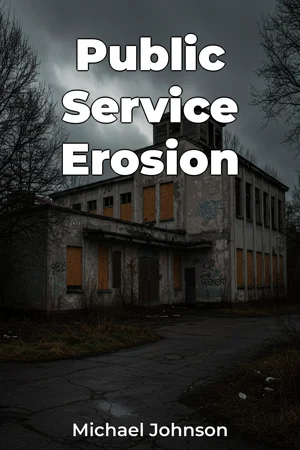
Are our public services, once bastions of reliability and societal support, quietly slipping into decay? "Public Service Erosion" delves into the multifaceted decline in both the quality and the accessibility of public services, a phenomenon impacting communities worldwide. This book examines not just the symptoms of this erosion – longer wait times, reduced service offerings, and increased user fees – but, more importantly, the root causes and potential pathways to restoration. We will explore the intricate relationship between governance structures, public administration practices, and the delivery of essential services to citizens. Understanding this erosion is critical, as effective public services are fundamental to social equity, economic stability, and overall societal well-being. The book is structured around three core themes: the changing landscape of governance, the evolution of public administration, and the consequential impact on service delivery. We begin by analyzing how shifts in political ideologies, budgetary constraints, and privatization initiatives have reshaped the governance of public services. Following that, we investigate the transformation of public administration itself, from traditional bureaucratic models to newer, often market-driven approaches. We will examine how these changes affect workforce capacity, organizational culture, and the ability of public agencies to effectively meet citizen needs. Finally, and most crucially, we analyze a wide array of impacts on service delivery. The central argument of "Public Service Erosion" is this: the decline in public service quality and availability is not merely a matter of inefficiency or mismanagement, but a systemic consequence of deliberate policy choices and evolving philosophies of governance. The book argues that a sustained commitment to evidence-based policy, coupled with thoughtful public administration, is essential to reverse this erosion and ensure equitable access to essential services for all citizens. This argument is vital because it challenges the prevailing narrative that often blames public sector employees or simply accepts decline as inevitable. The book's structure begins with an introduction to the core concepts of public service, governance, and administration. It then develops the argument through three major sections. The first examines the impact of neoliberal policies on public sector funding and organizational structures. The second analyzes the changing roles and responsibilities of public servants in an era of increasing privatization and outsourcing, and the third presents case studies from various countries and sectors, illustrating the real-world consequences of public service decline. The culmination of the argument emphasizes the need for a renewed commitment to public service values and principles. The practical applications and implications discussed include policy recommendations for restoring public trust, improving service delivery, and strengthening democratic governance. The book draws on a diverse range of evidence, including quantitative data on public spending and service performance, qualitative case studies of successful and unsuccessful reforms, and surveys of public sector employees and service users. It also utilizes comparative analysis to identify best practices and lessons learned from different countries and contexts. "Public Service Erosion" connects to several other fields of study, including political science (through its analysis of governance structures), economics (through its examination of public finance and market-based reforms), and sociology (through its exploration of social equity and access to services). These interdisciplinary connections enhance the book's argument by providing a more comprehensive understanding of the complex factors driving public service decline. The book offers a nuanced perspective, moving beyond simplistic narratives of government inefficiency to explore the deeper systemic issues at play. Its tone is academic yet accessible, aiming to inform and engage a broad audience. The target audience includes academics and students in public administration, political science, and related fields, as well as policymakers, public sector managers, and concerned citizens interested in understanding and addressing the challenges facing public services. As a work of non-fiction in the areas of Current Events and Politics, "Public Service Erosion" adheres to standards of accuracy, objectivity, and evidence-based reasoning. It presents diverse perspectives on the issues discussed, while clearly articulating the author's own position and supporting it with rigorous analysis. The book's scope is intentionally broad, covering a wide range of public services and countries, but it also acknowledges its limitations. It does not attempt to provide a comprehensive solution to all of the problems facing public services, but rather to offer a framework for understanding the challenges and identifying potential pathways to improvement. The information in "Public Service Erosion" can be applied practically by policymakers seeking to design more effective and equitable public service systems, by public sector managers seeking to improve organizational performance, and by citizens seeking to advocate for better services in their communities. Finally, the book addresses ongoing debates surrounding the role of government, the merits of privatization, and the appropriate balance between efficiency and equity in public service delivery. It seeks to contribute to a more informed and constructive dialogue about the future of public services in the 21st century.
Are our public services, once bastions of reliability and societal support, quietly slipping into decay? "Public Service Erosion" delves into the multifaceted decline in both the quality and the accessibility of public services, a phenomenon impacting communities worldwide. This book examines not just the symptoms of this erosion – longer wait times, reduced service offerings, and increased user fees – but, more importantly, the root causes and potential pathways to restoration. We will explore the intricate relationship between governance structures, public administration practices, and the delivery of essential services to citizens. Understanding this erosion is critical, as effective public services are fundamental to social equity, economic stability, and overall societal well-being. The book is structured around three core themes: the changing landscape of governance, the evolution of public administration, and the consequential impact on service delivery. We begin by analyzing how shifts in political ideologies, budgetary constraints, and privatization initiatives have reshaped the governance of public services. Following that, we investigate the transformation of public administration itself, from traditional bureaucratic models to newer, often market-driven approaches. We will examine how these changes affect workforce capacity, organizational culture, and the ability of public agencies to effectively meet citizen needs. Finally, and most crucially, we analyze a wide array of impacts on service delivery. The central argument of "Public Service Erosion" is this: the decline in public service quality and availability is not merely a matter of inefficiency or mismanagement, but a systemic consequence of deliberate policy choices and evolving philosophies of governance. The book argues that a sustained commitment to evidence-based policy, coupled with thoughtful public administration, is essential to reverse this erosion and ensure equitable access to essential services for all citizens. This argument is vital because it challenges the prevailing narrative that often blames public sector employees or simply accepts decline as inevitable. The book's structure begins with an introduction to the core concepts of public service, governance, and administration. It then develops the argument through three major sections. The first examines the impact of neoliberal policies on public sector funding and organizational structures. The second analyzes the changing roles and responsibilities of public servants in an era of increasing privatization and outsourcing, and the third presents case studies from various countries and sectors, illustrating the real-world consequences of public service decline. The culmination of the argument emphasizes the need for a renewed commitment to public service values and principles. The practical applications and implications discussed include policy recommendations for restoring public trust, improving service delivery, and strengthening democratic governance. The book draws on a diverse range of evidence, including quantitative data on public spending and service performance, qualitative case studies of successful and unsuccessful reforms, and surveys of public sector employees and service users. It also utilizes comparative analysis to identify best practices and lessons learned from different countries and contexts. "Public Service Erosion" connects to several other fields of study, including political science (through its analysis of governance structures), economics (through its examination of public finance and market-based reforms), and sociology (through its exploration of social equity and access to services). These interdisciplinary connections enhance the book's argument by providing a more comprehensive understanding of the complex factors driving public service decline. The book offers a nuanced perspective, moving beyond simplistic narratives of government inefficiency to explore the deeper systemic issues at play. Its tone is academic yet accessible, aiming to inform and engage a broad audience. The target audience includes academics and students in public administration, political science, and related fields, as well as policymakers, public sector managers, and concerned citizens interested in understanding and addressing the challenges facing public services. As a work of non-fiction in the areas of Current Events and Politics, "Public Service Erosion" adheres to standards of accuracy, objectivity, and evidence-based reasoning. It presents diverse perspectives on the issues discussed, while clearly articulating the author's own position and supporting it with rigorous analysis. The book's scope is intentionally broad, covering a wide range of public services and countries, but it also acknowledges its limitations. It does not attempt to provide a comprehensive solution to all of the problems facing public services, but rather to offer a framework for understanding the challenges and identifying potential pathways to improvement. The information in "Public Service Erosion" can be applied practically by policymakers seeking to design more effective and equitable public service systems, by public sector managers seeking to improve organizational performance, and by citizens seeking to advocate for better services in their communities. Finally, the book addresses ongoing debates surrounding the role of government, the merits of privatization, and the appropriate balance between efficiency and equity in public service delivery. It seeks to contribute to a more informed and constructive dialogue about the future of public services in the 21st century.
"Public Service Erosion" examines the decline in quality and accessibility of public services globally, attributing it to deliberate policy choices rather than simple mismanagement. It highlights the impact of neoliberal policies, privatization, and outsourcing on governance and public administration. The book argues that this erosion isn't inevitable and can be reversed through evidence-based policy and thoughtful public administration, ensuring equitable access for all citizens. The book explores how shifts in political ideologies and budgetary constraints have reshaped public service governance. One critical insight is the transformation of public administration from traditional models to market-driven approaches, affecting workforce capacity and the ability to meet citizen needs. Did you know that studies show countries that prioritize public service investments often see stronger social and economic outcomes? The book presents case studies from various countries to illustrate the real-world consequences of this decline. Beginning with core concepts, the book progresses through the impact of neoliberal policies, the changing roles of public servants, and case studies. It concludes by emphasizing a renewed commitment to public service values and offers policy recommendations to improve service delivery and strengthen democratic governance. This approach provides a comprehensive understanding of the challenges and potential pathways to improvement.
Book Details
ISBN
9788233994440
Publisher
Publifye AS
Your Licenses
You don't own any licenses for this book
Purchase a license below to unlock this book and download the EPUB.
Purchase License
Select a tier to unlock this book
Need bulk licensing?
Contact us for enterprise agreements.