
About This Book
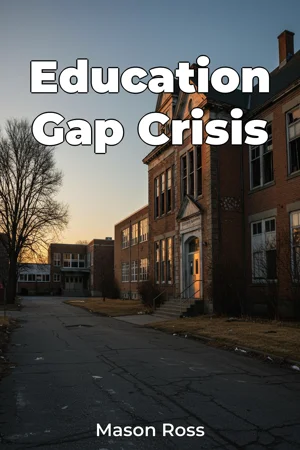
Why do opportunities for educational advancement remain unevenly distributed across societies, hindering both individual potential and collective progress? "Education Gap Crisis" delves into the heart of this critical question, examining the pervasive disparities in educational quality and access that continue to plague communities worldwide. This book focuses on two primary areas: the systemic inequalities embedded within educational systems and the socio-economic factors that perpetuate these disparities, impacting student outcomes and societal well-being. Understanding the education gap requires a comprehensive review of historical policies, funding models, and cultural influences that shape learning environments. This book provides that context, tracing the evolution of educational inequality from segregation-era policies to contemporary challenges posed by unequal resource allocation and biased curricula. It assumes a foundational understanding of basic sociological and economic principles to fully grasp the complexities discussed. The central argument of "Education Gap Crisis" is that persistent educational disparities are not merely the result of individual shortcomings or isolated incidents, but rather stem from deeply entrenched systemic failures and societal biases. Addressing this crisis requires a multi-faceted approach that targets not only educational institutions but also the broader social and economic landscapes in which they operate. This argument is important because it challenges simplistic narratives of individual responsibility and calls for systemic reform. The book is structured to provide a thorough examination of the crisis. First, it introduces the core concepts of educational inequality, defining key terms and outlining the scope of the problem. Second, it develops a detailed analysis of specific factors contributing to the gap, including school funding disparities, teacher quality variations, access to resources, and the impact of poverty and racial bias. This section is divided into chapters that address each of these factors in depth, supported by comparative studies and demographic data. Third, the book examines the long-term consequences of educational disparities, such as reduced economic mobility, increased social division, and diminished civic engagement. Finally, it culminates in a presentation of evidence-based strategies for closing the education gap, including policy recommendations, innovative educational programs, and community-based initiatives. The evidence presented throughout the book draws from a wide range of sources, including large-scale quantitative datasets from national and international assessments, qualitative case studies of schools and communities, and policy analysis from leading educational researchers. Unique data sources, such as longitudinal studies tracking the educational trajectories of students from diverse backgrounds, are also used to illustrate the persistent effects of inequality. "Education Gap Crisis" connects to several other fields of study, including sociology, economics, and political science. By drawing on sociological theories of social stratification, economic models of human capital development, and political analyses of educational policy, the book provides a comprehensive perspective on the education gap. These interdisciplinary connections enhance the book's argument by demonstrating the complex interplay of factors that contribute to educational inequality. One innovative aspect of this book is its focus on intersectionality, examining how various forms of social inequality (e.g., race, class, gender, disability) intersect to shape educational opportunities and outcomes. By adopting this perspective, the book offers a nuanced understanding of the diverse experiences of students from marginalized backgrounds. The book adopts an academic tone, presenting information in a clear, concise, and objective manner. While grounded in rigorous research, it avoids excessive jargon and strives to be accessible to a broad audience. The target audience includes educators, policymakers, researchers, and anyone interested in understanding and addressing educational inequality. This book would be valuable to them because it provides a comprehensive overview of the problem, a rigorous analysis of its causes, and practical strategies for addressing it. As an academic work in the social sciences, the book adheres to established conventions of scholarly research, including clear citations, rigorous methodology, and objective analysis. It avoids advocacy or polemics, focusing instead on presenting evidence-based arguments. The scope of the book is broad, covering educational disparities in a global context. However, it focuses primarily on the experiences of developed countries, particularly the United States. It acknowledges that the specific forms of educational inequality may vary across different contexts, and encourages further research to explore these variations. The information presented in the book can be applied in various ways. Educators can use it to inform their teaching practices and advocate for more equitable school policies. Policymakers can use it to develop and implement evidence-based reforms. Researchers can use it as a starting point for further investigation. The book addresses ongoing debates in the field of education, such as the role of standardized testing, the effectiveness of charter schools, and the impact of school choice policies. It presents different perspectives on these issues, weighing the evidence and offering reasoned conclusions.
Why do opportunities for educational advancement remain unevenly distributed across societies, hindering both individual potential and collective progress? "Education Gap Crisis" delves into the heart of this critical question, examining the pervasive disparities in educational quality and access that continue to plague communities worldwide. This book focuses on two primary areas: the systemic inequalities embedded within educational systems and the socio-economic factors that perpetuate these disparities, impacting student outcomes and societal well-being. Understanding the education gap requires a comprehensive review of historical policies, funding models, and cultural influences that shape learning environments. This book provides that context, tracing the evolution of educational inequality from segregation-era policies to contemporary challenges posed by unequal resource allocation and biased curricula. It assumes a foundational understanding of basic sociological and economic principles to fully grasp the complexities discussed. The central argument of "Education Gap Crisis" is that persistent educational disparities are not merely the result of individual shortcomings or isolated incidents, but rather stem from deeply entrenched systemic failures and societal biases. Addressing this crisis requires a multi-faceted approach that targets not only educational institutions but also the broader social and economic landscapes in which they operate. This argument is important because it challenges simplistic narratives of individual responsibility and calls for systemic reform. The book is structured to provide a thorough examination of the crisis. First, it introduces the core concepts of educational inequality, defining key terms and outlining the scope of the problem. Second, it develops a detailed analysis of specific factors contributing to the gap, including school funding disparities, teacher quality variations, access to resources, and the impact of poverty and racial bias. This section is divided into chapters that address each of these factors in depth, supported by comparative studies and demographic data. Third, the book examines the long-term consequences of educational disparities, such as reduced economic mobility, increased social division, and diminished civic engagement. Finally, it culminates in a presentation of evidence-based strategies for closing the education gap, including policy recommendations, innovative educational programs, and community-based initiatives. The evidence presented throughout the book draws from a wide range of sources, including large-scale quantitative datasets from national and international assessments, qualitative case studies of schools and communities, and policy analysis from leading educational researchers. Unique data sources, such as longitudinal studies tracking the educational trajectories of students from diverse backgrounds, are also used to illustrate the persistent effects of inequality. "Education Gap Crisis" connects to several other fields of study, including sociology, economics, and political science. By drawing on sociological theories of social stratification, economic models of human capital development, and political analyses of educational policy, the book provides a comprehensive perspective on the education gap. These interdisciplinary connections enhance the book's argument by demonstrating the complex interplay of factors that contribute to educational inequality. One innovative aspect of this book is its focus on intersectionality, examining how various forms of social inequality (e.g., race, class, gender, disability) intersect to shape educational opportunities and outcomes. By adopting this perspective, the book offers a nuanced understanding of the diverse experiences of students from marginalized backgrounds. The book adopts an academic tone, presenting information in a clear, concise, and objective manner. While grounded in rigorous research, it avoids excessive jargon and strives to be accessible to a broad audience. The target audience includes educators, policymakers, researchers, and anyone interested in understanding and addressing educational inequality. This book would be valuable to them because it provides a comprehensive overview of the problem, a rigorous analysis of its causes, and practical strategies for addressing it. As an academic work in the social sciences, the book adheres to established conventions of scholarly research, including clear citations, rigorous methodology, and objective analysis. It avoids advocacy or polemics, focusing instead on presenting evidence-based arguments. The scope of the book is broad, covering educational disparities in a global context. However, it focuses primarily on the experiences of developed countries, particularly the United States. It acknowledges that the specific forms of educational inequality may vary across different contexts, and encourages further research to explore these variations. The information presented in the book can be applied in various ways. Educators can use it to inform their teaching practices and advocate for more equitable school policies. Policymakers can use it to develop and implement evidence-based reforms. Researchers can use it as a starting point for further investigation. The book addresses ongoing debates in the field of education, such as the role of standardized testing, the effectiveness of charter schools, and the impact of school choice policies. It presents different perspectives on these issues, weighing the evidence and offering reasoned conclusions.
"Education Gap Crisis" examines the pervasive educational disparities that hinder individual potential and societal progress. It tackles systemic inequalities and socio-economic factors perpetuating these disparities, impacting student outcomes and overall well-being. The book highlights how historical policies, funding models, and cultural influences shape learning environments, tracing inequality from segregation-era policies to modern challenges like unequal resource allocation and biased curricula. For example, the book explores how disparities in school funding directly correlate with variations in teacher quality, ultimately affecting student achievement. The book progresses by first defining educational inequality, then analyzing specific contributing factors like school funding, teacher quality, resources, poverty, and racial bias, supported by comparative studies and demographic data. It then examines the long-term consequences, such as reduced economic mobility and increased social division. Finally, it presents evidence-based strategies, policy recommendations, and innovative programs for closing the gap. A unique aspect is its focus on intersectionality, examining how race, class, gender, and disability intersect to shape educational opportunities. The book challenges simplistic narratives of individual responsibility and calls for systemic reform, offering valuable insights for educators, policymakers, and researchers.
Book Details
ISBN
9788233994433
Publisher
Publifye AS
Your Licenses
You don't own any licenses for this book
Purchase a license below to unlock this book and download the EPUB.
Purchase License
Select a tier to unlock this book
Need bulk licensing?
Contact us for enterprise agreements.