
About This Book
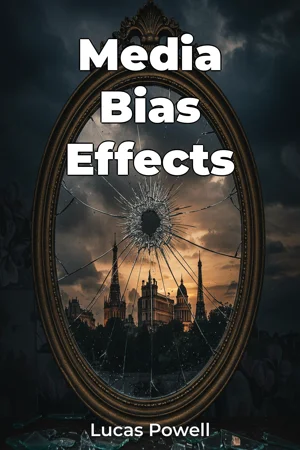
In an era defined by instant information and fragmented narratives, how can citizens discern truth from manipulation in the media landscape? "Media Bias Effects" delves into the pervasive influence of biased media narratives on public opinion and trust in democratic institutions, presenting a comprehensive analysis of how these distortions materialize and their real-world consequences. The book's core focus revolves around understanding the mechanics of media bias, its impact on public perception, and the resulting erosion of trust in traditional sources of information. These topics are critical because a misinformed public cannot effectively participate in civic duties, leading to polarization and instability. We begin by establishing a foundational understanding of media bias, examining diverse forms such as framing, agenda-setting, and source selection. Essential concepts from communication studies, including social constructionism and cultivation theory, provide the framework for understanding how media shapes individual and collective perceptions of reality. Historical context is provided to illustrate the evolution of media bias over time, from overtly partisan newspapers to the subtle algorithmic biases of modern social media platforms. The central argument posits that systematic biases in media narratives, whether intentional or unintentional, significantly distort public understanding of critical issues, fostering distrust and hindering constructive dialogue. This argument is vital because it challenges the assumption of media objectivity and underscores the need for critical media literacy among citizens. The book unfolds in three major sections. The first section provides a comprehensive overview of the theoretical frameworks for understanding media bias, drawing on communication studies, political science, and sociology. The second section analyzes specific case studies of biased reporting on issues such as climate change, immigration, and elections, utilizing quantitative survey data and qualitative content analysis to demonstrate the effects on public opinion. The third section explores the practical implications of media bias, offering strategies for promoting media literacy and fostering more balanced and informed public discourse. The evidence presented throughout the book relies on a combination of quantitative survey data, content analysis of news articles and social media posts, and qualitative interviews with journalists and media consumers. A unique aspect of the research involves analyzing large-scale datasets of news articles to identify patterns of bias in language and framing. "Media Bias Effects" bridges several disciplines, connecting communication studies with political science to examine the impact of media bias on political attitudes and behavior. It also draws from sociology to understand how media narratives shape social identities and group dynamics. Furthermore, the book connects to the field of education by advocating for enhanced media literacy programs. What sets this book apart is its integrated approach, combining theoretical analysis with empirical evidence and practical recommendations. It moves beyond simply identifying bias to exploring its underlying mechanisms and offering concrete strategies for mitigating its effects. Written in a clear and accessible style, the book is aimed at a broad audience, including students, scholars, journalists, policymakers, and concerned citizens. It will be particularly valuable to those seeking a deeper understanding of the media's role in shaping public opinion and its implications for democratic governance. The genre fits squarely within 'Current Events' and 'Journalism,' adhering to fact-based analysis and rigorous sourcing expected of these fields. The book deliberately focuses on mainstream media and social media platforms, excluding fringe or explicitly propagandistic outlets. This scope limitation allows for a more targeted and nuanced analysis of the subtle biases that permeate everyday news consumption. Readers will gain practical insights into how to critically evaluate media sources, identify bias in reporting, and engage in more informed discussions about important social and political issues. They will also learn strategies for promoting media literacy in their communities and advocating for more transparent and accountable media practices. The book also addresses ongoing debates about the role of social media algorithms in amplifying bias and the effectiveness of fact-checking initiatives in combating misinformation. By examining these controversies, "Media Bias Effects" provides a balanced and nuanced perspective on the challenges and opportunities of navigating the modern media landscape.
In an era defined by instant information and fragmented narratives, how can citizens discern truth from manipulation in the media landscape? "Media Bias Effects" delves into the pervasive influence of biased media narratives on public opinion and trust in democratic institutions, presenting a comprehensive analysis of how these distortions materialize and their real-world consequences. The book's core focus revolves around understanding the mechanics of media bias, its impact on public perception, and the resulting erosion of trust in traditional sources of information. These topics are critical because a misinformed public cannot effectively participate in civic duties, leading to polarization and instability. We begin by establishing a foundational understanding of media bias, examining diverse forms such as framing, agenda-setting, and source selection. Essential concepts from communication studies, including social constructionism and cultivation theory, provide the framework for understanding how media shapes individual and collective perceptions of reality. Historical context is provided to illustrate the evolution of media bias over time, from overtly partisan newspapers to the subtle algorithmic biases of modern social media platforms. The central argument posits that systematic biases in media narratives, whether intentional or unintentional, significantly distort public understanding of critical issues, fostering distrust and hindering constructive dialogue. This argument is vital because it challenges the assumption of media objectivity and underscores the need for critical media literacy among citizens. The book unfolds in three major sections. The first section provides a comprehensive overview of the theoretical frameworks for understanding media bias, drawing on communication studies, political science, and sociology. The second section analyzes specific case studies of biased reporting on issues such as climate change, immigration, and elections, utilizing quantitative survey data and qualitative content analysis to demonstrate the effects on public opinion. The third section explores the practical implications of media bias, offering strategies for promoting media literacy and fostering more balanced and informed public discourse. The evidence presented throughout the book relies on a combination of quantitative survey data, content analysis of news articles and social media posts, and qualitative interviews with journalists and media consumers. A unique aspect of the research involves analyzing large-scale datasets of news articles to identify patterns of bias in language and framing. "Media Bias Effects" bridges several disciplines, connecting communication studies with political science to examine the impact of media bias on political attitudes and behavior. It also draws from sociology to understand how media narratives shape social identities and group dynamics. Furthermore, the book connects to the field of education by advocating for enhanced media literacy programs. What sets this book apart is its integrated approach, combining theoretical analysis with empirical evidence and practical recommendations. It moves beyond simply identifying bias to exploring its underlying mechanisms and offering concrete strategies for mitigating its effects. Written in a clear and accessible style, the book is aimed at a broad audience, including students, scholars, journalists, policymakers, and concerned citizens. It will be particularly valuable to those seeking a deeper understanding of the media's role in shaping public opinion and its implications for democratic governance. The genre fits squarely within 'Current Events' and 'Journalism,' adhering to fact-based analysis and rigorous sourcing expected of these fields. The book deliberately focuses on mainstream media and social media platforms, excluding fringe or explicitly propagandistic outlets. This scope limitation allows for a more targeted and nuanced analysis of the subtle biases that permeate everyday news consumption. Readers will gain practical insights into how to critically evaluate media sources, identify bias in reporting, and engage in more informed discussions about important social and political issues. They will also learn strategies for promoting media literacy in their communities and advocating for more transparent and accountable media practices. The book also addresses ongoing debates about the role of social media algorithms in amplifying bias and the effectiveness of fact-checking initiatives in combating misinformation. By examining these controversies, "Media Bias Effects" provides a balanced and nuanced perspective on the challenges and opportunities of navigating the modern media landscape.
"Media Bias Effects" explores how media bias shapes public opinion and impacts trust in democratic institutions. It examines different forms of bias, such as framing and agenda-setting, revealing how these distortions influence our understanding of critical issues. For example, the book analyzes how biased reporting on climate change can affect public perception. This is especially relevant today, as misinformation spreads rapidly through social media and erodes faith in traditional news sources. The book's approach is unique, combining theoretical analysis with empirical evidence. It progresses by first establishing a foundation of understanding media bias, then analyzing specific cases of biased reporting, and finally exploring practical implications and solutions. By connecting communication studies with political science and sociology, "Media Bias Effects" offers a comprehensive view of how media narratives shape social identities and political attitudes. Ultimately, it aims to equip readers with the tools to critically evaluate media sources and engage in more informed discussions.
Book Details
ISBN
9788233994341
Publisher
Publifye AS
Your Licenses
You don't own any licenses for this book
Purchase a license below to unlock this book and download the EPUB.
Purchase License
Select a tier to unlock this book
Need bulk licensing?
Contact us for enterprise agreements.