
About This Book
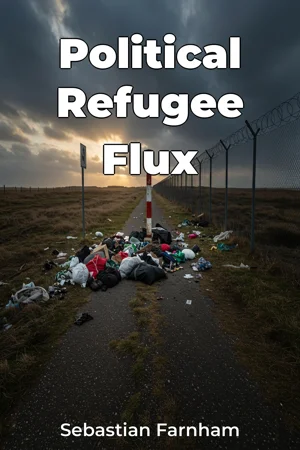
Why do individuals and groups abandon their homes, their cultures, and their very nations, risking everything for an uncertain future in foreign lands? "Political Refugee Flux" delves into the complex and multifaceted phenomenon of political asylum and refugee movements, driven by persecution, conflict, and systemic injustices. This book examines not just the symptoms of displacement, but the underlying political, social, and historical forces that propel it across the globe. This work explores three key thematic areas. First, we analyze the root causes of refugee crises, focusing on state-sponsored violence, political instability, and the erosion of human rights. Second, we investigate the journeys and experiences of refugees themselves, from the desperate decisions to flee to the challenges of integration and the preservation of identity in new environments. Third, we critically examine the international legal and policy frameworks designed to protect refugees, assessing their effectiveness and the persistent gaps in their implementation. These topics are vital because forced migration challenges the very foundations of national sovereignty, international cooperation, and human empathy. Understanding refugee dynamics requires navigating a complex web of historical factors, including colonialism, Cold War proxy conflicts, and the rise of nationalism, as well as contemporary issues like climate change and global economic inequality. Readers should have a basic understanding of world history, international relations, and human rights principles. The central argument of "Political Refugee Flux" is that refugee movements are not merely humanitarian crises, but rather symptoms of deeper systemic failures within the international political order. By exposing these failures and analyzing the lived experiences of refugees, this book aims to challenge conventional narratives and advocate for more just and effective policies. The book begins by defining key terms and establishing a theoretical framework for understanding political asylum and refugee flows. It then proceeds through a chronological and geographical exploration of major refugee crises, beginning with post-World War II displacement and continuing through contemporary movements triggered by conflicts in the Middle East, Africa, and Latin America. We then explore the evolution of international refugee law, analyzing the 1951 Refugee Convention and its subsequent protocols, as well as the roles of key international organizations like the UNHCR. The book culminates in a discussion of potential solutions, including improved conflict resolution mechanisms, enhanced international cooperation, and more humane and effective integration policies. The analysis will be supported by a wide range of evidence, including statistical data from international organizations, legal documents, policy reports, and first-hand accounts from refugees themselves. This book draws upon archival research from various international policy reports and governmental publications. This book connects to fields such as human rights law, international relations, and development studies. Understanding the legal frameworks governing refugee status links to human rights law. Analyzing the political causes and consequences of refugee flows intersect with international relations. Finally, studying the socio-economic impacts of displacement connects to the field of development studies. "Political Refugee Flux" offers a unique perspective by integrating macro-level political analysis with micro-level accounts of individual refugee experiences. This approach allows for a more nuanced and comprehensive understanding of the complexities of forced migration. The book adopts an academic yet accessible tone, balancing rigorous analysis with compelling storytelling. Data is presented clearly and concisely, and complex legal and political concepts are explained in plain language. The target audience includes students and scholars of political science, international relations, history, and law, as well as policymakers, journalists, and anyone interested in understanding one of the most pressing global challenges of our time. It's particularly valuable for those seeking a deeper understanding of international policy and its true impact. As a work of non-fiction within the genres of History World, World History, and Politics, "Political Refugee Flux" adheres to the conventions of academic rigor, factual accuracy, and balanced presentation of different viewpoints. It is expected to present well-researched information, documented sources, and logical arguments. While the book aims to provide a comprehensive overview of global refugee movements, it cannot cover every single crisis in exhaustive detail. The focus is on providing a framework for understanding the underlying causes and dynamics of forced migration, rather than offering a complete encyclopedic account. The insights presented within "Political Refugee Flux" can be applied to a variety of real-world contexts. Policymakers can use the analysis to develop more effective refugee policies. Humanitarian organizations can use the insights to improve their response strategies. And individuals can use the information to become more informed and engaged citizens. The book addresses ongoing debates surrounding issues such as the responsibility of states to protect refugees, the effectiveness of border control measures, and the integration challenges faced by refugees in host countries. These discussions are approached with nuance and the consideration of different perspectives, contributing to a more informed and productive dialogue on this complex issue.
Why do individuals and groups abandon their homes, their cultures, and their very nations, risking everything for an uncertain future in foreign lands? "Political Refugee Flux" delves into the complex and multifaceted phenomenon of political asylum and refugee movements, driven by persecution, conflict, and systemic injustices. This book examines not just the symptoms of displacement, but the underlying political, social, and historical forces that propel it across the globe. This work explores three key thematic areas. First, we analyze the root causes of refugee crises, focusing on state-sponsored violence, political instability, and the erosion of human rights. Second, we investigate the journeys and experiences of refugees themselves, from the desperate decisions to flee to the challenges of integration and the preservation of identity in new environments. Third, we critically examine the international legal and policy frameworks designed to protect refugees, assessing their effectiveness and the persistent gaps in their implementation. These topics are vital because forced migration challenges the very foundations of national sovereignty, international cooperation, and human empathy. Understanding refugee dynamics requires navigating a complex web of historical factors, including colonialism, Cold War proxy conflicts, and the rise of nationalism, as well as contemporary issues like climate change and global economic inequality. Readers should have a basic understanding of world history, international relations, and human rights principles. The central argument of "Political Refugee Flux" is that refugee movements are not merely humanitarian crises, but rather symptoms of deeper systemic failures within the international political order. By exposing these failures and analyzing the lived experiences of refugees, this book aims to challenge conventional narratives and advocate for more just and effective policies. The book begins by defining key terms and establishing a theoretical framework for understanding political asylum and refugee flows. It then proceeds through a chronological and geographical exploration of major refugee crises, beginning with post-World War II displacement and continuing through contemporary movements triggered by conflicts in the Middle East, Africa, and Latin America. We then explore the evolution of international refugee law, analyzing the 1951 Refugee Convention and its subsequent protocols, as well as the roles of key international organizations like the UNHCR. The book culminates in a discussion of potential solutions, including improved conflict resolution mechanisms, enhanced international cooperation, and more humane and effective integration policies. The analysis will be supported by a wide range of evidence, including statistical data from international organizations, legal documents, policy reports, and first-hand accounts from refugees themselves. This book draws upon archival research from various international policy reports and governmental publications. This book connects to fields such as human rights law, international relations, and development studies. Understanding the legal frameworks governing refugee status links to human rights law. Analyzing the political causes and consequences of refugee flows intersect with international relations. Finally, studying the socio-economic impacts of displacement connects to the field of development studies. "Political Refugee Flux" offers a unique perspective by integrating macro-level political analysis with micro-level accounts of individual refugee experiences. This approach allows for a more nuanced and comprehensive understanding of the complexities of forced migration. The book adopts an academic yet accessible tone, balancing rigorous analysis with compelling storytelling. Data is presented clearly and concisely, and complex legal and political concepts are explained in plain language. The target audience includes students and scholars of political science, international relations, history, and law, as well as policymakers, journalists, and anyone interested in understanding one of the most pressing global challenges of our time. It's particularly valuable for those seeking a deeper understanding of international policy and its true impact. As a work of non-fiction within the genres of History World, World History, and Politics, "Political Refugee Flux" adheres to the conventions of academic rigor, factual accuracy, and balanced presentation of different viewpoints. It is expected to present well-researched information, documented sources, and logical arguments. While the book aims to provide a comprehensive overview of global refugee movements, it cannot cover every single crisis in exhaustive detail. The focus is on providing a framework for understanding the underlying causes and dynamics of forced migration, rather than offering a complete encyclopedic account. The insights presented within "Political Refugee Flux" can be applied to a variety of real-world contexts. Policymakers can use the analysis to develop more effective refugee policies. Humanitarian organizations can use the insights to improve their response strategies. And individuals can use the information to become more informed and engaged citizens. The book addresses ongoing debates surrounding issues such as the responsibility of states to protect refugees, the effectiveness of border control measures, and the integration challenges faced by refugees in host countries. These discussions are approached with nuance and the consideration of different perspectives, contributing to a more informed and productive dialogue on this complex issue.
"Political Refugee Flux" explores the complex world of political refugees, examining the root causes and consequences of forced migration. The book delves into why individuals risk everything to seek political asylum, often driven by state-sponsored violence and the erosion of human rights. It highlights how refugee movements challenge national sovereignty, international cooperation, and human empathy, offering a comprehensive look at this critical issue. The book uniquely combines macro-level political analysis with the lived experiences of refugees, providing a nuanced understanding of their journeys and the challenges they face integrating into new societies. Beginning with post-World War II displacement and moving through contemporary crises in the Middle East, Africa, and Latin America, the book traces the evolution of international refugee law and the roles of organizations like the UNHCR. It further examines the effectiveness of current international legal and policy frameworks, while advocating for improved conflict resolution and humane integration policies.
Book Details
ISBN
9788233994242
Publisher
Publifye AS
Your Licenses
You don't own any licenses for this book
Purchase a license below to unlock this book and download the EPUB.
Purchase License
Select a tier to unlock this book
Need bulk licensing?
Contact us for enterprise agreements.