
About This Book
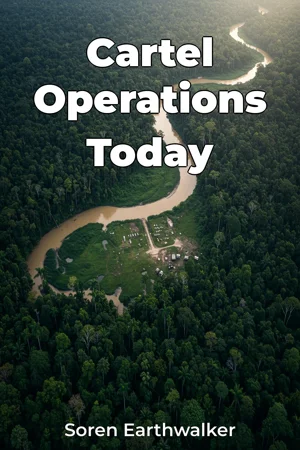
How have drug cartels adapted in the 21st century, and what are the cascading consequences of their evolution on a global scale? "Cartel Operations Today" delves into answering this question by examining the intricate networks, shifting strategies, and far-reaching impacts of modern drug cartels. These organizations are no longer simply conduits for narcotics; they are complex, adaptive entities influencing politics, economics, and social structures across borders. Understanding their current operations is crucial for policymakers, law enforcement, and anyone seeking to grasp the dynamics of global power and security. This book focuses on three key areas: the diversification of cartel activities beyond drug trafficking, the increasing sophistication of their financial operations, and their strategic exploitation of technology and globalization. These factors collectively contribute to the resilience and expansion of cartels, making them a formidable challenge to international stability. We will explore the historical context of cartel development, tracing their evolution from loosely organized groups to highly structured, transnational organizations. Understanding this history is crucial to grasp the roots of their current power and adaptability. The book argues that cartels have successfully adapted to law enforcement pressure and market dynamics by diversifying their revenue streams, embracing technological advancements, and exploiting the interconnectedness of the global economy. This adaptation has made them more resilient and challenging to dismantle than ever before. "Cartel Operations Today" is structured to provide a comprehensive understanding of the subject. It begins by laying the groundwork with an introduction to the modern cartel landscape, defining key terms, and outlining the scope of their operations. The subsequent sections will each address a major facet of cartel activity: their diversification into activities such as human trafficking, illegal mining, and cybercrime; their sophisticated money laundering techniques and use of shell corporations to obscure financial flows; and their leveraging of technology, including encrypted communications, drones, and social media, to enhance their operations and evade detection. The book culminates by analyzing the global implications of these trends, offering insights into potential strategies for mitigating the threat posed by cartels. The analysis presented relies on a combination of primary and secondary sources, including governmental reports from agencies like the DEA and UNODC, investigative journalism, academic research, and open-source intelligence. Particular attention is paid to identifying patterns and trends that are often obscured by focusing solely on individual cases or specific cartels. We also utilize network analysis to map out the complex relationships between different cartel factions, their collaborators, and the various illicit markets they operate in. This book connects to several other fields of study, including international relations, economics, criminology, and cybersecurity. By integrating these perspectives, "Cartel Operations Today" provides a more nuanced and comprehensive understanding of the multifaceted nature of cartel operations. "Cartel Operations Today" distinguishes itself by taking a holistic, interdisciplinary approach to understanding modern cartel operations. Rather than focusing solely on law enforcement perspectives, it examines the economic, social, and political factors that contribute to the rise and resilience of these organizations. This approach allows for a more nuanced understanding of the challenges involved in combating cartels and for the development of more effective strategies. The tone of the book is analytical and informative, aiming to present complex information in an accessible manner. While the subject matter is often sensationalized in popular media, "Cartel Operations Today" maintains a fact-based, objective approach, avoiding hyperbole and focusing on empirical evidence. The target audience includes students and researchers in fields such as criminal justice, political science, and international relations, as well as policymakers, law enforcement professionals, and anyone interested in understanding the complex dynamics of global crime and security. This book will offer valuable insights into the challenges and opportunities involved in combating cartels and promoting global stability. As a work of true crime and political analysis, "Cartel Operations Today" adheres to the genre's conventions of factual accuracy, detailed investigation, and objective reporting. While it explores the often-sensational aspects of cartel activity, it does so in a responsible and ethical manner, avoiding glorification of violence or criminal behavior. The scope of "Cartel Operations Today" is intentionally broad, examining cartel operations on a global scale. However, it also recognizes the importance of local context and provides specific examples and case studies to illustrate key concepts. While it cannot cover every cartel in every region, it aims to provide a representative overview of the major trends and challenges. The information presented in "Cartel Operations Today" has numerous real-world applications. It can inform the development of more effective law enforcement strategies, improve risk assessments for businesses operating in high-risk areas, and educate the public about the true nature and scope of the cartel threat. Finally, the book addresses several ongoing debates in the field, such as the effectiveness of different drug policy approaches and the role of corruption in facilitating cartel operations. By presenting a range of perspectives and analyzing the available evidence, "Cartel Operations Today" aims to contribute to a more informed and productive discussion about these critical issues.
How have drug cartels adapted in the 21st century, and what are the cascading consequences of their evolution on a global scale? "Cartel Operations Today" delves into answering this question by examining the intricate networks, shifting strategies, and far-reaching impacts of modern drug cartels. These organizations are no longer simply conduits for narcotics; they are complex, adaptive entities influencing politics, economics, and social structures across borders. Understanding their current operations is crucial for policymakers, law enforcement, and anyone seeking to grasp the dynamics of global power and security. This book focuses on three key areas: the diversification of cartel activities beyond drug trafficking, the increasing sophistication of their financial operations, and their strategic exploitation of technology and globalization. These factors collectively contribute to the resilience and expansion of cartels, making them a formidable challenge to international stability. We will explore the historical context of cartel development, tracing their evolution from loosely organized groups to highly structured, transnational organizations. Understanding this history is crucial to grasp the roots of their current power and adaptability. The book argues that cartels have successfully adapted to law enforcement pressure and market dynamics by diversifying their revenue streams, embracing technological advancements, and exploiting the interconnectedness of the global economy. This adaptation has made them more resilient and challenging to dismantle than ever before. "Cartel Operations Today" is structured to provide a comprehensive understanding of the subject. It begins by laying the groundwork with an introduction to the modern cartel landscape, defining key terms, and outlining the scope of their operations. The subsequent sections will each address a major facet of cartel activity: their diversification into activities such as human trafficking, illegal mining, and cybercrime; their sophisticated money laundering techniques and use of shell corporations to obscure financial flows; and their leveraging of technology, including encrypted communications, drones, and social media, to enhance their operations and evade detection. The book culminates by analyzing the global implications of these trends, offering insights into potential strategies for mitigating the threat posed by cartels. The analysis presented relies on a combination of primary and secondary sources, including governmental reports from agencies like the DEA and UNODC, investigative journalism, academic research, and open-source intelligence. Particular attention is paid to identifying patterns and trends that are often obscured by focusing solely on individual cases or specific cartels. We also utilize network analysis to map out the complex relationships between different cartel factions, their collaborators, and the various illicit markets they operate in. This book connects to several other fields of study, including international relations, economics, criminology, and cybersecurity. By integrating these perspectives, "Cartel Operations Today" provides a more nuanced and comprehensive understanding of the multifaceted nature of cartel operations. "Cartel Operations Today" distinguishes itself by taking a holistic, interdisciplinary approach to understanding modern cartel operations. Rather than focusing solely on law enforcement perspectives, it examines the economic, social, and political factors that contribute to the rise and resilience of these organizations. This approach allows for a more nuanced understanding of the challenges involved in combating cartels and for the development of more effective strategies. The tone of the book is analytical and informative, aiming to present complex information in an accessible manner. While the subject matter is often sensationalized in popular media, "Cartel Operations Today" maintains a fact-based, objective approach, avoiding hyperbole and focusing on empirical evidence. The target audience includes students and researchers in fields such as criminal justice, political science, and international relations, as well as policymakers, law enforcement professionals, and anyone interested in understanding the complex dynamics of global crime and security. This book will offer valuable insights into the challenges and opportunities involved in combating cartels and promoting global stability. As a work of true crime and political analysis, "Cartel Operations Today" adheres to the genre's conventions of factual accuracy, detailed investigation, and objective reporting. While it explores the often-sensational aspects of cartel activity, it does so in a responsible and ethical manner, avoiding glorification of violence or criminal behavior. The scope of "Cartel Operations Today" is intentionally broad, examining cartel operations on a global scale. However, it also recognizes the importance of local context and provides specific examples and case studies to illustrate key concepts. While it cannot cover every cartel in every region, it aims to provide a representative overview of the major trends and challenges. The information presented in "Cartel Operations Today" has numerous real-world applications. It can inform the development of more effective law enforcement strategies, improve risk assessments for businesses operating in high-risk areas, and educate the public about the true nature and scope of the cartel threat. Finally, the book addresses several ongoing debates in the field, such as the effectiveness of different drug policy approaches and the role of corruption in facilitating cartel operations. By presenting a range of perspectives and analyzing the available evidence, "Cartel Operations Today" aims to contribute to a more informed and productive discussion about these critical issues.
"Cartel Operations Today" explores the evolution of drug cartels into complex, transnational entities impacting global politics, economics, and security. These organizations have adapted, becoming more than mere narcotics conduits, and now influence international relations through diversified criminal activities. The book examines how cartels have enhanced their resilience by embracing technology and exploiting globalization, posing a formidable challenge to international stability. The book delves into the historical context of cartel development, tracing their evolution into highly structured organizations that have diversified into areas such as human trafficking and cybercrime. It further analyzes their sophisticated money laundering techniques, which obscure financial flows, and their strategic use of technology like encrypted communications and drones, to enhance operations and evade detection. This approach allows for a more nuanced understanding of the challenges involved in combating cartels and for the development of more effective strategies. Structured to provide a comprehensive understanding, "Cartel Operations Today" begins with an overview of the modern cartel landscape and progresses through major facets of cartel activity. The book culminates by analyzing the global implications of these trends, offering insights into strategies for mitigating the threats posed by cartels, and is a valuable resource for policymakers, law enforcement, and those interested in global crime and security.
Book Details
ISBN
9788233993979
Publisher
Publifye AS
Your Licenses
You don't own any licenses for this book
Purchase a license below to unlock this book and download the EPUB.
Purchase License
Select a tier to unlock this book
Need bulk licensing?
Contact us for enterprise agreements.