
About This Book
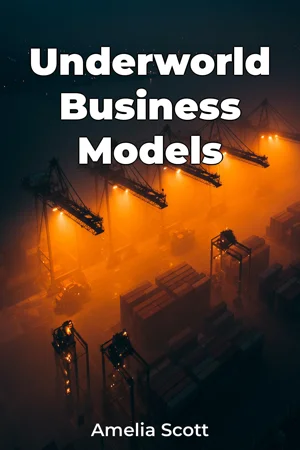
'Underworld Business Models’ delves into the intricate economic strategies employed by criminal organizations, approaching the subject with the rigor of financial analysis and the insights of market studies. How do illicit enterprises thrive in the shadows, and what can their operational structures reveal about the broader economic landscape? This book argues that understanding these underworld economies necessitates a shift in perspective, viewing them not merely as societal blights but as complex systems exhibiting rational economic behavior. The book explores three primary areas: the application of microeconomic principles to illicit markets, the financial engineering used to launder and move illicit funds, and the organizational structures that enable criminal enterprises to function on a global scale. These topics are significant because they offer a new lens through which to examine both criminal behavior and legitimate economic activity, revealing unexpected parallels and informing strategies for combating organized crime. The historical context for this analysis includes the evolution of criminal organizations from loosely affiliated groups to sophisticated, multi-national corporations. The reader should have a basic understanding of economic principles such as supply and demand, market equilibrium, and organizational behavior to fully grasp the arguments presented. Our central thesis posits that criminal organizations operate with a degree of economic rationality often underestimated by law enforcement and policymakers. By analyzing their strategies through the lens of established economic models, we can gain a deeper understanding of their strengths, weaknesses, and vulnerabilities. This argument is crucial for developing more effective policies to disrupt and dismantle these organizations. The book is structured as follows: It begins by introducing the basic economic principles relevant to understanding illicit markets, such as rational choice theory and game theory. The subsequent sections delve into specific criminal activities, including drug trafficking, arms smuggling, and human trafficking, analyzing each as a unique market with its own supply chains, distribution networks, and competitive dynamics. We then explore the financial mechanisms used to conceal and legitimize illicit proceeds, examining techniques such as money laundering, tax evasion, and the use of shell corporations. The book culminates by analyzing the organizational structures of criminal enterprises, from hierarchical command structures to decentralized networks, and explores how these structures adapt to changing market conditions and law enforcement pressures. Finally, we discuss the practical implications of our analysis for policymakers, law enforcement agencies, and financial institutions. The evidence presented in this book draws from a variety of sources, including financial statements seized from criminal organizations, intelligence reports from law enforcement agencies, and academic studies of illicit markets. We also utilize market studies, econometric analyses, and case studies of specific criminal enterprises to support our arguments. This book connects to several other fields of study, including criminology, sociology, and political science. Criminology provides insights into the motivations and behaviors of criminals, while sociology offers a framework for understanding the social structures that enable criminal activity. Political science sheds light on the role of corruption and state weakness in facilitating the growth of criminal organizations. These interdisciplinary connections enhance the book's argument by providing a more holistic understanding of the complex factors that contribute to the persistence of organized crime. What sets this book apart is its innovative application of economic principles to the study of criminal behavior. While previous works have explored the economics of crime, few have provided such a detailed and rigorous analysis of the business models employed by criminal organizations. This book takes an approach that moves beyond simplistic notions of criminality. The tone is academic yet accessible, aiming to bridge the gap between scholarly research and practical application. The writing style is clear and concise, avoiding jargon and technical terms where possible. The target audience includes academics, policymakers, law enforcement professionals, financial analysts, and anyone interested in understanding the economic dimensions of organized crime. The book would be valuable to them because it offers a new perspective on a complex and pressing problem, providing insights that can inform policy decisions, law enforcement strategies, and financial risk management practices. As a work of true crime and economics, this book adheres to the conventions of both genres, presenting factual information in a clear and unbiased manner. It also includes elements of narrative non-fiction, drawing on real-world examples and case studies to illustrate the concepts discussed. The scope of the book is limited to the economic strategies of criminal organizations, focusing primarily on illicit markets and financial flows. It does not delve into the psychological or sociological factors that contribute to criminal behavior, nor does it provide a comprehensive overview of all types of crime. The information in this book can be applied practically by policymakers to develop more effective strategies for combating organized crime, by law enforcement agencies to disrupt illicit markets and seize criminal assets, and by financial institutions to detect and prevent money laundering. Areas where the book touches on debates and controversies are the effectiveness of different approaches to combating organized crime, the role of government corruption in facilitating criminal activity, and the ethical implications of using financial intelligence to track illicit flows.
'Underworld Business Models’ delves into the intricate economic strategies employed by criminal organizations, approaching the subject with the rigor of financial analysis and the insights of market studies. How do illicit enterprises thrive in the shadows, and what can their operational structures reveal about the broader economic landscape? This book argues that understanding these underworld economies necessitates a shift in perspective, viewing them not merely as societal blights but as complex systems exhibiting rational economic behavior. The book explores three primary areas: the application of microeconomic principles to illicit markets, the financial engineering used to launder and move illicit funds, and the organizational structures that enable criminal enterprises to function on a global scale. These topics are significant because they offer a new lens through which to examine both criminal behavior and legitimate economic activity, revealing unexpected parallels and informing strategies for combating organized crime. The historical context for this analysis includes the evolution of criminal organizations from loosely affiliated groups to sophisticated, multi-national corporations. The reader should have a basic understanding of economic principles such as supply and demand, market equilibrium, and organizational behavior to fully grasp the arguments presented. Our central thesis posits that criminal organizations operate with a degree of economic rationality often underestimated by law enforcement and policymakers. By analyzing their strategies through the lens of established economic models, we can gain a deeper understanding of their strengths, weaknesses, and vulnerabilities. This argument is crucial for developing more effective policies to disrupt and dismantle these organizations. The book is structured as follows: It begins by introducing the basic economic principles relevant to understanding illicit markets, such as rational choice theory and game theory. The subsequent sections delve into specific criminal activities, including drug trafficking, arms smuggling, and human trafficking, analyzing each as a unique market with its own supply chains, distribution networks, and competitive dynamics. We then explore the financial mechanisms used to conceal and legitimize illicit proceeds, examining techniques such as money laundering, tax evasion, and the use of shell corporations. The book culminates by analyzing the organizational structures of criminal enterprises, from hierarchical command structures to decentralized networks, and explores how these structures adapt to changing market conditions and law enforcement pressures. Finally, we discuss the practical implications of our analysis for policymakers, law enforcement agencies, and financial institutions. The evidence presented in this book draws from a variety of sources, including financial statements seized from criminal organizations, intelligence reports from law enforcement agencies, and academic studies of illicit markets. We also utilize market studies, econometric analyses, and case studies of specific criminal enterprises to support our arguments. This book connects to several other fields of study, including criminology, sociology, and political science. Criminology provides insights into the motivations and behaviors of criminals, while sociology offers a framework for understanding the social structures that enable criminal activity. Political science sheds light on the role of corruption and state weakness in facilitating the growth of criminal organizations. These interdisciplinary connections enhance the book's argument by providing a more holistic understanding of the complex factors that contribute to the persistence of organized crime. What sets this book apart is its innovative application of economic principles to the study of criminal behavior. While previous works have explored the economics of crime, few have provided such a detailed and rigorous analysis of the business models employed by criminal organizations. This book takes an approach that moves beyond simplistic notions of criminality. The tone is academic yet accessible, aiming to bridge the gap between scholarly research and practical application. The writing style is clear and concise, avoiding jargon and technical terms where possible. The target audience includes academics, policymakers, law enforcement professionals, financial analysts, and anyone interested in understanding the economic dimensions of organized crime. The book would be valuable to them because it offers a new perspective on a complex and pressing problem, providing insights that can inform policy decisions, law enforcement strategies, and financial risk management practices. As a work of true crime and economics, this book adheres to the conventions of both genres, presenting factual information in a clear and unbiased manner. It also includes elements of narrative non-fiction, drawing on real-world examples and case studies to illustrate the concepts discussed. The scope of the book is limited to the economic strategies of criminal organizations, focusing primarily on illicit markets and financial flows. It does not delve into the psychological or sociological factors that contribute to criminal behavior, nor does it provide a comprehensive overview of all types of crime. The information in this book can be applied practically by policymakers to develop more effective strategies for combating organized crime, by law enforcement agencies to disrupt illicit markets and seize criminal assets, and by financial institutions to detect and prevent money laundering. Areas where the book touches on debates and controversies are the effectiveness of different approaches to combating organized crime, the role of government corruption in facilitating criminal activity, and the ethical implications of using financial intelligence to track illicit flows.
"Underworld Business Models" offers a compelling exploration of the economics driving criminal organizations, arguing that these entities operate with a surprising degree of rational economic behavior. By applying financial analysis and market studies, the book reveals how illicit enterprises function not just as societal problems, but as sophisticated systems responding to market forces. One intriguing insight is the application of microeconomic principles, such as supply and demand, to understand activities like drug trafficking and arms smuggling. Furthermore, the book details the complex financial engineering used for money laundering, demonstrating how illicit funds are moved and concealed within the global economy. The book progresses from basic economic principles to specific criminal activities, analyzing their unique supply chains and competitive dynamics. It then examines the financial mechanisms used to legitimize illicit proceeds, before culminating in the analysis of various organizational structures of criminal enterprises, from hierarchical to decentralized networks. Ultimately, this approach provides a fresh perspective on organized crime, highlighting its vulnerabilities and informing strategies for law enforcement and policymakers.
Book Details
ISBN
9788233993955
Publisher
Publifye AS
Your Licenses
You don't own any licenses for this book
Purchase a license below to unlock this book and download the EPUB.
Purchase License
Select a tier to unlock this book
Need bulk licensing?
Contact us for enterprise agreements.