
About This Book
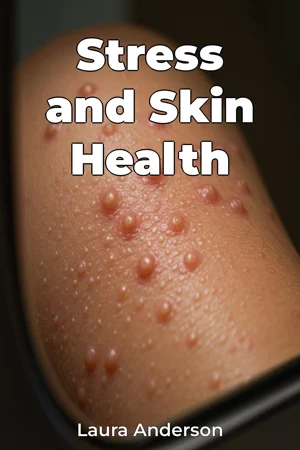
Have you ever noticed your skin flaring up during periods of intense stress? This book, "Stress and Skin Health," delves into the intricate relationship between psychological stress and the manifestation or exacerbation of various skin conditions. We explore the science behind this connection, focusing on the critical roles of cortisol and inflammatory responses, offering insights valuable to both individuals experiencing these issues and healthcare professionals seeking a deeper understanding. This book addresses several key topics. First, we examine the hypothalamic-pituitary-adrenal (HPA) axis and its role in the stress response, specifically focusing on cortisol production. We detail how chronic stress can lead to dysregulation of this axis, resulting in prolonged elevated cortisol levels, which can negatively impact skin health. Second, we investigate the inflammatory pathways activated by stress. We explore how psychological stress triggers the release of pro-inflammatory cytokines, contributing to skin inflammation and impaired barrier function. Finally, we delve into specific skin conditions, such as eczema, psoriasis, acne, and hives, analyzing how stress contributes to their onset or severity. These conditions are common and significantly impact quality of life, making understanding their connection to stress crucial. The book contextualizes the science of stress and skin through the lens of modern life, where chronic stress has become increasingly prevalent. We discuss the social factors that contribute to stress, such as work pressures, financial anxieties, and social isolation, and how these factors can manifest physically on the skin. Some background knowledge of basic biology and endocrinology will be helpful but not essential, as we provide clear explanations of complex scientific concepts. The central argument of "Stress and Skin Health" is that psychological stress is a significant yet often overlooked factor in the development and progression of numerous skin disorders. Recognizing and managing stress is therefore an integral component of maintaining healthy skin. This argument is essential because it shifts the focus from purely dermatological treatments to a more holistic approach, one that considers the mind-body connection. The book is structured in a logical progression. We begin by introducing the fundamental concepts of stress physiology and the skin's structure and function. Then, we dedicate individual chapters to exploring the effects of cortisol on skin cells, the inflammatory processes triggered by stress, and the specific mechanisms by which stress influences conditions like eczema, psoriasis, acne, and urticaria. The book culminates with a discussion of practical stress management techniques, including mindfulness, exercise, and cognitive behavioral therapy, and their potential to improve skin health. This book draws on a wide range of scientific evidence, including studies published in peer-reviewed journals, clinical trials, and meta-analyses. We thoroughly analyze research on cortisol levels in individuals with skin conditions compared to healthy controls, as well as studies examining the effects of stress management interventions on skin inflammation and disease severity. "Stress and Skin Health" integrates knowledge from several disciplines. It connects psychology by exploring the cognitive and emotional aspects of stress; dermatology by examining the physiological processes in the skin; and endocrinology by understanding hormone regulation. These interdisciplinary connections strengthen the book's argument by providing a comprehensive view of the complex interactions between mind, body, and skin. This book offers a unique perspective by integrating a thorough review of the scientific literature with practical advice for managing stress and improving skin health. We provide a balanced perspective that acknowledges both the biological and psychological dimensions of the stress-skin connection. The tone is professional and fact-based, while remaining accessible to a broad audience. The writing style blends scientific rigor with clear explanations. The primary audience for this book includes individuals who suffer from stress-related skin conditions, healthcare professionals (dermatologists, psychologists, general practitioners), and anyone interested in the mind-body connection. This book can be a valuable resource for gaining a deeper understanding of how stress impacts skin health and learning practical strategies for managing it. As a health-focused non-fiction book, it provides evidence-based information and strategies for improving well-being. The scope of the book is limited to the connection between psychological stress and skin health. It does not cover all possible causes of skin conditions, nor does it provide medical advice. It is intended as an informational resource to complement, not replace, professional medical care. The information presented in this book has real-world applications. Readers can use the stress management techniques described to improve their overall well-being and potentially alleviate skin symptoms. Healthcare professionals can integrate the book's insights into their clinical practice, providing more holistic and effective care for their patients. While the link between stress and skin health is increasingly recognized, some debates persist regarding the precise mechanisms involved and the relative importance of stress compared to other factors. We address these controversies by presenting a balanced view of the current research landscape.
Have you ever noticed your skin flaring up during periods of intense stress? This book, "Stress and Skin Health," delves into the intricate relationship between psychological stress and the manifestation or exacerbation of various skin conditions. We explore the science behind this connection, focusing on the critical roles of cortisol and inflammatory responses, offering insights valuable to both individuals experiencing these issues and healthcare professionals seeking a deeper understanding. This book addresses several key topics. First, we examine the hypothalamic-pituitary-adrenal (HPA) axis and its role in the stress response, specifically focusing on cortisol production. We detail how chronic stress can lead to dysregulation of this axis, resulting in prolonged elevated cortisol levels, which can negatively impact skin health. Second, we investigate the inflammatory pathways activated by stress. We explore how psychological stress triggers the release of pro-inflammatory cytokines, contributing to skin inflammation and impaired barrier function. Finally, we delve into specific skin conditions, such as eczema, psoriasis, acne, and hives, analyzing how stress contributes to their onset or severity. These conditions are common and significantly impact quality of life, making understanding their connection to stress crucial. The book contextualizes the science of stress and skin through the lens of modern life, where chronic stress has become increasingly prevalent. We discuss the social factors that contribute to stress, such as work pressures, financial anxieties, and social isolation, and how these factors can manifest physically on the skin. Some background knowledge of basic biology and endocrinology will be helpful but not essential, as we provide clear explanations of complex scientific concepts. The central argument of "Stress and Skin Health" is that psychological stress is a significant yet often overlooked factor in the development and progression of numerous skin disorders. Recognizing and managing stress is therefore an integral component of maintaining healthy skin. This argument is essential because it shifts the focus from purely dermatological treatments to a more holistic approach, one that considers the mind-body connection. The book is structured in a logical progression. We begin by introducing the fundamental concepts of stress physiology and the skin's structure and function. Then, we dedicate individual chapters to exploring the effects of cortisol on skin cells, the inflammatory processes triggered by stress, and the specific mechanisms by which stress influences conditions like eczema, psoriasis, acne, and urticaria. The book culminates with a discussion of practical stress management techniques, including mindfulness, exercise, and cognitive behavioral therapy, and their potential to improve skin health. This book draws on a wide range of scientific evidence, including studies published in peer-reviewed journals, clinical trials, and meta-analyses. We thoroughly analyze research on cortisol levels in individuals with skin conditions compared to healthy controls, as well as studies examining the effects of stress management interventions on skin inflammation and disease severity. "Stress and Skin Health" integrates knowledge from several disciplines. It connects psychology by exploring the cognitive and emotional aspects of stress; dermatology by examining the physiological processes in the skin; and endocrinology by understanding hormone regulation. These interdisciplinary connections strengthen the book's argument by providing a comprehensive view of the complex interactions between mind, body, and skin. This book offers a unique perspective by integrating a thorough review of the scientific literature with practical advice for managing stress and improving skin health. We provide a balanced perspective that acknowledges both the biological and psychological dimensions of the stress-skin connection. The tone is professional and fact-based, while remaining accessible to a broad audience. The writing style blends scientific rigor with clear explanations. The primary audience for this book includes individuals who suffer from stress-related skin conditions, healthcare professionals (dermatologists, psychologists, general practitioners), and anyone interested in the mind-body connection. This book can be a valuable resource for gaining a deeper understanding of how stress impacts skin health and learning practical strategies for managing it. As a health-focused non-fiction book, it provides evidence-based information and strategies for improving well-being. The scope of the book is limited to the connection between psychological stress and skin health. It does not cover all possible causes of skin conditions, nor does it provide medical advice. It is intended as an informational resource to complement, not replace, professional medical care. The information presented in this book has real-world applications. Readers can use the stress management techniques described to improve their overall well-being and potentially alleviate skin symptoms. Healthcare professionals can integrate the book's insights into their clinical practice, providing more holistic and effective care for their patients. While the link between stress and skin health is increasingly recognized, some debates persist regarding the precise mechanisms involved and the relative importance of stress compared to other factors. We address these controversies by presenting a balanced view of the current research landscape.
"Stress and Skin Health" explores the profound connection between psychological stress and various skin conditions like eczema, psoriasis, acne, and hives. It highlights how stress, a prevalent factor in modern life, can trigger or worsen these issues through complex biological pathways. One key insight is the role of the hypothalamic-pituitary-adrenal (HPA) axis, which, when dysregulated by chronic stress, leads to elevated cortisol levels, negatively impacting skin health. The book also investigates how stress activates inflammatory responses, contributing to skin irritation and impaired barrier function. The book takes a holistic approach, integrating knowledge from psychology, dermatology, and endocrinology to provide a comprehensive view of the mind-body connection. It progresses logically, beginning with the fundamentals of stress physiology and skin structure, then delving into specific mechanisms by which cortisol and inflammation affect different skin conditions. Ultimately, "Stress and Skin Health" emphasizes stress management, providing practical techniques like mindfulness and cognitive behavioral therapy to improve both psychological well-being and skin health. This approach offers a unique perspective, shifting the focus from solely dermatological treatments to a more integrated approach.
Book Details
ISBN
9788233993443
Publisher
Publifye AS
Your Licenses
You don't own any licenses for this book
Purchase a license below to unlock this book and download the EPUB.
Purchase License
Select a tier to unlock this book
Need bulk licensing?
Contact us for enterprise agreements.