
About This Book
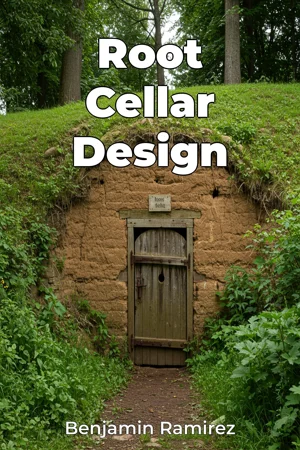
Why settle for supermarket produce when you can enjoy fresh, locally stored fruits and vegetables year-round? "Root Cellar Design" offers a comprehensive guide to constructing and maintaining underground storage spaces for optimal food preservation, drawing upon architectural principles to create efficient and sustainable systems. This book addresses two key areas: the architectural considerations involved in building effective underground storage and the science of climate control necessary for preserving different types of produce. These topics are crucial in an era of increased focus on local food systems, sustainability, and reducing reliance on long-distance transportation of goods. Understanding the principles behind root cellar design requires a basic grasp of architectural concepts like structural integrity, insulation, and ventilation, as well as an appreciation for the historical context of food preservation techniques. For centuries, root cellars have provided a reliable method for extending the harvest season, predating modern refrigeration. This book builds upon this legacy, integrating traditional wisdom with contemporary building science. The central argument of "Root Cellar Design" is that the effective design and climate control of underground storage are inextricably linked and that a holistic, architecturally informed approach is essential for maximizing the longevity and quality of stored produce. This argument is significant because it moves beyond simplistic instructions and offers a design framework adaptable to varying climates, geographies, and individual needs. The book challenges the assumption that any underground space is suitable for food storage, emphasizing the importance of careful planning and execution. The book begins with an introduction to the fundamental principles of root cellar design, covering topics such as site selection, structural considerations, and material choices. It then delves into the crucial elements of climate control, exploring the role of temperature, humidity, and ventilation in preserving different types of fruits and vegetables. Major points covered include: different types of root cellar designs (from simple earthen structures to more complex, insulated spaces); detailed analysis of ventilation strategies and their impact on humidity levels; and the selection of appropriate building materials based on their thermal properties and moisture resistance. The book culminates with practical guidance on how to implement these principles in a variety of contexts, offering case studies of existing root cellars and providing step-by-step instructions for designing and building your own. Finally, considerations are given to the long term operation and maintenance of the space. The evidence presented in the book draws from a combination of architectural case studies, scientific research on food preservation, and practical experience. Data from agricultural extension services, building science publications, and historical records of root cellar performance will support the arguments. The book also leverages thermal modeling to demonstrate the impact of different design choices on the internal climate of a root cellar. "Root Cellar Design" connects to several other fields, including sustainable agriculture, environmental science, and public health. By promoting local food storage, the book contributes to more sustainable food systems, reduces carbon emissions associated with transportation, and supports access to fresh, healthy food. This book offers a unique perspective by integrating architectural design principles with the specific needs of food preservation. It moves beyond generic building advice and provides a tailored approach to creating functional and efficient root cellars. The tone and writing style are informative and accessible, aiming to bridge the gap between architectural jargon and practical guidance for the average reader. While grounded in scientific research, the book avoids overly technical language and prioritizes clarity and usability. The target audience includes home gardeners, small-scale farmers, homesteaders, and anyone interested in sustainable living and food preservation. It will be valuable to those seeking practical, evidence-based guidance on designing and building effective root cellars. As a work in the 'Architecture' and 'Design' genres, the book fulfills the expectation of providing detailed plans, diagrams, and illustrations to support the text. It adheres to the standards of clarity, precision, and visual communication common in architectural publications. The scope of the book is limited to the design and construction of underground storage spaces for fruits and vegetables. It does not cover other methods of food preservation, such as canning or freezing, in detail. The information in "Root Cellar Design" can be applied directly to the design and construction of new root cellars, as well as the renovation of existing structures. It provides readers with the knowledge and tools to create efficient and sustainable food storage systems. While the benefits of root cellars are well-established, there are ongoing debates regarding the optimal design and construction techniques for different climates and soil conditions. This book addresses these debates by presenting a range of options and providing the evidence needed to make informed decisions.
Why settle for supermarket produce when you can enjoy fresh, locally stored fruits and vegetables year-round? "Root Cellar Design" offers a comprehensive guide to constructing and maintaining underground storage spaces for optimal food preservation, drawing upon architectural principles to create efficient and sustainable systems. This book addresses two key areas: the architectural considerations involved in building effective underground storage and the science of climate control necessary for preserving different types of produce. These topics are crucial in an era of increased focus on local food systems, sustainability, and reducing reliance on long-distance transportation of goods. Understanding the principles behind root cellar design requires a basic grasp of architectural concepts like structural integrity, insulation, and ventilation, as well as an appreciation for the historical context of food preservation techniques. For centuries, root cellars have provided a reliable method for extending the harvest season, predating modern refrigeration. This book builds upon this legacy, integrating traditional wisdom with contemporary building science. The central argument of "Root Cellar Design" is that the effective design and climate control of underground storage are inextricably linked and that a holistic, architecturally informed approach is essential for maximizing the longevity and quality of stored produce. This argument is significant because it moves beyond simplistic instructions and offers a design framework adaptable to varying climates, geographies, and individual needs. The book challenges the assumption that any underground space is suitable for food storage, emphasizing the importance of careful planning and execution. The book begins with an introduction to the fundamental principles of root cellar design, covering topics such as site selection, structural considerations, and material choices. It then delves into the crucial elements of climate control, exploring the role of temperature, humidity, and ventilation in preserving different types of fruits and vegetables. Major points covered include: different types of root cellar designs (from simple earthen structures to more complex, insulated spaces); detailed analysis of ventilation strategies and their impact on humidity levels; and the selection of appropriate building materials based on their thermal properties and moisture resistance. The book culminates with practical guidance on how to implement these principles in a variety of contexts, offering case studies of existing root cellars and providing step-by-step instructions for designing and building your own. Finally, considerations are given to the long term operation and maintenance of the space. The evidence presented in the book draws from a combination of architectural case studies, scientific research on food preservation, and practical experience. Data from agricultural extension services, building science publications, and historical records of root cellar performance will support the arguments. The book also leverages thermal modeling to demonstrate the impact of different design choices on the internal climate of a root cellar. "Root Cellar Design" connects to several other fields, including sustainable agriculture, environmental science, and public health. By promoting local food storage, the book contributes to more sustainable food systems, reduces carbon emissions associated with transportation, and supports access to fresh, healthy food. This book offers a unique perspective by integrating architectural design principles with the specific needs of food preservation. It moves beyond generic building advice and provides a tailored approach to creating functional and efficient root cellars. The tone and writing style are informative and accessible, aiming to bridge the gap between architectural jargon and practical guidance for the average reader. While grounded in scientific research, the book avoids overly technical language and prioritizes clarity and usability. The target audience includes home gardeners, small-scale farmers, homesteaders, and anyone interested in sustainable living and food preservation. It will be valuable to those seeking practical, evidence-based guidance on designing and building effective root cellars. As a work in the 'Architecture' and 'Design' genres, the book fulfills the expectation of providing detailed plans, diagrams, and illustrations to support the text. It adheres to the standards of clarity, precision, and visual communication common in architectural publications. The scope of the book is limited to the design and construction of underground storage spaces for fruits and vegetables. It does not cover other methods of food preservation, such as canning or freezing, in detail. The information in "Root Cellar Design" can be applied directly to the design and construction of new root cellars, as well as the renovation of existing structures. It provides readers with the knowledge and tools to create efficient and sustainable food storage systems. While the benefits of root cellars are well-established, there are ongoing debates regarding the optimal design and construction techniques for different climates and soil conditions. This book addresses these debates by presenting a range of options and providing the evidence needed to make informed decisions.
"Root Cellar Design" offers a comprehensive guide to building and maintaining efficient underground storage spaces for preserving fruits and vegetables year-round. It uniquely blends architectural design with the science of climate control, essential for maximizing the longevity of stored produce. The book emphasizes how architectural considerations, like structural integrity and ventilation, are inextricably linked to effective climate control, moving beyond simplistic instructions to offer an adaptable design framework. The book highlights intriguing facts, such as root cellars predating modern refrigeration as a reliable method for extending the harvest season. It also delves into the impact of different ventilation strategies on humidity levels, crucial for preserving various types of produce. The book progresses from fundamental principles like site selection and material choices to practical guidance, including case studies and step-by-step instructions. This resource is valuable for home gardeners, small-scale farmers, and anyone interested in sustainable living. It starts with the basics of architectural design, explores climate control, and finishes with practical guidance on implementing these principles. It promotes local food storage, contributes to sustainable food systems, and supports access to fresh, healthy food.
Book Details
ISBN
9788233993122
Publisher
Publifye AS
Your Licenses
You don't own any licenses for this book
Purchase a license below to unlock this book and download the EPUB.
Purchase License
Select a tier to unlock this book
Need bulk licensing?
Contact us for enterprise agreements.