
About This Book
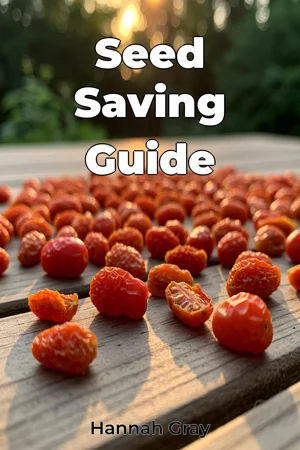
Have you ever wondered about the ancient pact between humanity and seeds, a partnership critical to our survival and the diversity of our food systems? This book, *Seed Saving Guide*, explores the art and science of seed preservation, offering a comprehensive journey into the methods and significance of securing our botanical heritage. We delve into three key areas: first, the foundational techniques for collecting and processing seeds from various plant species, emphasizing the importance of understanding plant life cycles and pollination methods. Second, we meticulously examine different storage methods, from traditional approaches to cutting-edge technologies, analyzing their effectiveness in maintaining seed viability over extended periods. Third, we explore the legal and ethical implications surrounding seed saving in the context of corporate control and access to genetic resources. These topics are vital because seed saving empowers individuals and communities, preserves biodiversity, and fosters resilient food systems in the face of climate change and genetic erosion. Historically, seed saving was integral to agricultural practices worldwide, passed down through generations. However, the rise of industrial agriculture and proprietary seed technologies has threatened this tradition. Understanding this context is crucial for appreciating the importance of reclaiming seed saving as a means of preserving genetic diversity and food sovereignty. While no prior expertise is required, a basic understanding of plant biology will enhance the reader's experience. The central argument of *Seed Saving Guide* is that seed saving is not merely a hobby but a crucial act of ecological stewardship and resistance against the homogenization of our food supply. It is an accessible means for anyone to participate in the conservation of plant genetic resources and to contribute to a more sustainable and equitable food system. The book begins by introducing the fundamental principles of seed biology and genetics, providing a solid foundation for understanding seed saving techniques. It then progresses systematically through the stages of seed collection, processing, and storage, dedicating individual chapters to specific plant families and their unique requirements. The culmination of the book focuses on practical applications, including setting up a home seed bank, participating in community seed exchanges, and advocating for policies that support seed saving. Emphasis is placed on understanding and navigating seed laws, patents, and regulations that affect seed saving. The arguments presented are supported by a combination of scientific literature, empirical data from botanical research, and case studies of successful seed saving initiatives worldwide. We draw upon data from seed banks, agricultural research institutions, and citizen science projects to provide a comprehensive and evidence-based guide. The book connects to other fields such as ecology, agriculture, and environmental policy. Its insights into plant genetics and adaptation are relevant to ecological studies, while its practical guidance on seed saving directly informs sustainable agricultural practices. Furthermore, the book's exploration of seed laws and regulations connects it to the broader field of environmental policy and advocacy. *Seed Saving Guide* distinguishes itself by providing a holistic and accessible approach to seed saving, combining scientific rigor with practical advice and actionable steps. It is written in a clear and engaging style suitable for both novice gardeners and experienced horticulturalists. The target audience includes home gardeners, small-scale farmers, permaculture enthusiasts, and anyone interested in food security and biodiversity conservation. It will appeal to those seeking practical guidance on seed saving techniques and a deeper understanding of the ecological and social significance of this practice. This book aligns with the conventions of gardening and biology guides, offering detailed instructions, illustrative diagrams, and informative tables. The scope of the book is limited to the practical aspects of seed saving and relevant botanical principles. It does not delve into advanced topics in plant genetics or agricultural engineering. Readers can apply the knowledge gained from this book to establish their own seed banks, improve the resilience of their gardens, and contribute to the preservation of plant biodiversity in their communities. While the scientific community generally agrees on the importance of preserving plant genetic resources, debates exist regarding the best strategies for achieving this goal. This book acknowledges these debates and presents different perspectives on issues such as seed patents and the role of gene banks.
Have you ever wondered about the ancient pact between humanity and seeds, a partnership critical to our survival and the diversity of our food systems? This book, *Seed Saving Guide*, explores the art and science of seed preservation, offering a comprehensive journey into the methods and significance of securing our botanical heritage. We delve into three key areas: first, the foundational techniques for collecting and processing seeds from various plant species, emphasizing the importance of understanding plant life cycles and pollination methods. Second, we meticulously examine different storage methods, from traditional approaches to cutting-edge technologies, analyzing their effectiveness in maintaining seed viability over extended periods. Third, we explore the legal and ethical implications surrounding seed saving in the context of corporate control and access to genetic resources. These topics are vital because seed saving empowers individuals and communities, preserves biodiversity, and fosters resilient food systems in the face of climate change and genetic erosion. Historically, seed saving was integral to agricultural practices worldwide, passed down through generations. However, the rise of industrial agriculture and proprietary seed technologies has threatened this tradition. Understanding this context is crucial for appreciating the importance of reclaiming seed saving as a means of preserving genetic diversity and food sovereignty. While no prior expertise is required, a basic understanding of plant biology will enhance the reader's experience. The central argument of *Seed Saving Guide* is that seed saving is not merely a hobby but a crucial act of ecological stewardship and resistance against the homogenization of our food supply. It is an accessible means for anyone to participate in the conservation of plant genetic resources and to contribute to a more sustainable and equitable food system. The book begins by introducing the fundamental principles of seed biology and genetics, providing a solid foundation for understanding seed saving techniques. It then progresses systematically through the stages of seed collection, processing, and storage, dedicating individual chapters to specific plant families and their unique requirements. The culmination of the book focuses on practical applications, including setting up a home seed bank, participating in community seed exchanges, and advocating for policies that support seed saving. Emphasis is placed on understanding and navigating seed laws, patents, and regulations that affect seed saving. The arguments presented are supported by a combination of scientific literature, empirical data from botanical research, and case studies of successful seed saving initiatives worldwide. We draw upon data from seed banks, agricultural research institutions, and citizen science projects to provide a comprehensive and evidence-based guide. The book connects to other fields such as ecology, agriculture, and environmental policy. Its insights into plant genetics and adaptation are relevant to ecological studies, while its practical guidance on seed saving directly informs sustainable agricultural practices. Furthermore, the book's exploration of seed laws and regulations connects it to the broader field of environmental policy and advocacy. *Seed Saving Guide* distinguishes itself by providing a holistic and accessible approach to seed saving, combining scientific rigor with practical advice and actionable steps. It is written in a clear and engaging style suitable for both novice gardeners and experienced horticulturalists. The target audience includes home gardeners, small-scale farmers, permaculture enthusiasts, and anyone interested in food security and biodiversity conservation. It will appeal to those seeking practical guidance on seed saving techniques and a deeper understanding of the ecological and social significance of this practice. This book aligns with the conventions of gardening and biology guides, offering detailed instructions, illustrative diagrams, and informative tables. The scope of the book is limited to the practical aspects of seed saving and relevant botanical principles. It does not delve into advanced topics in plant genetics or agricultural engineering. Readers can apply the knowledge gained from this book to establish their own seed banks, improve the resilience of their gardens, and contribute to the preservation of plant biodiversity in their communities. While the scientific community generally agrees on the importance of preserving plant genetic resources, debates exist regarding the best strategies for achieving this goal. This book acknowledges these debates and presents different perspectives on issues such as seed patents and the role of gene banks.
*Seed Saving Guide* explores the vital practice of preserving plant genetic resources, a cornerstone of biodiversity conservation and food security. It delves into the art and science behind collecting, processing, and storing seeds, emphasizing how these actions empower communities and bolster resilient food systems. An intriguing aspect highlighted is the historical context of seed saving, once a widespread practice threatened by industrial agriculture; reclaiming this tradition is presented as a means of preserving genetic diversity. The book systematically progresses from fundamental principles of seed biology and genetics to practical techniques. Individual chapters focus on seed collection, processing, and storage, tailored to specific plant families. It uniquely addresses the legal and ethical dimensions surrounding seed saving, including seed laws and regulations, and also touches on setting up a home seed bank and participating in community seed sharing. This comprehensive guide combines scientific rigor with actionable steps, making it valuable to both novice gardeners and experienced horticulturalists. By providing practical advice and emphasizing the ecological and social significance of seed saving, the book encourages readers to contribute actively to a more sustainable and equitable food system.
Book Details
ISBN
9788233993115
Publisher
Publifye AS
Your Licenses
You don't own any licenses for this book
Purchase a license below to unlock this book and download the EPUB.
Purchase License
Select a tier to unlock this book
Need bulk licensing?
Contact us for enterprise agreements.