
About This Book
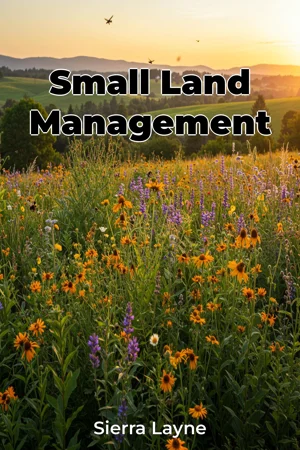
Can small properties truly contribute to sustainable agriculture and resource conservation, or are they destined to be ecological liabilities? "Small Land Management" addresses this critical question by providing a comprehensive analysis of efficient land use and resource optimization strategies specifically tailored for small-scale landowners. This book explores the often-overlooked potential of integrating sustainable farming practices, conservation techniques, and thoughtful land management to maximize productivity while minimizing environmental impact on smaller parcels of land. The core of "Small Land Management" revolves around three interconnected themes: optimizing land utilization for food production, implementing effective water resource management, and fostering biodiversity through habitat preservation. These themes are important because small properties, when managed collectively and thoughtfully, can significantly contribute to local food security, water conservation efforts, and the creation of vital green spaces crucial for supporting diverse ecosystems. The context for this discussion is rooted in the increasing fragmentation of agricultural land, driven by urbanization, inheritance patterns, and economic pressures. Understanding basic ecological principles, soil science, and fundamental concepts of sustainable agriculture will enhance the reader's comprehension of the book's recommendations. The central argument is that small landowners, empowered with the right knowledge and techniques, can transform their properties into models of sustainable resource management, contributing significantly to both local food systems and broader environmental conservation efforts. This argument is crucial because it challenges the conventional view that only large-scale agricultural operations can achieve meaningful efficiency and sustainability. "Small Land Management" is structured logically to guide readers through the process of understanding and implementing sustainable practices. It begins with an introduction to the unique challenges and opportunities presented by small landholdings. The book proceeds to explore key areas: soil health management through composting, cover cropping, and reduced tillage; water conservation techniques such as rainwater harvesting, efficient irrigation systems, and drought-resistant planting; and biodiversity enhancement through the creation of wildlife habitats, pollinator gardens, and the integration of native plant species. The book culminates with a discussion of practical applications, including case studies of successful small land management projects, financial incentives for conservation practices, and legal considerations for land use planning. The analysis presented draws upon agricultural research, environmental studies, and practical field trials. The book utilizes data from government agencies, university extension programs, and non-profit organizations dedicated to sustainable agriculture and conservation. "Small Land Management" highlights the connections between Conservation & Protection, Earth Sciences, and Geography. The book emphasizes the geographical context of land use, the earth science principles governing soil and water management, and the conservation strategies needed to protect biodiversity. The book adopts a practical, solutions-oriented approach, offering specific recommendations and actionable steps that readers can implement on their own properties. It avoids overly technical jargon and presents information in a clear, accessible manner. The primary target audience includes small landowners, hobby farmers, homesteaders, and anyone interested in sustainable land management. The book will also appeal to students and professionals in fields such as agriculture, environmental science, and urban planning. Adhering to the conventions of the Conservation & Protection and Earth Sciences Geography genres, "Small Land Management" prioritizes scientific accuracy, evidence-based recommendations, and practical guidance for readers seeking to improve their land management practices. While "Small Land Management" provides a broad overview of sustainable land management practices, it focuses specifically on techniques applicable to small properties in temperate climates. The information presented in "Small Land Management" can be directly applied to improve soil health, conserve water, enhance biodiversity, and increase the productivity of small landholdings. Readers will gain the knowledge and tools necessary to develop sustainable land management plans tailored to their specific properties and goals. The book acknowledges ongoing debates about the effectiveness of different sustainable agriculture practices and the role of small farms in addressing global food security challenges. It presents a balanced perspective, acknowledging both the potential benefits and limitations of various approaches. "Small Land Management" offers a comprehensive and actionable guide for anyone seeking to maximize the ecological and economic potential of small properties.
Can small properties truly contribute to sustainable agriculture and resource conservation, or are they destined to be ecological liabilities? "Small Land Management" addresses this critical question by providing a comprehensive analysis of efficient land use and resource optimization strategies specifically tailored for small-scale landowners. This book explores the often-overlooked potential of integrating sustainable farming practices, conservation techniques, and thoughtful land management to maximize productivity while minimizing environmental impact on smaller parcels of land. The core of "Small Land Management" revolves around three interconnected themes: optimizing land utilization for food production, implementing effective water resource management, and fostering biodiversity through habitat preservation. These themes are important because small properties, when managed collectively and thoughtfully, can significantly contribute to local food security, water conservation efforts, and the creation of vital green spaces crucial for supporting diverse ecosystems. The context for this discussion is rooted in the increasing fragmentation of agricultural land, driven by urbanization, inheritance patterns, and economic pressures. Understanding basic ecological principles, soil science, and fundamental concepts of sustainable agriculture will enhance the reader's comprehension of the book's recommendations. The central argument is that small landowners, empowered with the right knowledge and techniques, can transform their properties into models of sustainable resource management, contributing significantly to both local food systems and broader environmental conservation efforts. This argument is crucial because it challenges the conventional view that only large-scale agricultural operations can achieve meaningful efficiency and sustainability. "Small Land Management" is structured logically to guide readers through the process of understanding and implementing sustainable practices. It begins with an introduction to the unique challenges and opportunities presented by small landholdings. The book proceeds to explore key areas: soil health management through composting, cover cropping, and reduced tillage; water conservation techniques such as rainwater harvesting, efficient irrigation systems, and drought-resistant planting; and biodiversity enhancement through the creation of wildlife habitats, pollinator gardens, and the integration of native plant species. The book culminates with a discussion of practical applications, including case studies of successful small land management projects, financial incentives for conservation practices, and legal considerations for land use planning. The analysis presented draws upon agricultural research, environmental studies, and practical field trials. The book utilizes data from government agencies, university extension programs, and non-profit organizations dedicated to sustainable agriculture and conservation. "Small Land Management" highlights the connections between Conservation & Protection, Earth Sciences, and Geography. The book emphasizes the geographical context of land use, the earth science principles governing soil and water management, and the conservation strategies needed to protect biodiversity. The book adopts a practical, solutions-oriented approach, offering specific recommendations and actionable steps that readers can implement on their own properties. It avoids overly technical jargon and presents information in a clear, accessible manner. The primary target audience includes small landowners, hobby farmers, homesteaders, and anyone interested in sustainable land management. The book will also appeal to students and professionals in fields such as agriculture, environmental science, and urban planning. Adhering to the conventions of the Conservation & Protection and Earth Sciences Geography genres, "Small Land Management" prioritizes scientific accuracy, evidence-based recommendations, and practical guidance for readers seeking to improve their land management practices. While "Small Land Management" provides a broad overview of sustainable land management practices, it focuses specifically on techniques applicable to small properties in temperate climates. The information presented in "Small Land Management" can be directly applied to improve soil health, conserve water, enhance biodiversity, and increase the productivity of small landholdings. Readers will gain the knowledge and tools necessary to develop sustainable land management plans tailored to their specific properties and goals. The book acknowledges ongoing debates about the effectiveness of different sustainable agriculture practices and the role of small farms in addressing global food security challenges. It presents a balanced perspective, acknowledging both the potential benefits and limitations of various approaches. "Small Land Management" offers a comprehensive and actionable guide for anyone seeking to maximize the ecological and economic potential of small properties.
"Small Land Management" explores how small properties can contribute to sustainable agriculture and resource conservation. It challenges the idea that only large-scale operations can achieve efficiency, focusing instead on optimizing land utilization, managing water resources, and fostering biodiversity on smaller parcels. For instance, the book highlights how collectively, small properties can enhance local food security and create vital green spaces. The book progresses logically, starting with the challenges and opportunities of small landholdings. It then delves into soil health management, water conservation, and biodiversity enhancement. The importance of soil health is emphasized, explaining how techniques like composting can improve soil structure and fertility. It also covers practical applications with case studies and financial incentives. This book uniquely provides actionable steps for small landowners in temperate climates to improve soil health, conserve water, and enhance biodiversity. It uses a practical, solutions-oriented approach and avoids excessive jargon, offering a clear guide to sustainable farming and land utilization.
Book Details
ISBN
9788233993108
Publisher
Publifye AS
Your Licenses
You don't own any licenses for this book
Purchase a license below to unlock this book and download the EPUB.
Purchase License
Select a tier to unlock this book
Need bulk licensing?
Contact us for enterprise agreements.