
About This Book
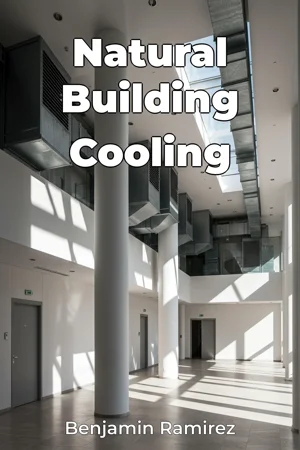
Can buildings breathe? This question, though seemingly metaphorical, lies at the heart of *Natural Building Cooling*, a comprehensive exploration into the science and art of passive cooling methods and ventilation systems within architectural design. This book tackles the urgent need for sustainable building practices in an era defined by climate change and escalating energy consumption. Understanding how to design buildings that naturally regulate temperature is not just an architectural consideration; it is an environmental imperative. The book delves into three key areas: the fundamental principles of passive cooling, the diverse range of natural ventilation strategies, and the integration of these strategies into holistic architectural designs. Passive cooling, the core concept, encompasses techniques that utilize natural environmental resources to dissipate heat, thus minimizing or eliminating the need for energy-intensive mechanical cooling systems. Natural ventilation, a critical subset of passive cooling, focuses specifically on harnessing wind and buoyancy forces to circulate air and remove heat from buildings. The integration of these strategies requires a deep understanding of climate, materials, and building orientation, transforming architecture from a mere shelter into a responsive, living system. *Natural Building Cooling* presents a historical review of passive cooling techniques, tracing their evolution from ancient vernacular architecture to modern sustainable designs. It examines the underlying physics of heat transfer, fluid dynamics, and thermodynamics necessary to grasp the effectiveness of different passive cooling approaches. Readers require a basic understanding of architectural design principles, building science, and climate considerations to fully appreciate the scope of the material. The central argument of this book is that the intelligent application of passive cooling and natural ventilation is crucial for creating sustainable and comfortable built environments. It challenges the conventional reliance on mechanical cooling, advocating for a paradigm shift towards bioclimatic design that harmonizes buildings with their surrounding environment. This argument is not simply theoretical; it is grounded in empirical evidence and practical applications, demonstrating the feasibility and effectiveness of these strategies across diverse climates and building typologies. The book is structured to provide a progressively deeper understanding of the subject. It begins with an introduction to the core principles of passive cooling and natural ventilation, outlining the various techniques available, such as shading, evaporative cooling, radiative cooling, and earth coupling. The subsequent sections explore specific ventilation strategies, including stack ventilation, cross ventilation, and wind towers, detailing their design considerations and performance characteristics. The book culminates in a discussion on the integration of these strategies into comprehensive architectural designs, emphasizing the importance of site analysis, climate-responsive design, and material selection. Real-world case studies illustrate the successful implementation of these strategies in various building types and climates. The evidence presented is derived from a combination of sources, including scientific research, engineering simulations, and architectural case studies. Energy modeling software is used to quantify the performance of different passive cooling strategies, while field measurements validate the effectiveness of these strategies in real-world settings. The book also draws upon historical data and ethnographic studies to understand traditional building practices and their relevance to modern sustainable design. *Natural Building Cooling* connects to various interdisciplinary fields, including environmental science, mechanical engineering, and urban planning. The book's focus on sustainable design aligns with the broader goals of environmental conservation and climate change mitigation. Its exploration of ventilation systems draws upon principles of mechanical engineering, while its emphasis on site analysis and urban context connects to the field of urban planning. These interdisciplinary connections enrich the book's argument, demonstrating the multifaceted nature of sustainable building design. This book stands out by providing a comprehensive and practical guide to passive cooling and natural ventilation. It bridges the gap between theory and practice, offering both the scientific foundation and the design strategies necessary to create energy-efficient and comfortable buildings. The book adopts a professional yet accessible tone, making it suitable for a diverse audience, including architects, engineers, building scientists, and students. The target audience includes architectural professionals seeking to enhance their knowledge of sustainable design, engineering professionals involved in building systems design, building science researchers, and students pursuing studies in architecture, engineering, and environmental design. The book will be a valuable resource for anyone interested in creating buildings that are both environmentally responsible and aesthetically pleasing. As a book in the genres of Technology, Architecture General, and Architecture, *Natural Building Cooling* adheres to the conventions of technical accuracy, detailed illustrations, and real world examples. The scope of the book is limited to passive cooling and natural ventilation strategies, excluding active cooling technologies such as air conditioning. This intentional limitation allows for a more in-depth exploration of the chosen topics. The information presented can be applied to a wide range of building types, from residential homes to commercial offices, in both new construction and retrofit projects. Readers can use the design strategies and performance data to optimize the energy efficiency and thermal comfort of their buildings. The book addresses the ongoing debate surrounding the efficacy of passive cooling strategies compared to active cooling systems, and how to best blend both for optimal performance. It also delves into the controversy concerning the implementation of natural ventilation in urban environments with poor air quality, exploring potential solutions for mitigating pollution risks.
Can buildings breathe? This question, though seemingly metaphorical, lies at the heart of *Natural Building Cooling*, a comprehensive exploration into the science and art of passive cooling methods and ventilation systems within architectural design. This book tackles the urgent need for sustainable building practices in an era defined by climate change and escalating energy consumption. Understanding how to design buildings that naturally regulate temperature is not just an architectural consideration; it is an environmental imperative. The book delves into three key areas: the fundamental principles of passive cooling, the diverse range of natural ventilation strategies, and the integration of these strategies into holistic architectural designs. Passive cooling, the core concept, encompasses techniques that utilize natural environmental resources to dissipate heat, thus minimizing or eliminating the need for energy-intensive mechanical cooling systems. Natural ventilation, a critical subset of passive cooling, focuses specifically on harnessing wind and buoyancy forces to circulate air and remove heat from buildings. The integration of these strategies requires a deep understanding of climate, materials, and building orientation, transforming architecture from a mere shelter into a responsive, living system. *Natural Building Cooling* presents a historical review of passive cooling techniques, tracing their evolution from ancient vernacular architecture to modern sustainable designs. It examines the underlying physics of heat transfer, fluid dynamics, and thermodynamics necessary to grasp the effectiveness of different passive cooling approaches. Readers require a basic understanding of architectural design principles, building science, and climate considerations to fully appreciate the scope of the material. The central argument of this book is that the intelligent application of passive cooling and natural ventilation is crucial for creating sustainable and comfortable built environments. It challenges the conventional reliance on mechanical cooling, advocating for a paradigm shift towards bioclimatic design that harmonizes buildings with their surrounding environment. This argument is not simply theoretical; it is grounded in empirical evidence and practical applications, demonstrating the feasibility and effectiveness of these strategies across diverse climates and building typologies. The book is structured to provide a progressively deeper understanding of the subject. It begins with an introduction to the core principles of passive cooling and natural ventilation, outlining the various techniques available, such as shading, evaporative cooling, radiative cooling, and earth coupling. The subsequent sections explore specific ventilation strategies, including stack ventilation, cross ventilation, and wind towers, detailing their design considerations and performance characteristics. The book culminates in a discussion on the integration of these strategies into comprehensive architectural designs, emphasizing the importance of site analysis, climate-responsive design, and material selection. Real-world case studies illustrate the successful implementation of these strategies in various building types and climates. The evidence presented is derived from a combination of sources, including scientific research, engineering simulations, and architectural case studies. Energy modeling software is used to quantify the performance of different passive cooling strategies, while field measurements validate the effectiveness of these strategies in real-world settings. The book also draws upon historical data and ethnographic studies to understand traditional building practices and their relevance to modern sustainable design. *Natural Building Cooling* connects to various interdisciplinary fields, including environmental science, mechanical engineering, and urban planning. The book's focus on sustainable design aligns with the broader goals of environmental conservation and climate change mitigation. Its exploration of ventilation systems draws upon principles of mechanical engineering, while its emphasis on site analysis and urban context connects to the field of urban planning. These interdisciplinary connections enrich the book's argument, demonstrating the multifaceted nature of sustainable building design. This book stands out by providing a comprehensive and practical guide to passive cooling and natural ventilation. It bridges the gap between theory and practice, offering both the scientific foundation and the design strategies necessary to create energy-efficient and comfortable buildings. The book adopts a professional yet accessible tone, making it suitable for a diverse audience, including architects, engineers, building scientists, and students. The target audience includes architectural professionals seeking to enhance their knowledge of sustainable design, engineering professionals involved in building systems design, building science researchers, and students pursuing studies in architecture, engineering, and environmental design. The book will be a valuable resource for anyone interested in creating buildings that are both environmentally responsible and aesthetically pleasing. As a book in the genres of Technology, Architecture General, and Architecture, *Natural Building Cooling* adheres to the conventions of technical accuracy, detailed illustrations, and real world examples. The scope of the book is limited to passive cooling and natural ventilation strategies, excluding active cooling technologies such as air conditioning. This intentional limitation allows for a more in-depth exploration of the chosen topics. The information presented can be applied to a wide range of building types, from residential homes to commercial offices, in both new construction and retrofit projects. Readers can use the design strategies and performance data to optimize the energy efficiency and thermal comfort of their buildings. The book addresses the ongoing debate surrounding the efficacy of passive cooling strategies compared to active cooling systems, and how to best blend both for optimal performance. It also delves into the controversy concerning the implementation of natural ventilation in urban environments with poor air quality, exploring potential solutions for mitigating pollution risks.
"Natural Building Cooling" explores the crucial role of passive cooling and natural ventilation in sustainable architectural design. It highlights how these strategies, which utilize natural resources to regulate building temperatures, are vital for reducing energy consumption and combating climate change. The book delves into the physics of heat transfer and fluid dynamics, demonstrating how techniques like shading and earth coupling can minimize reliance on mechanical cooling systems. Intriguingly, the book traces the evolution of these techniques from ancient vernacular architecture to modern sustainable designs, revealing that buildings can, in a sense, "breathe." The book progresses by first establishing the core principles of passive cooling and natural ventilation, then moves into specific ventilation strategies like stack and cross ventilation. Finally, it discusses the integration of these methods into comprehensive architectural designs, emphasizing the importance of climate-responsive design and material selection. Through real-world case studies and energy modeling, it demonstrates the effectiveness of these strategies across diverse climates and building types. Ultimately, this book makes a case for harmonizing buildings with their environment.
Book Details
ISBN
9788233993092
Publisher
Publifye AS
Your Licenses
You don't own any licenses for this book
Purchase a license below to unlock this book and download the EPUB.
Purchase License
Select a tier to unlock this book
Need bulk licensing?
Contact us for enterprise agreements.