
About This Book
Have you ever considered the mechanical engineering principles that underpin the lifespan and effectiveness of your everyday tools? "Basic Tool Maintenance" delves into the essential care and repair methods crucial for anyone who relies on tools, from the home DIY enthusiast to the seasoned professional. This book addresses the vital, often overlooked, aspect of tool maintenance, focusing on prolonging tool life, enhancing performance, and ensuring user safety. This book explores three key concepts. First, it dissects the material science behind tool construction, examining how different metals and composites react to wear, corrosion, and stress. Second, it details the practical techniques for cleaning, lubricating, sharpening, and repairing a wide array of hand tools and power tools. Third, it emphasizes the importance of preventative maintenance schedules and proper storage methods to minimize degradation over time. These topics are important because well-maintained tools operate more efficiently, reduce the risk of accidents, and save money by avoiding premature replacements. "Basic Tool Maintenance" builds upon fundamental principles of mechanical engineering, such as understanding material hardness, friction, and the mechanics of cutting and fastening. While a background in engineering is not required, a basic understanding of physics concepts like force and motion will be beneficial. The central argument of this book is that a proactive approach to tool maintenance, grounded in engineering principles, is not just a matter of convenience but a critical factor in optimizing tool performance, ensuring safety, and maximizing the return on investment in your toolkit. The book begins with an introduction to the core concepts of tool materials and their properties. It then progresses through a series of chapters dedicated to specific categories of tools (e.g., cutting tools, striking tools, fastening tools, power tools), providing detailed instructions and illustrations for maintenance and repair procedures. Each chapter covers common problems, troubleshooting tips, and step-by-step guides for tasks such as sharpening blades, replacing worn parts, and calibrating settings. The book culminates in a section on establishing a comprehensive tool maintenance program, including record-keeping, inventory management, and safety protocols. Supporting the practical guidance are explanations of the underlying mechanical principles. For example, discussions on sharpening techniques are paired with explanations of edge geometry and material removal rates. The book draws upon research from materials science, manufacturing engineering, and safety engineering to provide a holistic and evidence-based approach to tool maintenance. "Basic Tool Maintenance" makes connections to several related fields. It touches on aspects of occupational safety by emphasizing safe tool handling and maintenance practices. Connections to environmental science are made through discussions of responsible disposal of waste materials and the use of eco-friendly cleaning products. Furthermore, it indirectly links to economics by illustrating the cost benefits of proper tool care versus the expenses associated with neglect and replacement. A unique aspect of this book is its integrated approach to combining mechanical engineering principles with practical, hands-on instructions. Rather than simply providing a list of maintenance tasks, it explains the "why" behind each procedure, empowering readers to understand the underlying mechanisms and make informed decisions about tool care. The tone of the book is direct, clear, and accessible, aiming to bridge the gap between technical knowledge and practical application. The writing style is concise and avoids jargon, making the information readily understandable for readers with varying levels of experience. The target audience includes homeowners, DIY enthusiasts, construction workers, mechanics, technicians, and anyone who uses tools regularly. It is also suitable for vocational schools and apprenticeship programs. The book's value lies in its ability to provide readers with the knowledge and skills necessary to maintain their tools effectively, safely, and economically. As a technology and mechanical engineering book, "Basic Tool Maintenance" adheres to genre conventions by presenting factual information, technical diagrams, and step-by-step instructions. It avoids subjective opinions and focuses on providing objective, reliable guidance. The book's scope is intentionally limited to the maintenance and repair of common hand tools and power tools, excluding specialized equipment or advanced repair techniques. While the book covers a broad range of tools, it does not delve into the intricacies of specific manufacturing processes or complex engineering analyses. The principles of tool maintenance outlined in this book have direct real-world applications. Readers will be able to improve the performance of their tools, extend their lifespan, reduce the risk of injuries, and save money on tool replacements. The book also addresses common controversies related to specific maintenance techniques and the use of different types of lubricants and cleaning agents, providing a balanced perspective based on available evidence.
Have you ever considered the mechanical engineering principles that underpin the lifespan and effectiveness of your everyday tools? "Basic Tool Maintenance" delves into the essential care and repair methods crucial for anyone who relies on tools, from the home DIY enthusiast to the seasoned professional. This book addresses the vital, often overlooked, aspect of tool maintenance, focusing on prolonging tool life, enhancing performance, and ensuring user safety. This book explores three key concepts. First, it dissects the material science behind tool construction, examining how different metals and composites react to wear, corrosion, and stress. Second, it details the practical techniques for cleaning, lubricating, sharpening, and repairing a wide array of hand tools and power tools. Third, it emphasizes the importance of preventative maintenance schedules and proper storage methods to minimize degradation over time. These topics are important because well-maintained tools operate more efficiently, reduce the risk of accidents, and save money by avoiding premature replacements. "Basic Tool Maintenance" builds upon fundamental principles of mechanical engineering, such as understanding material hardness, friction, and the mechanics of cutting and fastening. While a background in engineering is not required, a basic understanding of physics concepts like force and motion will be beneficial. The central argument of this book is that a proactive approach to tool maintenance, grounded in engineering principles, is not just a matter of convenience but a critical factor in optimizing tool performance, ensuring safety, and maximizing the return on investment in your toolkit. The book begins with an introduction to the core concepts of tool materials and their properties. It then progresses through a series of chapters dedicated to specific categories of tools (e.g., cutting tools, striking tools, fastening tools, power tools), providing detailed instructions and illustrations for maintenance and repair procedures. Each chapter covers common problems, troubleshooting tips, and step-by-step guides for tasks such as sharpening blades, replacing worn parts, and calibrating settings. The book culminates in a section on establishing a comprehensive tool maintenance program, including record-keeping, inventory management, and safety protocols. Supporting the practical guidance are explanations of the underlying mechanical principles. For example, discussions on sharpening techniques are paired with explanations of edge geometry and material removal rates. The book draws upon research from materials science, manufacturing engineering, and safety engineering to provide a holistic and evidence-based approach to tool maintenance. "Basic Tool Maintenance" makes connections to several related fields. It touches on aspects of occupational safety by emphasizing safe tool handling and maintenance practices. Connections to environmental science are made through discussions of responsible disposal of waste materials and the use of eco-friendly cleaning products. Furthermore, it indirectly links to economics by illustrating the cost benefits of proper tool care versus the expenses associated with neglect and replacement. A unique aspect of this book is its integrated approach to combining mechanical engineering principles with practical, hands-on instructions. Rather than simply providing a list of maintenance tasks, it explains the "why" behind each procedure, empowering readers to understand the underlying mechanisms and make informed decisions about tool care. The tone of the book is direct, clear, and accessible, aiming to bridge the gap between technical knowledge and practical application. The writing style is concise and avoids jargon, making the information readily understandable for readers with varying levels of experience. The target audience includes homeowners, DIY enthusiasts, construction workers, mechanics, technicians, and anyone who uses tools regularly. It is also suitable for vocational schools and apprenticeship programs. The book's value lies in its ability to provide readers with the knowledge and skills necessary to maintain their tools effectively, safely, and economically. As a technology and mechanical engineering book, "Basic Tool Maintenance" adheres to genre conventions by presenting factual information, technical diagrams, and step-by-step instructions. It avoids subjective opinions and focuses on providing objective, reliable guidance. The book's scope is intentionally limited to the maintenance and repair of common hand tools and power tools, excluding specialized equipment or advanced repair techniques. While the book covers a broad range of tools, it does not delve into the intricacies of specific manufacturing processes or complex engineering analyses. The principles of tool maintenance outlined in this book have direct real-world applications. Readers will be able to improve the performance of their tools, extend their lifespan, reduce the risk of injuries, and save money on tool replacements. The book also addresses common controversies related to specific maintenance techniques and the use of different types of lubricants and cleaning agents, providing a balanced perspective based on available evidence.
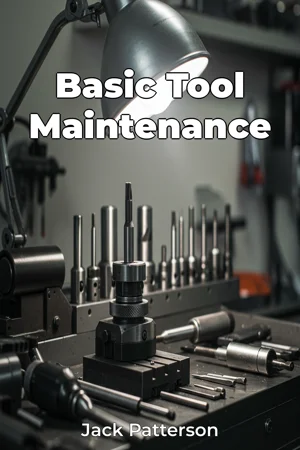
"Basic Tool Maintenance" explores the often-overlooked yet critical aspects of tool care and repair, essential for prolonging tool life, enhancing performance, and boosting user safety. By delving into the material science behind tool construction, the book explains how different materials react to wear and corrosion, offering insights into why maintenance is crucial. Discover practical techniques for cleaning, lubricating, and sharpening both hand tools and power tools, ensuring they operate efficiently and safely. The book uniquely blends mechanical engineering principles with hands-on instructions, explaining the "why" behind each maintenance procedure. It begins with core concepts of tool materials and their properties, and then advances through specific tool categories, providing detailed instructions and illustrations for maintenance and repair procedures. Emphasizing preventative maintenance, the book guides readers in establishing effective programs, including record-keeping and safety protocols, to maximize their toolkit investment.
Book Details
ISBN
9788233993085
Publisher
Publifye AS
Your Licenses
You don't own any licenses for this book
Purchase a license below to unlock this book and download the EPUB.
Purchase License
Select a tier to unlock this book
Need bulk licensing?
Contact us for enterprise agreements.