
About This Book
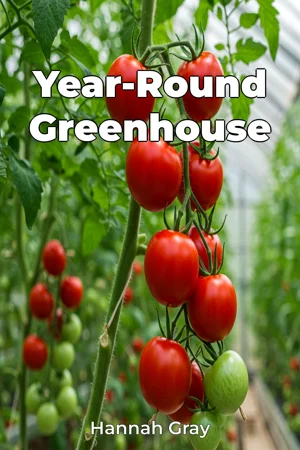
Can fresh, locally-sourced produce be a reality year-round, even in the face of harsh climates? This book, "Year-Round Greenhouse," delves into the science and practice of achieving sustainable food production through advanced greenhouse design and four-season growing techniques, drawing from extensive horticultural studies to offer a practical guide for both amateur and professional growers. At its core, this book addresses three critical areas: greenhouse design optimization for energy efficiency, the application of season extension techniques, and strategies for integrated pest and disease management in controlled environments. These topics are significant because they directly impact the feasibility and sustainability of local food systems, offering solutions to reduce reliance on long-distance transportation of produce, minimize environmental impact, and enhance food security in a changing climate. The historical context of greenhouse cultivation spans centuries, evolving from simple structures designed to protect delicate plants to sophisticated, climate-controlled facilities. Modern advancements in materials science, automation, and biological control have revolutionized the potential of greenhouse agriculture. The book assumes a basic understanding of plant biology and gardening principles, but provides thorough explanations of more complex concepts as they arise. The central argument of "Year-Round Greenhouse" is that with informed design and management, greenhouses can provide a viable pathway to sustainable and resilient local food production, regardless of external climate conditions. This argument is vital in the context of increasing concerns about food security, climate change, and the environmental impact of conventional agriculture. The book begins by introducing fundamental concepts of greenhouse design, covering topics such as structural materials, glazing options, heating and cooling systems, and environmental control technologies. It proceeds to examine specific season extension techniques, including the use of supplemental lighting, thermal curtains, soil heating, and innovative growing systems like hydroponics and aquaponics. A significant portion of the book is dedicated to integrated pest and disease management, emphasizing biological control methods, disease-resistant varieties, and cultural practices that promote plant health and minimize the need for chemical interventions. The book culminates with practical case studies demonstrating successful year-round greenhouse operations in diverse climates, along with guidelines for adapting these techniques to different geographic regions and scales of production. The evidence presented throughout the book is grounded in rigorous horticultural research, including data from university trials, government studies, and real-world greenhouse operations. Unique data sources include energy audits of various greenhouse designs, comparative analyses of different growing systems, and long-term studies on the effectiveness of biological control agents. "Year-Round Greenhouse" connects to several other fields, including engineering (in the design and construction of energy-efficient structures), economics (in the analysis of production costs and market viability), and ecology (in the understanding of plant-environment interactions and integrated pest management). These interdisciplinary connections enrich the book's argument by providing a holistic perspective on the challenges and opportunities of greenhouse agriculture. What sets this book apart is its comprehensive, science-based approach to year-round greenhouse growing. It integrates the latest research findings with practical insights from experienced growers, offering a balanced and accessible guide for readers of all levels. The tone is informative and practical, with a focus on providing clear explanations and actionable advice. The writing style is accessible to a broad audience, avoiding excessive jargon while maintaining scientific accuracy. The target audience includes home gardeners, small-scale farmers, educators, and researchers interested in sustainable agriculture and local food systems. This book would be valuable to them because it provides the knowledge and tools needed to design, build, and manage successful year-round greenhouses. As a science-based gardening book, "Year-Round Greenhouse" adheres to the conventions of providing evidence-based recommendations, detailed explanations of scientific principles, and clear instructions for practical application. The scope of the book is limited to the technical aspects of greenhouse design and management, with a focus on temperate and cold climates. It does not delve into the broader social or political issues related to food systems. Readers can apply the information in this book to design and build their own greenhouses, optimize existing greenhouse operations, reduce energy consumption, improve crop yields, and minimize the use of pesticides and herbicides. One ongoing debate in the field of greenhouse agriculture concerns the relative merits of different growing systems, such as soil-based versus hydroponic. "Year-Round Greenhouse" addresses this debate by presenting a balanced overview of the advantages and disadvantages of each system, allowing readers to make informed decisions based on their specific needs and resources.
Can fresh, locally-sourced produce be a reality year-round, even in the face of harsh climates? This book, "Year-Round Greenhouse," delves into the science and practice of achieving sustainable food production through advanced greenhouse design and four-season growing techniques, drawing from extensive horticultural studies to offer a practical guide for both amateur and professional growers. At its core, this book addresses three critical areas: greenhouse design optimization for energy efficiency, the application of season extension techniques, and strategies for integrated pest and disease management in controlled environments. These topics are significant because they directly impact the feasibility and sustainability of local food systems, offering solutions to reduce reliance on long-distance transportation of produce, minimize environmental impact, and enhance food security in a changing climate. The historical context of greenhouse cultivation spans centuries, evolving from simple structures designed to protect delicate plants to sophisticated, climate-controlled facilities. Modern advancements in materials science, automation, and biological control have revolutionized the potential of greenhouse agriculture. The book assumes a basic understanding of plant biology and gardening principles, but provides thorough explanations of more complex concepts as they arise. The central argument of "Year-Round Greenhouse" is that with informed design and management, greenhouses can provide a viable pathway to sustainable and resilient local food production, regardless of external climate conditions. This argument is vital in the context of increasing concerns about food security, climate change, and the environmental impact of conventional agriculture. The book begins by introducing fundamental concepts of greenhouse design, covering topics such as structural materials, glazing options, heating and cooling systems, and environmental control technologies. It proceeds to examine specific season extension techniques, including the use of supplemental lighting, thermal curtains, soil heating, and innovative growing systems like hydroponics and aquaponics. A significant portion of the book is dedicated to integrated pest and disease management, emphasizing biological control methods, disease-resistant varieties, and cultural practices that promote plant health and minimize the need for chemical interventions. The book culminates with practical case studies demonstrating successful year-round greenhouse operations in diverse climates, along with guidelines for adapting these techniques to different geographic regions and scales of production. The evidence presented throughout the book is grounded in rigorous horticultural research, including data from university trials, government studies, and real-world greenhouse operations. Unique data sources include energy audits of various greenhouse designs, comparative analyses of different growing systems, and long-term studies on the effectiveness of biological control agents. "Year-Round Greenhouse" connects to several other fields, including engineering (in the design and construction of energy-efficient structures), economics (in the analysis of production costs and market viability), and ecology (in the understanding of plant-environment interactions and integrated pest management). These interdisciplinary connections enrich the book's argument by providing a holistic perspective on the challenges and opportunities of greenhouse agriculture. What sets this book apart is its comprehensive, science-based approach to year-round greenhouse growing. It integrates the latest research findings with practical insights from experienced growers, offering a balanced and accessible guide for readers of all levels. The tone is informative and practical, with a focus on providing clear explanations and actionable advice. The writing style is accessible to a broad audience, avoiding excessive jargon while maintaining scientific accuracy. The target audience includes home gardeners, small-scale farmers, educators, and researchers interested in sustainable agriculture and local food systems. This book would be valuable to them because it provides the knowledge and tools needed to design, build, and manage successful year-round greenhouses. As a science-based gardening book, "Year-Round Greenhouse" adheres to the conventions of providing evidence-based recommendations, detailed explanations of scientific principles, and clear instructions for practical application. The scope of the book is limited to the technical aspects of greenhouse design and management, with a focus on temperate and cold climates. It does not delve into the broader social or political issues related to food systems. Readers can apply the information in this book to design and build their own greenhouses, optimize existing greenhouse operations, reduce energy consumption, improve crop yields, and minimize the use of pesticides and herbicides. One ongoing debate in the field of greenhouse agriculture concerns the relative merits of different growing systems, such as soil-based versus hydroponic. "Year-Round Greenhouse" addresses this debate by presenting a balanced overview of the advantages and disadvantages of each system, allowing readers to make informed decisions based on their specific needs and resources.
"Year-Round Greenhouse" explores how to achieve sustainable, local food production using advanced greenhouse design and four-season growing techniques. It's a practical guide for anyone interested in extending the growing season, regardless of their experience level. The book highlights intriguing facts, such as how controlled environments can significantly reduce reliance on long-distance produce transportation, minimizing environmental impact. It also delves into the optimization of greenhouse design for energy efficiency, crucial for sustainable agriculture. The book uniquely integrates the latest horticultural research with practical insights, offering a balanced and accessible guide. It progresses systematically, beginning with fundamental design concepts like materials and environmental control, then moving to season extension techniques, including hydroponics. A significant section is dedicated to integrated pest management, emphasizing biological control. Through case studies and guidelines, readers learn to adapt these techniques to various climates and production scales.
Book Details
ISBN
9788233993030
Publisher
Publifye AS
Your Licenses
You don't own any licenses for this book
Purchase a license below to unlock this book and download the EPUB.
Purchase License
Select a tier to unlock this book
Need bulk licensing?
Contact us for enterprise agreements.