
About This Book
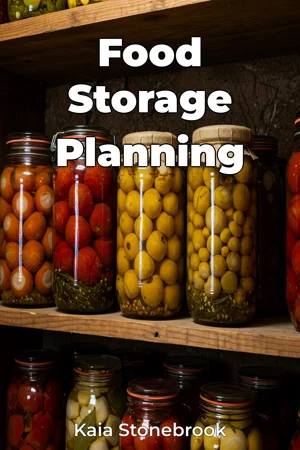
How secure is your food supply against unforeseen circumstances? This book, *Food Storage Planning*, delves into the science and strategies behind long-term food preservation and effective storage rotation, providing readers with the knowledge to create resilient and sustainable food reserves. We explore two key topics: scientifically-backed food preservation techniques and comprehensive storage management systems. Food preservation is critical to ensuring nutritional security, especially in emergencies or during times of economic instability. Effective storage rotation minimizes waste, maximizes food quality, and prevents spoilage, ensuring the food remains safe and palatable. Historically, food preservation has been essential for human survival, evolving from simple drying and salting methods to sophisticated techniques like canning, freeze-drying, and modified atmosphere packaging. Understanding this historical context helps appreciate present-day advancements and anticipate future innovations in food storage. This book assumes a general understanding of basic kitchen practices but requires no specialized scientific knowledge; we explain complex concepts in an accessible manner. The central argument of *Food Storage Planning* asserts that a proactive, informed approach to food storage is not merely a matter of convenience, but a vital component of personal and community resilience. By applying the principles of food science and efficient storage management, individuals can significantly enhance their preparedness for any situation. This book is structured to guide readers through a complete understanding of food storage. We begin by introducing fundamental concepts in food science related to spoilage, preservation, and nutrient retention (a). The core of the book is dedicated to exploring various preservation methods, including dehydration, canning, fermentation, freezing, and modern techniques such as irradiation and sous vide, detailing their advantages, disadvantages, and specific applications (b). Next, we address the critical aspects of storage systems, emphasizing FIFO (First In, First Out) and other rotation methods, optimal storage conditions (temperature, humidity, light), pest control, and inventory management (b). Finally, we culminate with practical guidelines for creating personalized food storage plans tailored to individual needs, dietary requirements, and available resources, including strategies for long-term survival and emergency preparedness (c, d). The information presented is supported by extensive research from food science journals, government publications (USDA, FDA), and academic studies focusing on food preservation, packaging, and storage. We also incorporate data from real-world case studies of successful long-term food storage implementations, offering practical validation of the proposed methods (6). *Food Storage Planning* connects food science with nutrition by ensuring preservation methods retain essential vitamins and minerals. The book also touches on economics through cost-benefit analyses of various food storage strategies, and environmental science by considering sustainable packaging and waste reduction. This book offers a unique integrated approach, combining the scientific principles of food preservation with the practical aspects of storage management. It presents complex information in an easy-to-understand format, using clear explanations, visual aids, and step-by-step instructions, to enable readers to implement effective food storage solutions. Our approach is conversational and informative, designed to empower readers with actionable knowledge. The tone is clear, concise, and avoids jargon, while offering scientific rigor. The target audience includes home cooks, preppers, homesteaders, emergency preparedness enthusiasts, and anyone interested in securing their food supply. It is valuable for those seeking to improve food security, reduce food waste, or simply gain a deeper understanding of food preservation techniques. As a non-fiction book in the science and cooking genres, we expect to provide evidence-based information, practical advice, and clear instructions. We aim to bridge the gap between scientific research and everyday application. The book focuses on practical, proven methods for extending the shelf life of common food items. It does not delve into highly specialized or experimental preservation techniques. It also does not explore specific recipes beyond their relevance to preserving food. Readers can apply the knowledge from this book to create emergency food kits, establish long-term food storage reserves, reduce food waste at home, prepare for natural disasters, and improve their overall food security. While food storage is generally a well-accepted practice, debates exist regarding the nutritional value of certain preserved foods compared to fresh produce, the safety of specific preservation methods (e.g., canning), and the long-term viability of relying solely on stored food. We address these concerns by providing balanced perspectives and evidence-based recommendations.
How secure is your food supply against unforeseen circumstances? This book, *Food Storage Planning*, delves into the science and strategies behind long-term food preservation and effective storage rotation, providing readers with the knowledge to create resilient and sustainable food reserves. We explore two key topics: scientifically-backed food preservation techniques and comprehensive storage management systems. Food preservation is critical to ensuring nutritional security, especially in emergencies or during times of economic instability. Effective storage rotation minimizes waste, maximizes food quality, and prevents spoilage, ensuring the food remains safe and palatable. Historically, food preservation has been essential for human survival, evolving from simple drying and salting methods to sophisticated techniques like canning, freeze-drying, and modified atmosphere packaging. Understanding this historical context helps appreciate present-day advancements and anticipate future innovations in food storage. This book assumes a general understanding of basic kitchen practices but requires no specialized scientific knowledge; we explain complex concepts in an accessible manner. The central argument of *Food Storage Planning* asserts that a proactive, informed approach to food storage is not merely a matter of convenience, but a vital component of personal and community resilience. By applying the principles of food science and efficient storage management, individuals can significantly enhance their preparedness for any situation. This book is structured to guide readers through a complete understanding of food storage. We begin by introducing fundamental concepts in food science related to spoilage, preservation, and nutrient retention (a). The core of the book is dedicated to exploring various preservation methods, including dehydration, canning, fermentation, freezing, and modern techniques such as irradiation and sous vide, detailing their advantages, disadvantages, and specific applications (b). Next, we address the critical aspects of storage systems, emphasizing FIFO (First In, First Out) and other rotation methods, optimal storage conditions (temperature, humidity, light), pest control, and inventory management (b). Finally, we culminate with practical guidelines for creating personalized food storage plans tailored to individual needs, dietary requirements, and available resources, including strategies for long-term survival and emergency preparedness (c, d). The information presented is supported by extensive research from food science journals, government publications (USDA, FDA), and academic studies focusing on food preservation, packaging, and storage. We also incorporate data from real-world case studies of successful long-term food storage implementations, offering practical validation of the proposed methods (6). *Food Storage Planning* connects food science with nutrition by ensuring preservation methods retain essential vitamins and minerals. The book also touches on economics through cost-benefit analyses of various food storage strategies, and environmental science by considering sustainable packaging and waste reduction. This book offers a unique integrated approach, combining the scientific principles of food preservation with the practical aspects of storage management. It presents complex information in an easy-to-understand format, using clear explanations, visual aids, and step-by-step instructions, to enable readers to implement effective food storage solutions. Our approach is conversational and informative, designed to empower readers with actionable knowledge. The tone is clear, concise, and avoids jargon, while offering scientific rigor. The target audience includes home cooks, preppers, homesteaders, emergency preparedness enthusiasts, and anyone interested in securing their food supply. It is valuable for those seeking to improve food security, reduce food waste, or simply gain a deeper understanding of food preservation techniques. As a non-fiction book in the science and cooking genres, we expect to provide evidence-based information, practical advice, and clear instructions. We aim to bridge the gap between scientific research and everyday application. The book focuses on practical, proven methods for extending the shelf life of common food items. It does not delve into highly specialized or experimental preservation techniques. It also does not explore specific recipes beyond their relevance to preserving food. Readers can apply the knowledge from this book to create emergency food kits, establish long-term food storage reserves, reduce food waste at home, prepare for natural disasters, and improve their overall food security. While food storage is generally a well-accepted practice, debates exist regarding the nutritional value of certain preserved foods compared to fresh produce, the safety of specific preservation methods (e.g., canning), and the long-term viability of relying solely on stored food. We address these concerns by providing balanced perspectives and evidence-based recommendations.
*Food Storage Planning* provides a comprehensive guide to securing your food supply through effective preservation and storage techniques. The book emphasizes the importance of understanding food science to maximize nutrient retention and minimize spoilage. Learn how historical methods like drying and salting evolved into modern techniques such as canning, dehydration, and freezing, all essential for emergency preparedness and long-term food security. The book explores various preservation methods, detailing their advantages and disadvantages for different types of food. It also covers storage rotation systems like FIFO (First In, First Out), optimal storage conditions, and pest control, all vital for maintaining food quality. By combining scientific principles with practical advice, this book empowers home cooks, homesteaders, and anyone interested in food security to create personalized food storage plans. The book progresses from fundamental concepts in food science to exploring preservation methods and then addresses storage systems. It culminates with practical guidelines for creating personalized food storage plans. With its integrated approach and accessible language, *Food Storage Planning* bridges the gap between scientific research and everyday application, offering actionable knowledge for building a resilient and sustainable food reserve.
Book Details
ISBN
9788233993023
Publisher
Publifye AS
Your Licenses
You don't own any licenses for this book
Purchase a license below to unlock this book and download the EPUB.
Purchase License
Select a tier to unlock this book
Need bulk licensing?
Contact us for enterprise agreements.