
About This Book
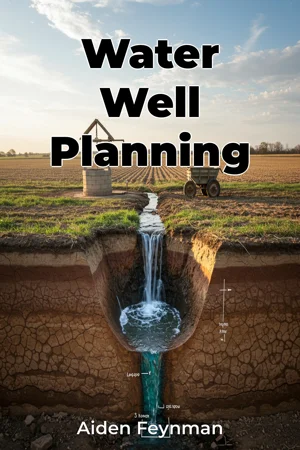
Are you prepared to secure a reliable water source? 'Water Well Planning' delivers a comprehensive roadmap for developing, testing, and maintaining water wells, grounded in geological and engineering principles. This book addresses the critical need for sustainable water resource management in an era of increasing global demand and environmental concerns. The core of this book revolves around three key areas: understanding hydrogeology, mastering well construction and testing techniques, and implementing effective maintenance strategies. Understanding hydrogeology--the study of groundwater occurrence and movement--is vital for identifying viable aquifers and predicting well yields. Proper well construction and rigorous testing methods are essential for ensuring water quality and long-term well performance. Finally, proactive maintenance prevents costly repairs and ensures the continued functionality of water wells as a vital water source. The knowledge shared builds upon established earth science principles and engineering practices, enhanced by recent technological advancements in drilling, sensing, and data analysis. While a basic understanding of geological concepts is helpful, the book strives to be accessible to readers from various technical and non-technical backgrounds. 'Water Well Planning' argues that a holistic, scientifically informed approach to water well development is critical. It goes beyond rudimentary instructions. We aim for promoting sustainable water use, minimizing environmental impact, and ensuring the long-term availability of clean water. The book unfolds in a structured progression. It begins with an overview of the global water cycle and the significance of groundwater resources. Next, it focuses on hydrogeological investigations, detailing methods for aquifer characterization, groundwater flow modeling, and site selection. The third segment dives into well design and construction. Case studies and best practices for drilling techniques, casing installation, and well development are provided. We then shift to water quality testing, including sampling protocols, laboratory analysis, and interpretation of results based on established standards. The book concludes with a comprehensive guide to well maintenance, including troubleshooting common problems, implementing preventive measures, and ensuring well longevity. 'Water Well Planning' draws on diverse sources of evidence, including peer-reviewed scientific literature, industry standards, and real-world case studies. We present data from geological surveys, hydrological reports, and water quality assessments, offering a blend of theoretical knowledge and practical applications. The subject seamlessly integrates technology, Earth Sciences, and Geography. The technological aspects encompass well-drilling techniques and GIS mapping of water resources, while earth sciences give the geological context for groundwater occurrence along with geographical considerations relating to regional water availability and demand. These interdisciplinary connections enrich the book's insights, providing a more complete understanding of water well planning. The book's approach is unique in its emphasis on integrating geological understanding with engineering best practices. It emphasizes proactive planning and preventative maintenance rather than reactive problem-solving. 'Water Well Planning' offers a practical, technically grounded approach that is simultaneously accessible and comprehensive. The tone is informative and practical. This book is targeted towards hydrogeologists, environmental engineers, water resource managers, and anyone involved in water well construction or management. It offers the tools and knowledge necessary to plan, construct, and maintain successful and sustainable water wells. This book adheres to the standards of technical non-fiction, providing verifiable facts, clear explanations, and practical guidance. It covers a broad spectrum of topics related to water well planning, from geological assessment to maintenance procedures. Recognizing the vastness of the field, 'Water Well Planning' deliberately focuses on fundamental principles and widely applicable techniques. While it does not delve into highly specialized or region-specific aspects of water well development, it provides a solid foundation for further exploration. The information within can be applied in numerous real-world settings: rural water supply projects, agricultural irrigation systems, industrial facilities, or private residences relying on well water. Readers can use this knowledge to make informed decisions, implement effective strategies, and ensure the long-term sustainability of their water sources. While the core principles of water well planning are well-established, there are ongoing debates regarding optimal drilling techniques, water quality standards, and the management of groundwater resources to address the impact from climate change. These debates are addressed throughout the book.
Are you prepared to secure a reliable water source? 'Water Well Planning' delivers a comprehensive roadmap for developing, testing, and maintaining water wells, grounded in geological and engineering principles. This book addresses the critical need for sustainable water resource management in an era of increasing global demand and environmental concerns. The core of this book revolves around three key areas: understanding hydrogeology, mastering well construction and testing techniques, and implementing effective maintenance strategies. Understanding hydrogeology--the study of groundwater occurrence and movement--is vital for identifying viable aquifers and predicting well yields. Proper well construction and rigorous testing methods are essential for ensuring water quality and long-term well performance. Finally, proactive maintenance prevents costly repairs and ensures the continued functionality of water wells as a vital water source. The knowledge shared builds upon established earth science principles and engineering practices, enhanced by recent technological advancements in drilling, sensing, and data analysis. While a basic understanding of geological concepts is helpful, the book strives to be accessible to readers from various technical and non-technical backgrounds. 'Water Well Planning' argues that a holistic, scientifically informed approach to water well development is critical. It goes beyond rudimentary instructions. We aim for promoting sustainable water use, minimizing environmental impact, and ensuring the long-term availability of clean water. The book unfolds in a structured progression. It begins with an overview of the global water cycle and the significance of groundwater resources. Next, it focuses on hydrogeological investigations, detailing methods for aquifer characterization, groundwater flow modeling, and site selection. The third segment dives into well design and construction. Case studies and best practices for drilling techniques, casing installation, and well development are provided. We then shift to water quality testing, including sampling protocols, laboratory analysis, and interpretation of results based on established standards. The book concludes with a comprehensive guide to well maintenance, including troubleshooting common problems, implementing preventive measures, and ensuring well longevity. 'Water Well Planning' draws on diverse sources of evidence, including peer-reviewed scientific literature, industry standards, and real-world case studies. We present data from geological surveys, hydrological reports, and water quality assessments, offering a blend of theoretical knowledge and practical applications. The subject seamlessly integrates technology, Earth Sciences, and Geography. The technological aspects encompass well-drilling techniques and GIS mapping of water resources, while earth sciences give the geological context for groundwater occurrence along with geographical considerations relating to regional water availability and demand. These interdisciplinary connections enrich the book's insights, providing a more complete understanding of water well planning. The book's approach is unique in its emphasis on integrating geological understanding with engineering best practices. It emphasizes proactive planning and preventative maintenance rather than reactive problem-solving. 'Water Well Planning' offers a practical, technically grounded approach that is simultaneously accessible and comprehensive. The tone is informative and practical. This book is targeted towards hydrogeologists, environmental engineers, water resource managers, and anyone involved in water well construction or management. It offers the tools and knowledge necessary to plan, construct, and maintain successful and sustainable water wells. This book adheres to the standards of technical non-fiction, providing verifiable facts, clear explanations, and practical guidance. It covers a broad spectrum of topics related to water well planning, from geological assessment to maintenance procedures. Recognizing the vastness of the field, 'Water Well Planning' deliberately focuses on fundamental principles and widely applicable techniques. While it does not delve into highly specialized or region-specific aspects of water well development, it provides a solid foundation for further exploration. The information within can be applied in numerous real-world settings: rural water supply projects, agricultural irrigation systems, industrial facilities, or private residences relying on well water. Readers can use this knowledge to make informed decisions, implement effective strategies, and ensure the long-term sustainability of their water sources. While the core principles of water well planning are well-established, there are ongoing debates regarding optimal drilling techniques, water quality standards, and the management of groundwater resources to address the impact from climate change. These debates are addressed throughout the book.
"Water Well Planning" provides a comprehensive guide to developing and maintaining water wells, emphasizing the critical role of sustainable water resource management. This book uniquely integrates geological understanding with engineering practices, addressing the increasing global demand for clean water. It highlights intriguing facts, such as the importance of hydrogeology in identifying viable aquifers and the necessity of proactive maintenance to prevent costly repairs, ensuring the longevity of wells as a vital water source. The book's approach is rooted in established earth science principles and engineering practices, enhanced by modern drilling and data analysis technologies. Readers will gain insights into aquifer characterization and groundwater flow modeling. It presents information in a structured progression, starting with the global water cycle and then moving through hydrogeological investigations, well design, water quality testing, and concluding with maintenance. Ultimately, "Water Well Planning" aims to promote sustainable water use and minimize environmental impact. By blending theoretical knowledge with practical applications, the book offers a valuable resource for anyone involved in water well construction or management, covering topics from geological assessment to maintenance procedures and ensuring the long-term sustainability of water sources.
Book Details
ISBN
9788233992989
Publisher
Publifye AS
Your Licenses
You don't own any licenses for this book
Purchase a license below to unlock this book and download the EPUB.
Purchase License
Select a tier to unlock this book
Need bulk licensing?
Contact us for enterprise agreements.