
About This Book
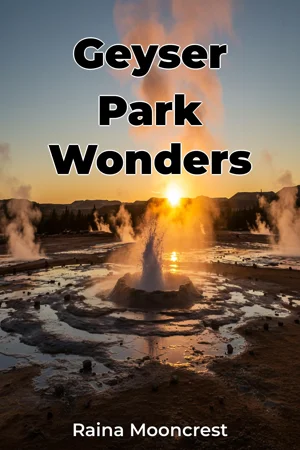
What if the very ground beneath your feet could erupt in a dazzling display of superheated water and steam? 'Geyser Park Wonders' invites you on a journey to the heart of some of the world's most active geothermal landscapes, exploring the science, history, and ecological significance of these natural phenomena. This book aims to provide a comprehensive understanding of geyser basins, hot springs, and related geothermal features. These remarkable environments offer a window into the Earth’s internal processes and support unique ecosystems, making their study crucial for understanding our planet. This book delves into the geological processes that create geysers and hot springs, the history of their scientific exploration, and the delicate balance of the ecosystems they support. Understanding these wonders requires insights into plate tectonics, hydrology, and geochemistry – disciplines that converge in these dynamic landscapes. These areas are not merely geological curiosities; they are zones teeming with microbial life adapted to extreme conditions, providing insights into the origins of life and potential for biotechnological innovation. The central argument of 'Geyser Park Wonders' is that geothermal areas like Yellowstone and similar sites worldwide are dynamic natural laboratories that offer invaluable insights into Earth’s past, present, and future. They demonstrate the interplay between geological forces, chemical processes, and biological adaptations. By understanding these systems, we can better appreciate the complexity of our planet and inform strategies for sustainable resource management and conservation in a changing world. The book begins by introducing the fundamental concepts of geothermal activity, explaining how magma plumes, fault lines, and groundwater systems interact to create these features. It then explores the history of scientific investigation, from early explorations to modern geochemical and geophysical techniques. The book will examine the geological history of these areas, detailing the volcanic activity and tectonic forces that shaped the landscape. Chapters will then focus on the diverse microbial communities that thrive in these extreme environments, highlighting their unique adaptations and ecological roles. Further chapters will consider the management and preservation of such delicate environments. The narrative culminates with a discussion of the implications of geothermal research for understanding climate change, energy production, and the search for life beyond Earth. The book draws upon a wealth of existing scientific literature, field observations, geochemical analyses, and geophysical data. It integrates research from geology, microbiology, hydrology, and environmental science to provide a holistic view. Original data from ongoing monitoring efforts and recent research expeditions are also incorporated, offering current insight into active geothermal zones. 'Geyser Park Wonders' connects to several interdisciplinary fields. First, it relates to astrobiology by studying extremophiles, organisms that thrive in harsh conditions, which helps us understand the possibilities for life on other planets. Second, it relates to environmental science by examining the impact of human activity on geothermal ecosystems and exploring sustainable management practices. Third, it connects to energy resource management by investigating the potential and challenges of harnessing geothermal energy. This book stands out by using an approach that blends rigorous scientific analysis with accessible explanations, making complex topics understandable for a broad audience. It presents a balanced view of the scientific community's current understanding of geothermal activity, emphasizing the interconnectedness of geological, chemical, and biological processes. The book is written in a clear, accessible style, avoiding jargon and using illustrations and diagrams to explain complex concepts. The objective is to present the current scientific understanding in a manner that is both informative and engaging. The target audience includes students, educators, science enthusiasts, and anyone interested in geology, environmental science, and the natural world. It appeals to those seeking a deeper understanding of the forces that shape our planet. As a non-fiction book, 'Geyser Park Wonders' adheres to standards of accuracy and objectivity, presenting information based on scientific evidence and peer-reviewed research. It aims to educate and inform, providing a nuanced and balanced perspective on a complex topic. The scope of the book is intentionally broad, covering various aspects of geothermal activity in different geographical regions. However, it focuses primarily on well-studied areas, while acknowledging that much remains unknown in the field of geothermal research. The information in 'Geyser Park Wonders' can be applied to various real-world scenarios, including geothermal energy development, environmental conservation efforts, and scientific education. It provides a foundation for understanding the risks and benefits associated with human interaction with geothermal environments. The book addresses ongoing debates about the management of geothermal resources, the potential impacts of climate change on thermal features, and the ethical considerations surrounding the exploration of extreme environments. By presenting different perspectives and highlighting areas of uncertainty, 'Geyser Park Wonders' encourages critical thinking and informed decision-making.
What if the very ground beneath your feet could erupt in a dazzling display of superheated water and steam? 'Geyser Park Wonders' invites you on a journey to the heart of some of the world's most active geothermal landscapes, exploring the science, history, and ecological significance of these natural phenomena. This book aims to provide a comprehensive understanding of geyser basins, hot springs, and related geothermal features. These remarkable environments offer a window into the Earth’s internal processes and support unique ecosystems, making their study crucial for understanding our planet. This book delves into the geological processes that create geysers and hot springs, the history of their scientific exploration, and the delicate balance of the ecosystems they support. Understanding these wonders requires insights into plate tectonics, hydrology, and geochemistry – disciplines that converge in these dynamic landscapes. These areas are not merely geological curiosities; they are zones teeming with microbial life adapted to extreme conditions, providing insights into the origins of life and potential for biotechnological innovation. The central argument of 'Geyser Park Wonders' is that geothermal areas like Yellowstone and similar sites worldwide are dynamic natural laboratories that offer invaluable insights into Earth’s past, present, and future. They demonstrate the interplay between geological forces, chemical processes, and biological adaptations. By understanding these systems, we can better appreciate the complexity of our planet and inform strategies for sustainable resource management and conservation in a changing world. The book begins by introducing the fundamental concepts of geothermal activity, explaining how magma plumes, fault lines, and groundwater systems interact to create these features. It then explores the history of scientific investigation, from early explorations to modern geochemical and geophysical techniques. The book will examine the geological history of these areas, detailing the volcanic activity and tectonic forces that shaped the landscape. Chapters will then focus on the diverse microbial communities that thrive in these extreme environments, highlighting their unique adaptations and ecological roles. Further chapters will consider the management and preservation of such delicate environments. The narrative culminates with a discussion of the implications of geothermal research for understanding climate change, energy production, and the search for life beyond Earth. The book draws upon a wealth of existing scientific literature, field observations, geochemical analyses, and geophysical data. It integrates research from geology, microbiology, hydrology, and environmental science to provide a holistic view. Original data from ongoing monitoring efforts and recent research expeditions are also incorporated, offering current insight into active geothermal zones. 'Geyser Park Wonders' connects to several interdisciplinary fields. First, it relates to astrobiology by studying extremophiles, organisms that thrive in harsh conditions, which helps us understand the possibilities for life on other planets. Second, it relates to environmental science by examining the impact of human activity on geothermal ecosystems and exploring sustainable management practices. Third, it connects to energy resource management by investigating the potential and challenges of harnessing geothermal energy. This book stands out by using an approach that blends rigorous scientific analysis with accessible explanations, making complex topics understandable for a broad audience. It presents a balanced view of the scientific community's current understanding of geothermal activity, emphasizing the interconnectedness of geological, chemical, and biological processes. The book is written in a clear, accessible style, avoiding jargon and using illustrations and diagrams to explain complex concepts. The objective is to present the current scientific understanding in a manner that is both informative and engaging. The target audience includes students, educators, science enthusiasts, and anyone interested in geology, environmental science, and the natural world. It appeals to those seeking a deeper understanding of the forces that shape our planet. As a non-fiction book, 'Geyser Park Wonders' adheres to standards of accuracy and objectivity, presenting information based on scientific evidence and peer-reviewed research. It aims to educate and inform, providing a nuanced and balanced perspective on a complex topic. The scope of the book is intentionally broad, covering various aspects of geothermal activity in different geographical regions. However, it focuses primarily on well-studied areas, while acknowledging that much remains unknown in the field of geothermal research. The information in 'Geyser Park Wonders' can be applied to various real-world scenarios, including geothermal energy development, environmental conservation efforts, and scientific education. It provides a foundation for understanding the risks and benefits associated with human interaction with geothermal environments. The book addresses ongoing debates about the management of geothermal resources, the potential impacts of climate change on thermal features, and the ethical considerations surrounding the exploration of extreme environments. By presenting different perspectives and highlighting areas of uncertainty, 'Geyser Park Wonders' encourages critical thinking and informed decision-making.
"Geyser Park Wonders" explores the fascinating world of geothermal areas, revealing the science behind geysers, hot springs, and the unique ecosystems they support. These dynamic landscapes offer a glimpse into Earth's internal processes, shaped by volcanic activity and tectonic forces. One intriguing fact is the existence of extremophiles—microbial life thriving in extreme heat and chemical conditions, offering clues about the origins of life itself. The book delves into the geological history of these areas, explaining how magma plumes and groundwater systems interact. It also examines the delicate balance of these ecosystems, showcasing the importance of understanding geochemistry and hydrology to preserve these natural wonders. The book further explores the history of scientific exploration and the potential for geothermal energy. Beginning with the fundamental concepts of geothermal activity, the book progresses through the history of scientific investigation, the unique microbial communities, and the management and preservation of these environments. It concludes by discussing the implications of geothermal research for climate change, energy production, and the search for life beyond Earth, making it a valuable resource for anyone interested in Earth Sciences and environmental science.
Book Details
ISBN
9788233992590
Publisher
Publifye AS
Your Licenses
You don't own any licenses for this book
Purchase a license below to unlock this book and download the EPUB.
Purchase License
Select a tier to unlock this book
Need bulk licensing?
Contact us for enterprise agreements.