
About This Book
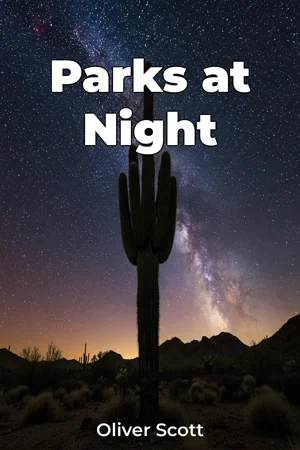
Have you ever wondered what happens in our national parks after the sun sets? "Parks at Night" invites you to explore the hidden world that emerges under the cloak of darkness, revealing the captivating secrets and wonders of these protected landscapes from a perspective rarely seen. This book delves into the nocturnal environment of national parks, covering stargazing opportunities, the behavior of nocturnal wildlife, and the eerie legends and folklore that have sprung up around these natural spaces. The investigation into the nighttime realm of national parks is crucial because as light pollution increases and natural habitats face mounting pressures, understanding and appreciating these nocturnal ecosystems becomes vital for their conservation. We examine not only the ecological importance of darkness but also the cultural significance of the night sky and the stories that bind people to these places. To fully appreciate these nocturnal landscapes, we will look at the basics of astronomy and ecology, including an accessible overview of constellations, the impact of moonlight on animal behavior, and the significance of dark skies for various species. This shared foundation will ensure that novices and seasoned park enthusiasts alike can fully engage with the content. "Parks at Night" argues that the national parks offer unique opportunities for experiencing and understanding the natural world in its entirety, expanding beyond diurnal observations to include the dynamic and often-overlooked nocturnal environment. This viewpoint highlights the necessity of preserving natural darkness as a critical component of national park conservation efforts. The book will begin by introducing the concept of the "nocturnal park," setting the stage with discussions on the scientific rationale for preserving dark skies and the historical relationship between humans and the night. Following this introduction, we will explore two main sections. The first will focus on the celestial wonders visible in national parks, including practical guidance on stargazing, astrophotography tips tailored to park settings, and explorations of the cultural astronomical knowledge of indigenous peoples connected to these lands. The second section will turn its attention to nocturnal wildlife, detailing the behavior of various species under the cover of darkness, the challenges they face due to human encroachment and light pollution, and strategies for responsible wildlife observation. The book will culminate in a discussion on the folklore and legends associated with national parks at night, examining how these stories reflect our relationship with nature and the darker aspects of the human experience. Our arguments will be supported by a combination of scientific research, including studies on the effects of light pollution on wildlife behavior and astronomical data on dark sky quality in national parks. We will also draw on anecdotal evidence from park rangers, nocturnal wildlife enthusiasts, and oral histories from communities bordering these protected areas. "Parks at Night" connects to the fields of conservation biology, cultural anthropology, and astronomy. By uniting these diverse disciplines, we provide a holistic understanding of the value and vulnerability of national parks at night. What sets this book apart is its blend of practical advice, scientific information, and cultural storytelling, offering readers a well-rounded perspective on the nocturnal world of national parks. It is aimed toward nature enthusiasts, amateur astronomers, travelers, and anyone interested in learning more about the hidden worlds within our national parks. The conversational yet informative writing style makes the book accessible to a wide range of readers. As a work of travel and nature writing, "Parks at Night" adheres to the conventions of both genres, with a blend of descriptive prose, scientific accuracy, and practical guidance. The book offers a comprehensive but not exhaustive overview of parks. It focuses primarily on parks within the contiguous United States, acknowledging that nocturnal experiences in parks worldwide deserve a broader exploration. The information presented in "Parks at Night" has real-world applications, empowering readers to become informed advocates for dark sky conservation and responsible park visitation. It encourages readers to appreciate and protect the nocturnal environment for future generations. The book also touches on the ongoing debates about the balance between park accessibility, recreational opportunities, and environmental preservation. The content encourages an appreciation for the darkness that many people fear.
Have you ever wondered what happens in our national parks after the sun sets? "Parks at Night" invites you to explore the hidden world that emerges under the cloak of darkness, revealing the captivating secrets and wonders of these protected landscapes from a perspective rarely seen. This book delves into the nocturnal environment of national parks, covering stargazing opportunities, the behavior of nocturnal wildlife, and the eerie legends and folklore that have sprung up around these natural spaces. The investigation into the nighttime realm of national parks is crucial because as light pollution increases and natural habitats face mounting pressures, understanding and appreciating these nocturnal ecosystems becomes vital for their conservation. We examine not only the ecological importance of darkness but also the cultural significance of the night sky and the stories that bind people to these places. To fully appreciate these nocturnal landscapes, we will look at the basics of astronomy and ecology, including an accessible overview of constellations, the impact of moonlight on animal behavior, and the significance of dark skies for various species. This shared foundation will ensure that novices and seasoned park enthusiasts alike can fully engage with the content. "Parks at Night" argues that the national parks offer unique opportunities for experiencing and understanding the natural world in its entirety, expanding beyond diurnal observations to include the dynamic and often-overlooked nocturnal environment. This viewpoint highlights the necessity of preserving natural darkness as a critical component of national park conservation efforts. The book will begin by introducing the concept of the "nocturnal park," setting the stage with discussions on the scientific rationale for preserving dark skies and the historical relationship between humans and the night. Following this introduction, we will explore two main sections. The first will focus on the celestial wonders visible in national parks, including practical guidance on stargazing, astrophotography tips tailored to park settings, and explorations of the cultural astronomical knowledge of indigenous peoples connected to these lands. The second section will turn its attention to nocturnal wildlife, detailing the behavior of various species under the cover of darkness, the challenges they face due to human encroachment and light pollution, and strategies for responsible wildlife observation. The book will culminate in a discussion on the folklore and legends associated with national parks at night, examining how these stories reflect our relationship with nature and the darker aspects of the human experience. Our arguments will be supported by a combination of scientific research, including studies on the effects of light pollution on wildlife behavior and astronomical data on dark sky quality in national parks. We will also draw on anecdotal evidence from park rangers, nocturnal wildlife enthusiasts, and oral histories from communities bordering these protected areas. "Parks at Night" connects to the fields of conservation biology, cultural anthropology, and astronomy. By uniting these diverse disciplines, we provide a holistic understanding of the value and vulnerability of national parks at night. What sets this book apart is its blend of practical advice, scientific information, and cultural storytelling, offering readers a well-rounded perspective on the nocturnal world of national parks. It is aimed toward nature enthusiasts, amateur astronomers, travelers, and anyone interested in learning more about the hidden worlds within our national parks. The conversational yet informative writing style makes the book accessible to a wide range of readers. As a work of travel and nature writing, "Parks at Night" adheres to the conventions of both genres, with a blend of descriptive prose, scientific accuracy, and practical guidance. The book offers a comprehensive but not exhaustive overview of parks. It focuses primarily on parks within the contiguous United States, acknowledging that nocturnal experiences in parks worldwide deserve a broader exploration. The information presented in "Parks at Night" has real-world applications, empowering readers to become informed advocates for dark sky conservation and responsible park visitation. It encourages readers to appreciate and protect the nocturnal environment for future generations. The book also touches on the ongoing debates about the balance between park accessibility, recreational opportunities, and environmental preservation. The content encourages an appreciation for the darkness that many people fear.
"Parks at Night" unveils the unseen beauty and critical importance of national parks after dark. It explores the unique opportunities these protected lands offer for stargazing and observing nocturnal wildlife, emphasizing the need for dark sky conservation. Discover how light pollution threatens nocturnal ecosystems, impacting animal behavior and obscuring the wonders of the night sky. The book blends scientific insights with folklore, revealing the cultural significance of darkness and the stories it inspires. Beginning with the concept of the "nocturnal park," the book progresses from celestial wonders and astrophotography to the behavior of nocturnal wildlife and the challenges they face. Learn about the cultural astronomy of indigenous peoples and how their knowledge connects them to the land. Did you know that many animals rely on the darkness for hunting, mating, and navigation, making dark skies essential for their survival? Or that national parks offer some of the last remaining havens for truly dark skies, free from the pervasive glow of urban light? This book provides nature enthusiasts, travelers, and amateur astronomers with practical guidance, scientific information, and captivating stories. By combining conservation biology, cultural anthropology, and astronomy, "Parks at Night" offers a holistic understanding of the value and vulnerability of these nocturnal environments, empowering readers to protect these precious resources.
Book Details
ISBN
9788233992552
Publisher
Publifye AS
Your Licenses
You don't own any licenses for this book
Purchase a license below to unlock this book and download the EPUB.
Purchase License
Select a tier to unlock this book
Need bulk licensing?
Contact us for enterprise agreements.