
About This Book
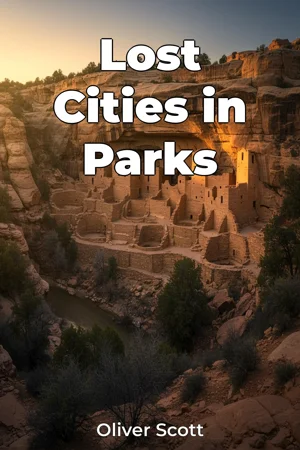
Imagine walking through a national park, not just seeing the natural beauty, but also uncovering the secrets of civilizations long past. Lost Cities in Parks unveils the hidden histories residing within the boundaries of America's cherished national parks, revealing the stories of the people who came before us. This book delves into three key areas: the archaeological evidence of pre-Columbian settlements, the impact of early European exploration and its consequences, and the ongoing efforts to preserve and interpret these fragile cultural resources. It's crucial to understand these topics because they offer a more complete picture of American history – one that acknowledges the diverse narratives often overlooked in traditional accounts. To fully appreciate the significance of these archaeological finds, a basic understanding of archaeological methods and Native American history is helpful, though not strictly necessary. The book provides the relevant background, exploring the development of archaeological techniques and the cultural diversity of the indigenous populations who inhabited these lands. The central argument is that national parks are not just natural landscapes, but also significant historical and cultural sites that hold invaluable clues about the past. By examining these sites, we can gain a deeper understanding of human adaptation, resilience, and the complex relationship between people and the environment. Furthermore, these sites provide a tangible link to the past, fostering a sense of connection and responsibility for their preservation. The book begins by introducing the concept of national parks as repositories of cultural heritage. It then develops this idea through major sections. Firstly, it explores several specific national parks, highlighting the history, archaeological evidence, and cultural significance of the sites within them. Examples include Mesa Verde National Park with its cliff dwellings, Cahokia Mounds near the Ozark National Scenic Riverways and the ancient settlements found at Channel Islands National Park. Each case study provides concrete examples of past civilizations and their interaction with both the natural world and each other. Secondly, the book examines the challenges of preserving these sites in the face of natural erosion, visitation, and development pressures. It discusses various preservation strategies and the ethical considerations involved in managing cultural resources. Finally, the culmination of the argument focuses on the importance of public education and engagement in protecting these cultural landscapes for future generations. The evidence presented throughout the book is drawn from archaeological reports, historical documents, ethnographic studies, and oral histories gathered from descendant communities. Unique data sources include detailed maps of archaeological sites, analysis of artifacts, and environmental reconstructions based on pollen and soil samples. The book also integrates information obtained through modern remote sensing techniques, such as LiDAR, in order to reveal previously unknown features. Lost Cities in Parks connects to several other fields, including anthropology, environmental studies, and heritage management. The anthropological perspective provides insights into the social and cultural organization of past societies. The environmental studies lens explores the impact of climate change and human activities on archaeological sites. And heritage management principles inform the discussion of preservation strategies and ethical considerations. These connections enhance the book's argument by demonstrating the interdisciplinary nature of studying cultural landscapes. This book distinguishes itself by taking a holistic approach to national parks, viewing them as integrated cultural and natural landscapes. It moves beyond traditional narratives of wilderness preservation to embrace the rich human history embedded within these protected areas. The tone of the book is informative and accessible, aiming to engage a broad audience while maintaining scholarly rigor. It is intended for anyone interested in history, archaeology, national parks, or the cultural heritage of the United States. It will be particularly valuable to park visitors, students, educators, and preservation professionals. As a work of non-fiction, "Lost Cities in Parks" adheres to the standards of accuracy, objectivity, and evidence-based reasoning. The scope of the book is limited to archaeological sites and cultural landscapes within the boundaries of U.S. national parks, acknowledging that similar sites exist on other public and private lands. The information in this book can be applied practically by readers in several ways. Firstly, it can inform their own visits to national parks, encouraging them to appreciate the cultural significance of these places. Secondly, it can inspire them to become involved in preservation efforts. Thirdly, it can provide them with a deeper understanding of American history and the importance of protecting cultural heritage. The book also addresses some ongoing debates in the field, such as the ethical considerations of archaeological excavation and the role of indigenous communities in managing cultural resources. By exploring these controversies, the book aims to foster a more nuanced and inclusive dialogue about the past.
Imagine walking through a national park, not just seeing the natural beauty, but also uncovering the secrets of civilizations long past. Lost Cities in Parks unveils the hidden histories residing within the boundaries of America's cherished national parks, revealing the stories of the people who came before us. This book delves into three key areas: the archaeological evidence of pre-Columbian settlements, the impact of early European exploration and its consequences, and the ongoing efforts to preserve and interpret these fragile cultural resources. It's crucial to understand these topics because they offer a more complete picture of American history – one that acknowledges the diverse narratives often overlooked in traditional accounts. To fully appreciate the significance of these archaeological finds, a basic understanding of archaeological methods and Native American history is helpful, though not strictly necessary. The book provides the relevant background, exploring the development of archaeological techniques and the cultural diversity of the indigenous populations who inhabited these lands. The central argument is that national parks are not just natural landscapes, but also significant historical and cultural sites that hold invaluable clues about the past. By examining these sites, we can gain a deeper understanding of human adaptation, resilience, and the complex relationship between people and the environment. Furthermore, these sites provide a tangible link to the past, fostering a sense of connection and responsibility for their preservation. The book begins by introducing the concept of national parks as repositories of cultural heritage. It then develops this idea through major sections. Firstly, it explores several specific national parks, highlighting the history, archaeological evidence, and cultural significance of the sites within them. Examples include Mesa Verde National Park with its cliff dwellings, Cahokia Mounds near the Ozark National Scenic Riverways and the ancient settlements found at Channel Islands National Park. Each case study provides concrete examples of past civilizations and their interaction with both the natural world and each other. Secondly, the book examines the challenges of preserving these sites in the face of natural erosion, visitation, and development pressures. It discusses various preservation strategies and the ethical considerations involved in managing cultural resources. Finally, the culmination of the argument focuses on the importance of public education and engagement in protecting these cultural landscapes for future generations. The evidence presented throughout the book is drawn from archaeological reports, historical documents, ethnographic studies, and oral histories gathered from descendant communities. Unique data sources include detailed maps of archaeological sites, analysis of artifacts, and environmental reconstructions based on pollen and soil samples. The book also integrates information obtained through modern remote sensing techniques, such as LiDAR, in order to reveal previously unknown features. Lost Cities in Parks connects to several other fields, including anthropology, environmental studies, and heritage management. The anthropological perspective provides insights into the social and cultural organization of past societies. The environmental studies lens explores the impact of climate change and human activities on archaeological sites. And heritage management principles inform the discussion of preservation strategies and ethical considerations. These connections enhance the book's argument by demonstrating the interdisciplinary nature of studying cultural landscapes. This book distinguishes itself by taking a holistic approach to national parks, viewing them as integrated cultural and natural landscapes. It moves beyond traditional narratives of wilderness preservation to embrace the rich human history embedded within these protected areas. The tone of the book is informative and accessible, aiming to engage a broad audience while maintaining scholarly rigor. It is intended for anyone interested in history, archaeology, national parks, or the cultural heritage of the United States. It will be particularly valuable to park visitors, students, educators, and preservation professionals. As a work of non-fiction, "Lost Cities in Parks" adheres to the standards of accuracy, objectivity, and evidence-based reasoning. The scope of the book is limited to archaeological sites and cultural landscapes within the boundaries of U.S. national parks, acknowledging that similar sites exist on other public and private lands. The information in this book can be applied practically by readers in several ways. Firstly, it can inform their own visits to national parks, encouraging them to appreciate the cultural significance of these places. Secondly, it can inspire them to become involved in preservation efforts. Thirdly, it can provide them with a deeper understanding of American history and the importance of protecting cultural heritage. The book also addresses some ongoing debates in the field, such as the ethical considerations of archaeological excavation and the role of indigenous communities in managing cultural resources. By exploring these controversies, the book aims to foster a more nuanced and inclusive dialogue about the past.
"Lost Cities in Parks" reveals the hidden histories within America's national parks, exploring pre-Columbian settlements and early European impacts. These parks aren't just natural wonders; they're also significant historical sites holding clues to past civilizations. The book emphasizes the importance of understanding the diverse narratives often overlooked in traditional American history. For example, archaeological evidence reveals that ancient peoples adapted and thrived in environments we now consider pristine wilderness. The book progresses by first introducing national parks as cultural heritage repositories. It then examines specific sites like Mesa Verde and Cahokia Mounds, highlighting their history and cultural significance. Preservation challenges, from natural erosion to development pressures, are also explored, alongside ethical considerations in managing these resources. The overarching goal is to promote public education and engagement to protect these invaluable cultural landscapes for future generations, ensuring these stories continue to be told.
Book Details
ISBN
9788233992446
Publisher
Publifye AS
Your Licenses
You don't own any licenses for this book
Purchase a license below to unlock this book and download the EPUB.
Purchase License
Select a tier to unlock this book
Need bulk licensing?
Contact us for enterprise agreements.