
About This Book
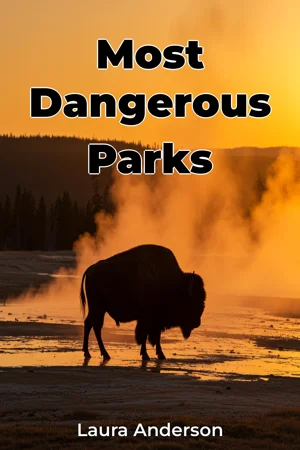
Have you ever wondered what lurks beyond the postcard-perfect vistas of our national parks? "Most Dangerous Parks" delves into the hidden perils and stark realities of these protected landscapes, revealing the risks faced by visitors and the challenges of managing these volatile environments. We will explore the intersection of extreme natural forces and human vulnerability within the world’s most hazardous national parks. This book examines two primary concepts: the inherent dangers posed by extreme natural environments and the multifaceted nature of human-wildlife encounters. The significance of understanding these elements is more critical than ever, as increasing visitation to national parks coincides with escalating environmental instability. Readers will gain crucial insights into mitigating risks and respecting the power of nature. Understanding the history of national park creation, the ecological dynamics within these parks, and the evolution of visitor management strategies provides crucial context. This book assumes no prior specialized knowledge; we explain key scientific and ecological terms throughout. Our central argument is that a comprehensive understanding of the inherent dangers within national parks, coupled with responsible visitor behavior and adaptive management strategies, is crucial for ensuring both human safety and the preservation of these vulnerable ecosystems. This argument challenges the romanticized view of national parks as solely recreational spaces, urging a more cautious and informed approach to experiencing nature. The book is structured as follows: 1. **Introduction:** We introduce the concept of risk in national parks, highlighting the contrast between perceived safety and actual dangers. 2. **Extreme Environments:** We dedicate several chapters to specific environmental hazards, such as: * Volcanic Activity: Exploring parks like Yellowstone, highlighting geothermal dangers and eruption risks. * Extreme Weather: Analyzing parks exposed to hurricanes, blizzards, and flash floods. * Unstable Terrain: Investigating parks with significant risks of landslides, rockfalls, and glacial hazards. 3. **Wildlife Encounters:** Several chapters focus on encounters with dangerous animals, specifically: * Predators: Examining human-predator conflict in parks with bears, mountain lions, and wolves. * Venomous Creatures: Covering parks with significant populations of snakes and insects. * Large Herbivores: Analyzing the risks associated with bison, elk, and moose. 4. **Human Factors:** We examine how human behavior, negligence, and inadequate preparation contribute to incidents. 5. **Management and Mitigation:** We discuss strategies employed by park services to mitigate risks, including education, infrastructure development, and emergency response protocols. 6. **Conclusion:** We summarize the central themes and provide actionable recommendations for park visitors and managers. The arguments presented are supported by a range of evidence, including incident reports from park services, scientific research on animal behavior and environmental hazards, and case studies of specific incidents. We draw upon data from various sources, including the National Park Service, geological surveys, and peer-reviewed scientific journals. This book connects to the fields of environmental science, risk management, and tourism studies. These interdisciplinary connections highlight the complex interplay between natural hazards, human behavior, and conservation efforts. We offer a practical perspective by combining scientific analysis with real-world examples and actionable advice. This book is intended for park enthusiasts, hikers, campers, and anyone interested in understanding the hidden dangers within our national parks. It serves as a valuable resource for planning safer and more informed visits. As a non-fiction book, we adhere to the conventions of accuracy, objectivity, and clear communication, presenting factual information in an accessible manner. While focusing on the most dangerous aspects of parks, we aim to provide a balanced view that acknowledges their beauty and ecological value. The scope is limited to the discussion of physical dangers within national parks. We do not delve into broader social or political issues related to park management. The information in this book can be applied to enhance personal safety during park visits, inform risk assessments for outdoor activities, and advocate for responsible park management practices. Ongoing debates surround the balance between accessibility and safety in national parks, as well as the effectiveness of various risk mitigation strategies. This book contributes to these discussions by providing a comprehensive analysis of the challenges and potential solutions.
Have you ever wondered what lurks beyond the postcard-perfect vistas of our national parks? "Most Dangerous Parks" delves into the hidden perils and stark realities of these protected landscapes, revealing the risks faced by visitors and the challenges of managing these volatile environments. We will explore the intersection of extreme natural forces and human vulnerability within the world’s most hazardous national parks. This book examines two primary concepts: the inherent dangers posed by extreme natural environments and the multifaceted nature of human-wildlife encounters. The significance of understanding these elements is more critical than ever, as increasing visitation to national parks coincides with escalating environmental instability. Readers will gain crucial insights into mitigating risks and respecting the power of nature. Understanding the history of national park creation, the ecological dynamics within these parks, and the evolution of visitor management strategies provides crucial context. This book assumes no prior specialized knowledge; we explain key scientific and ecological terms throughout. Our central argument is that a comprehensive understanding of the inherent dangers within national parks, coupled with responsible visitor behavior and adaptive management strategies, is crucial for ensuring both human safety and the preservation of these vulnerable ecosystems. This argument challenges the romanticized view of national parks as solely recreational spaces, urging a more cautious and informed approach to experiencing nature. The book is structured as follows: 1. **Introduction:** We introduce the concept of risk in national parks, highlighting the contrast between perceived safety and actual dangers. 2. **Extreme Environments:** We dedicate several chapters to specific environmental hazards, such as: * Volcanic Activity: Exploring parks like Yellowstone, highlighting geothermal dangers and eruption risks. * Extreme Weather: Analyzing parks exposed to hurricanes, blizzards, and flash floods. * Unstable Terrain: Investigating parks with significant risks of landslides, rockfalls, and glacial hazards. 3. **Wildlife Encounters:** Several chapters focus on encounters with dangerous animals, specifically: * Predators: Examining human-predator conflict in parks with bears, mountain lions, and wolves. * Venomous Creatures: Covering parks with significant populations of snakes and insects. * Large Herbivores: Analyzing the risks associated with bison, elk, and moose. 4. **Human Factors:** We examine how human behavior, negligence, and inadequate preparation contribute to incidents. 5. **Management and Mitigation:** We discuss strategies employed by park services to mitigate risks, including education, infrastructure development, and emergency response protocols. 6. **Conclusion:** We summarize the central themes and provide actionable recommendations for park visitors and managers. The arguments presented are supported by a range of evidence, including incident reports from park services, scientific research on animal behavior and environmental hazards, and case studies of specific incidents. We draw upon data from various sources, including the National Park Service, geological surveys, and peer-reviewed scientific journals. This book connects to the fields of environmental science, risk management, and tourism studies. These interdisciplinary connections highlight the complex interplay between natural hazards, human behavior, and conservation efforts. We offer a practical perspective by combining scientific analysis with real-world examples and actionable advice. This book is intended for park enthusiasts, hikers, campers, and anyone interested in understanding the hidden dangers within our national parks. It serves as a valuable resource for planning safer and more informed visits. As a non-fiction book, we adhere to the conventions of accuracy, objectivity, and clear communication, presenting factual information in an accessible manner. While focusing on the most dangerous aspects of parks, we aim to provide a balanced view that acknowledges their beauty and ecological value. The scope is limited to the discussion of physical dangers within national parks. We do not delve into broader social or political issues related to park management. The information in this book can be applied to enhance personal safety during park visits, inform risk assessments for outdoor activities, and advocate for responsible park management practices. Ongoing debates surround the balance between accessibility and safety in national parks, as well as the effectiveness of various risk mitigation strategies. This book contributes to these discussions by providing a comprehensive analysis of the challenges and potential solutions.
"Most Dangerous Parks" explores the often-overlooked risks present within national parks, revealing that these natural paradises can also harbor significant dangers. It highlights how increasing park visitation, coupled with environmental instability, creates a complex challenge for both visitors and park management. The book delves into the science, ecology, and history of national parks, explaining key concepts in accessible language to help readers understand the balance between enjoying nature and respecting its power. For example, many are unaware of the geothermal dangers lurking beneath Yellowstone's picturesque landscape or the sudden threat of flash floods in seemingly tranquil canyons. The book examines environmental hazards like volcanic activity, extreme weather, and unstable terrain, alongside wildlife encounters with predators and venomous creatures. It progresses from an introduction to the concept of risk to detailed discussions of specific dangers, including human factors and management strategies. Through incident reports, scientific research, and case studies, "Most Dangerous Parks" provides a practical perspective, offering actionable advice for safer and more informed visits. The book emphasizes the importance of understanding these risks to ensure human safety and the preservation of these vulnerable ecosystems, advocating for a more cautious approach to nature travel.
Book Details
ISBN
9788233992439
Publisher
Publifye AS
Your Licenses
You don't own any licenses for this book
Purchase a license below to unlock this book and download the EPUB.
Purchase License
Select a tier to unlock this book
Need bulk licensing?
Contact us for enterprise agreements.