
About This Book
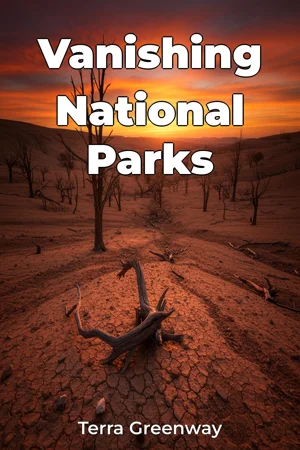
Are our national parks, once considered bastions of untouched wilderness, quietly slipping away? "Vanishing National Parks" delves into the multifaceted threats imperiling these vital ecosystems, from the increasingly visible impacts of climate change to the relentless pressures of deforestation and human encroachment. This exploration is critical because national parks represent not just scenic landscapes, but also reservoirs of biodiversity, crucial components of global climate regulation, and invaluable resources for scientific research and public enjoyment. This book provides context by examining the history of the national park system, tracing its origins in conservation movements to its present-day challenges. It considers relevant social factors such as tourism, economic development, and indigenous land rights, alongside scientific data on species decline, habitat loss, and climatic shifts. The central argument posits that the long-term survival of national parks requires a fundamental shift in how we perceive and manage them. This involves moving beyond traditional conservation models to embrace proactive strategies that address the root causes of environmental degradation and foster collaborative partnerships between governments, communities, and scientists. The book is structured to systematically build this argument. It begins by introducing the core values and ecological significance of national parks, followed by a detailed analysis of the primary threats they face. Major sections will then focus on: 1) Climate Change Impacts, detailing rising temperatures, altered precipitation patterns, and their effects on park ecosystems; 2) Deforestation and Habitat Fragmentation, examining the drivers of forest loss and the consequences for wildlife populations and ecosystem integrity; and 3) Sustainable Solutions and Strategies, presenting case studies of successful conservation initiatives and outlining policy recommendations for the future. The conclusion synthesizes these findings, emphasizing the urgency of action and offering a roadmap for preserving national parks for future generations. The arguments presented are supported by extensive scientific research, including data from government agencies, academic institutions, and conservation organizations. It will also incorporate on-the-ground observations and case studies from national parks around the globe. The book utilizes diverse methodologies, including ecological modeling, remote sensing analysis, and socio-economic assessments, to provide a comprehensive understanding of the issues. "Vanishing National Parks" makes connections to various fields, including climate science, ecology, economics, and environmental policy. It will highlight the economic benefits of preserving national parks, discuss the ethical considerations of conservation, and explore policy frameworks for sustainable resource management. This interdisciplinary approach strengthens the book's argument and broadens its appeal. The book offers a unique perspective by integrating scientific rigor with practical solutions. It avoids alarmist rhetoric, instead adopting a pragmatic tone that acknowledges the complexity of the challenges while remaining optimistic about the potential for positive change. The intended audience includes environmental scientists, conservation professionals, policymakers, students, and anyone with an interest in protecting our natural heritage. It bridges the gap between scientific research and public understanding, making complex environmental issues accessible to a broad readership. As a work of environmental non-fiction, it adheres to principles of accuracy, objectivity, and transparency, presenting information in a clear and unbiased manner. The scope of "Vanishing National Parks" is broad, encompassing a global perspective on the challenges facing these protected areas. However, it focuses primarily on terrestrial ecosystems, with limited discussion of marine parks. Readers will be able to use the information in this book to advocate for stronger environmental policies, support conservation organizations, and make informed decisions about their own impact on the environment. It arms readers with the knowledge to become effective stewards of our planet's natural treasures. The book will address ongoing debates surrounding protected area management, such as the role of ecotourism, the balance between conservation and economic development, and the rights of indigenous communities. By presenting different perspectives and analyzing the evidence, it aims to foster a more informed and nuanced discussion about the future of national parks.
Are our national parks, once considered bastions of untouched wilderness, quietly slipping away? "Vanishing National Parks" delves into the multifaceted threats imperiling these vital ecosystems, from the increasingly visible impacts of climate change to the relentless pressures of deforestation and human encroachment. This exploration is critical because national parks represent not just scenic landscapes, but also reservoirs of biodiversity, crucial components of global climate regulation, and invaluable resources for scientific research and public enjoyment. This book provides context by examining the history of the national park system, tracing its origins in conservation movements to its present-day challenges. It considers relevant social factors such as tourism, economic development, and indigenous land rights, alongside scientific data on species decline, habitat loss, and climatic shifts. The central argument posits that the long-term survival of national parks requires a fundamental shift in how we perceive and manage them. This involves moving beyond traditional conservation models to embrace proactive strategies that address the root causes of environmental degradation and foster collaborative partnerships between governments, communities, and scientists. The book is structured to systematically build this argument. It begins by introducing the core values and ecological significance of national parks, followed by a detailed analysis of the primary threats they face. Major sections will then focus on: 1) Climate Change Impacts, detailing rising temperatures, altered precipitation patterns, and their effects on park ecosystems; 2) Deforestation and Habitat Fragmentation, examining the drivers of forest loss and the consequences for wildlife populations and ecosystem integrity; and 3) Sustainable Solutions and Strategies, presenting case studies of successful conservation initiatives and outlining policy recommendations for the future. The conclusion synthesizes these findings, emphasizing the urgency of action and offering a roadmap for preserving national parks for future generations. The arguments presented are supported by extensive scientific research, including data from government agencies, academic institutions, and conservation organizations. It will also incorporate on-the-ground observations and case studies from national parks around the globe. The book utilizes diverse methodologies, including ecological modeling, remote sensing analysis, and socio-economic assessments, to provide a comprehensive understanding of the issues. "Vanishing National Parks" makes connections to various fields, including climate science, ecology, economics, and environmental policy. It will highlight the economic benefits of preserving national parks, discuss the ethical considerations of conservation, and explore policy frameworks for sustainable resource management. This interdisciplinary approach strengthens the book's argument and broadens its appeal. The book offers a unique perspective by integrating scientific rigor with practical solutions. It avoids alarmist rhetoric, instead adopting a pragmatic tone that acknowledges the complexity of the challenges while remaining optimistic about the potential for positive change. The intended audience includes environmental scientists, conservation professionals, policymakers, students, and anyone with an interest in protecting our natural heritage. It bridges the gap between scientific research and public understanding, making complex environmental issues accessible to a broad readership. As a work of environmental non-fiction, it adheres to principles of accuracy, objectivity, and transparency, presenting information in a clear and unbiased manner. The scope of "Vanishing National Parks" is broad, encompassing a global perspective on the challenges facing these protected areas. However, it focuses primarily on terrestrial ecosystems, with limited discussion of marine parks. Readers will be able to use the information in this book to advocate for stronger environmental policies, support conservation organizations, and make informed decisions about their own impact on the environment. It arms readers with the knowledge to become effective stewards of our planet's natural treasures. The book will address ongoing debates surrounding protected area management, such as the role of ecotourism, the balance between conservation and economic development, and the rights of indigenous communities. By presenting different perspectives and analyzing the evidence, it aims to foster a more informed and nuanced discussion about the future of national parks.
"Vanishing National Parks" explores the growing threats to these protected areas, revealing how climate change, deforestation, and human activities endanger these vital ecosystems. National parks, beyond being scenic landscapes, are critical for biodiversity, climate regulation, and scientific research. The book emphasizes that traditional conservation methods are insufficient, advocating for proactive strategies and collaborative partnerships to reverse environmental degradation. For example, altered precipitation patterns are already impacting park ecosystems. The book systematically builds its argument, beginning with the ecological significance of parks before analyzing the threats they face. It dedicates major sections to climate change impacts, deforestation and habitat fragmentation, and sustainable solutions, presenting case studies and policy recommendations. By integrating scientific research with practical solutions, "Vanishing National Parks" offers a unique perspective, highlighting the urgency of action while remaining optimistic about positive change.
Book Details
ISBN
9788233992422
Publisher
Publifye AS
Your Licenses
You don't own any licenses for this book
Purchase a license below to unlock this book and download the EPUB.
Purchase License
Select a tier to unlock this book
Need bulk licensing?
Contact us for enterprise agreements.