
About This Book
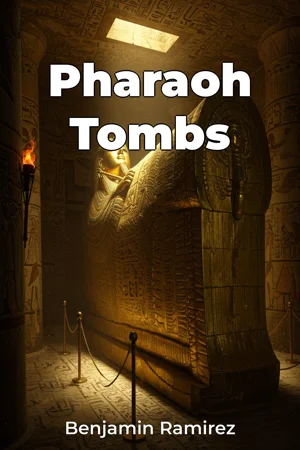
What secrets lie entombed beneath the sands of Egypt, and what drove ancient pharaohs to construct monuments of such staggering scale? "Pharaoh Tombs" unveils the mysteries surrounding the grand pyramids and elaborate burial complexes built as final resting places for Egypt's rulers, exploring not only their architectural significance but also their profound cultural and historical context. These tombs are far more than just repositories for royal remains; they are reflections of a complex belief system centered on the afterlife, power, and the pharaoh's divine role. This book delves into three key aspects of pharaoh tombs. First, the evolution of tomb architecture, tracing the development from simple mastabas to the towering pyramids of Giza and the hidden chambers of the Valley of the Kings. Understanding this architectural progression reveals changing beliefs and advancements in engineering and construction techniques. Second, the elaborate rituals and funerary practices associated with royal burials, providing insight into ancient Egyptian society's profound preoccupation with death and resurrection. Third, the treasures and artifacts interred within these tombs, not merely as displays of wealth, but as essential provisions for the pharaoh's journey into the afterlife. To fully appreciate the significance of these tombs, it is essential to ground them within the broader context of ancient Egyptian civilization. The pharaoh was considered a god on Earth, responsible for maintaining cosmic order (Ma'at). The construction of these monumental tombs was therefore not an act of vanity but a sacred duty, ensuring the pharaoh's successful transition to the afterlife and, consequently, the continued prosperity of Egypt. Readers should come prepared to consider concepts of divine kingship, ancient Egyptian religion, and the socio-economic structures that enabled such massive construction projects. The central argument of "Pharaoh Tombs" is that these structures and their contents serve as a comprehensive historical record, offering invaluable insights into the beliefs, values, and technical capabilities of ancient Egyptian society. The very effort to construct these tombs provides a tangible measure of the pharaoh's power and the civilization's resources. The book begins with an introduction to the main concepts: the role of the pharaoh, the Egyptian belief system, and the architectural principles behind tomb construction. It then explores the evolution of tomb design, from early dynastic mastabas to the iconic pyramids of the Old Kingdom, examining the Step Pyramid of Djoser at Saqqara, the pyramids of Giza, and the later pyramid complexes of the Middle Kingdom. Next, the book investigates royal burial rituals, the significance of mummification, the role of funerary texts like the Book of the Dead, and the symbolic meaning of grave goods. Finally, it looks at the treasures found within these tombs—statues, jewelry, furniture, and other artifacts—analyzing their craftsmanship and their purpose in equipping the pharaoh for the afterlife. The book culminates by considering the modern implications of archaeological discoveries and the ongoing efforts to preserve and understand these ancient sites. The evidence presented will draw from archaeological surveys, hieroglyphic texts, and analyses of recovered artifacts. The book will also incorporate modern research techniques, such as radiocarbon dating and 3D modeling, to provide a comprehensive understanding of the tombs. The book will connect with other fields such as art history through the detailed design of tomb decoration, religious studies through the analysis of funerary beliefs, and engineering through the logistics and manpower required to complete the tombs. These interdisciplinary connections enrich the reader’s understanding of the holistic nature of ancient Egyptian civilization. "Pharaoh Tombs" adopts a balanced and informed approach, presenting the available evidence in a clear and accessible manner. The tone is informative and respectful, aiming to educate and engage readers without sensationalizing the topic. The target audience includes anyone with an interest in ancient history, archaeology, or Egyptology, whether they are students, amateur enthusiasts, or seasoned scholars. This book provides a comprehensive yet accessible overview of pharaoh tombs, synthesizing the latest research and offering fresh perspectives on these iconic monuments. The scope of "Pharaoh Tombs" is limited to royal tombs of the pharaonic period, primarily focusing on the Old, Middle, and New Kingdoms. While it acknowledges the existence of tombs from other periods, it does not delve into them in detail. The information in this book can be applied practically in appreciating museum exhibits of Egyptian artifacts, in understanding the context of historical documentaries, and in engaging more deeply with travel to Egypt. The field of Egyptology is not without its debates, such as the methods used to construct the pyramids and the interpretation of certain religious texts. "Pharaoh Tombs" addresses some of these controversies by presenting different viewpoints and evaluating the evidence for each.
What secrets lie entombed beneath the sands of Egypt, and what drove ancient pharaohs to construct monuments of such staggering scale? "Pharaoh Tombs" unveils the mysteries surrounding the grand pyramids and elaborate burial complexes built as final resting places for Egypt's rulers, exploring not only their architectural significance but also their profound cultural and historical context. These tombs are far more than just repositories for royal remains; they are reflections of a complex belief system centered on the afterlife, power, and the pharaoh's divine role. This book delves into three key aspects of pharaoh tombs. First, the evolution of tomb architecture, tracing the development from simple mastabas to the towering pyramids of Giza and the hidden chambers of the Valley of the Kings. Understanding this architectural progression reveals changing beliefs and advancements in engineering and construction techniques. Second, the elaborate rituals and funerary practices associated with royal burials, providing insight into ancient Egyptian society's profound preoccupation with death and resurrection. Third, the treasures and artifacts interred within these tombs, not merely as displays of wealth, but as essential provisions for the pharaoh's journey into the afterlife. To fully appreciate the significance of these tombs, it is essential to ground them within the broader context of ancient Egyptian civilization. The pharaoh was considered a god on Earth, responsible for maintaining cosmic order (Ma'at). The construction of these monumental tombs was therefore not an act of vanity but a sacred duty, ensuring the pharaoh's successful transition to the afterlife and, consequently, the continued prosperity of Egypt. Readers should come prepared to consider concepts of divine kingship, ancient Egyptian religion, and the socio-economic structures that enabled such massive construction projects. The central argument of "Pharaoh Tombs" is that these structures and their contents serve as a comprehensive historical record, offering invaluable insights into the beliefs, values, and technical capabilities of ancient Egyptian society. The very effort to construct these tombs provides a tangible measure of the pharaoh's power and the civilization's resources. The book begins with an introduction to the main concepts: the role of the pharaoh, the Egyptian belief system, and the architectural principles behind tomb construction. It then explores the evolution of tomb design, from early dynastic mastabas to the iconic pyramids of the Old Kingdom, examining the Step Pyramid of Djoser at Saqqara, the pyramids of Giza, and the later pyramid complexes of the Middle Kingdom. Next, the book investigates royal burial rituals, the significance of mummification, the role of funerary texts like the Book of the Dead, and the symbolic meaning of grave goods. Finally, it looks at the treasures found within these tombs—statues, jewelry, furniture, and other artifacts—analyzing their craftsmanship and their purpose in equipping the pharaoh for the afterlife. The book culminates by considering the modern implications of archaeological discoveries and the ongoing efforts to preserve and understand these ancient sites. The evidence presented will draw from archaeological surveys, hieroglyphic texts, and analyses of recovered artifacts. The book will also incorporate modern research techniques, such as radiocarbon dating and 3D modeling, to provide a comprehensive understanding of the tombs. The book will connect with other fields such as art history through the detailed design of tomb decoration, religious studies through the analysis of funerary beliefs, and engineering through the logistics and manpower required to complete the tombs. These interdisciplinary connections enrich the reader’s understanding of the holistic nature of ancient Egyptian civilization. "Pharaoh Tombs" adopts a balanced and informed approach, presenting the available evidence in a clear and accessible manner. The tone is informative and respectful, aiming to educate and engage readers without sensationalizing the topic. The target audience includes anyone with an interest in ancient history, archaeology, or Egyptology, whether they are students, amateur enthusiasts, or seasoned scholars. This book provides a comprehensive yet accessible overview of pharaoh tombs, synthesizing the latest research and offering fresh perspectives on these iconic monuments. The scope of "Pharaoh Tombs" is limited to royal tombs of the pharaonic period, primarily focusing on the Old, Middle, and New Kingdoms. While it acknowledges the existence of tombs from other periods, it does not delve into them in detail. The information in this book can be applied practically in appreciating museum exhibits of Egyptian artifacts, in understanding the context of historical documentaries, and in engaging more deeply with travel to Egypt. The field of Egyptology is not without its debates, such as the methods used to construct the pyramids and the interpretation of certain religious texts. "Pharaoh Tombs" addresses some of these controversies by presenting different viewpoints and evaluating the evidence for each.
"Pharaoh Tombs" explores the fascinating world of ancient Egyptian royal burials, revealing the architectural marvels and profound cultural significance of pharaoh tombs. These elaborate structures, from the iconic pyramids to the hidden chambers of the Valley of the Kings, served not only as final resting places but also as powerful statements of divine kingship and preparation for the afterlife. The book examines how the construction of these monuments was a sacred duty, ensuring the pharaoh's successful transition and the continued prosperity of Egypt. The narrative progresses chronologically, tracing the evolution of tomb architecture, delving into elaborate funerary practices like mummification, and analyzing the treasures and artifacts interred within. These artifacts, far from mere displays of wealth, were essential provisions for the pharaoh's journey into the afterlife. Through archaeological surveys, hieroglyphic texts, and modern research techniques, "Pharaoh Tombs" connects art history, religious studies, and engineering to give readers a holistic view of Egyptian civilization.
Book Details
ISBN
9788233992118
Publisher
Publifye AS
Your Licenses
You don't own any licenses for this book
Purchase a license below to unlock this book and download the EPUB.
Purchase License
Select a tier to unlock this book
Need bulk licensing?
Contact us for enterprise agreements.