
About This Book
What happened to the great civilizations that constructed monumental pyramids, then seemingly vanished from the historical record? *Lost Pyramid Cities* delves into the mysteries surrounding these ancient urban centers, examining the architectural marvels they left behind and exploring potential reasons for their decline and abandonment. This book addresses three interconnected themes: the architectural ingenuity evident in pyramid city construction, the societal structures and daily life within these urban environments, and the environmental or socio-political factors that may have contributed to their eventual collapse. These topics are crucial for understanding the complexities of early urban development and the fragility of even the most advanced societies. To appreciate the significance of these lost cities, a foundational understanding of ancient building techniques, early forms of governance, and basic climatology is beneficial, though not strictly required. We provide context for these areas. The book argues that the rise and fall of pyramid cities offer invaluable lessons about the sustainability of urban development and the long-term consequences of environmental mismanagement or unchecked social inequality. The book unfolds in three distinct parts. Initially, we introduce the concept of the "pyramid city," establishing a working definition and outlining the key characteristics shared by these urban centers across different continents. The second section examines specific examples, such as Teotihuacan in Mexico, the cities of the Norte Chico civilization in Peru, and arguably certain sites within ancient Egypt, analyzing their architectural layouts, social hierarchies, and economic systems. Each chapter focuses on a different city or civilization, presenting archaeological evidence and historical analyses. The final section synthesizes the information presented in the previous chapters, drawing conclusions about the common factors that may have led to the decline of these societies. We explore theories ranging from environmental degradation and resource depletion to social unrest and external pressures. The book concludes by considering the relevance of these historical examples for contemporary urban planning and sustainability efforts. The book's arguments are supported by a diverse range of evidence, including archaeological surveys, analyses of excavated artifacts, deciphered hieroglyphic texts (where available), and paleo-environmental data. We incorporate recent findings from isotopic analysis of human remains and advanced remote sensing technologies to paint a more complete picture of life in these ancient cities. *Lost Pyramid Cities* draws connections across multiple disciplines. It integrates archaeological findings with historical analysis, architectural theory, environmental science, and sociological perspectives to offer a holistic understanding of these ancient societies. By examining the interplay between social structures, environmental factors, and architectural design, the book provides fresh insights into the dynamics of urban development and decline. This book offers a comparative analysis that transcends geographical boundaries. By examining pyramid cities across different continents and time periods, we identify common patterns and unique characteristics, providing a more nuanced understanding of the factors that shaped these ancient urban centers and their eventual fates. The book employs an objective and analytical tone, prioritizing evidence-based arguments and avoiding speculative interpretations. The writing style is accessible to a broad audience while maintaining scholarly rigor. This book is targeted towards readers interested in archaeology, ancient history, architecture, and urban studies. It would be valuable for students, researchers, and anyone seeking a deeper understanding of the rise and fall of early civilizations. It also appeals to armchair travelers who are fascinated by lost worlds. As a work of non-fiction, the book adheres to principles of accuracy, objectivity, and transparency. All sources are clearly cited, and interpretations are supported by evidence. While the book covers a broad geographical area, from Mesoamerica to South America and arguably aspects of Egypt, it does not offer an exhaustive account of every pyramid site. The focus remains on providing in-depth analyses of selected examples to illustrate key themes and concepts. The lessons learned from the rise and fall of pyramid cities have direct relevance for contemporary urban challenges. By understanding the factors that contributed to the decline of these ancient societies, we can gain insights into how to create more sustainable and resilient urban environments today. The book also touches upon ongoing debates within the archaeological community, such as the relative importance of environmental factors versus social factors in the collapse of civilizations. While presenting different perspectives, the book maintains a balanced approach, encouraging readers to critically evaluate the evidence and form their own conclusions.
What happened to the great civilizations that constructed monumental pyramids, then seemingly vanished from the historical record? *Lost Pyramid Cities* delves into the mysteries surrounding these ancient urban centers, examining the architectural marvels they left behind and exploring potential reasons for their decline and abandonment. This book addresses three interconnected themes: the architectural ingenuity evident in pyramid city construction, the societal structures and daily life within these urban environments, and the environmental or socio-political factors that may have contributed to their eventual collapse. These topics are crucial for understanding the complexities of early urban development and the fragility of even the most advanced societies. To appreciate the significance of these lost cities, a foundational understanding of ancient building techniques, early forms of governance, and basic climatology is beneficial, though not strictly required. We provide context for these areas. The book argues that the rise and fall of pyramid cities offer invaluable lessons about the sustainability of urban development and the long-term consequences of environmental mismanagement or unchecked social inequality. The book unfolds in three distinct parts. Initially, we introduce the concept of the "pyramid city," establishing a working definition and outlining the key characteristics shared by these urban centers across different continents. The second section examines specific examples, such as Teotihuacan in Mexico, the cities of the Norte Chico civilization in Peru, and arguably certain sites within ancient Egypt, analyzing their architectural layouts, social hierarchies, and economic systems. Each chapter focuses on a different city or civilization, presenting archaeological evidence and historical analyses. The final section synthesizes the information presented in the previous chapters, drawing conclusions about the common factors that may have led to the decline of these societies. We explore theories ranging from environmental degradation and resource depletion to social unrest and external pressures. The book concludes by considering the relevance of these historical examples for contemporary urban planning and sustainability efforts. The book's arguments are supported by a diverse range of evidence, including archaeological surveys, analyses of excavated artifacts, deciphered hieroglyphic texts (where available), and paleo-environmental data. We incorporate recent findings from isotopic analysis of human remains and advanced remote sensing technologies to paint a more complete picture of life in these ancient cities. *Lost Pyramid Cities* draws connections across multiple disciplines. It integrates archaeological findings with historical analysis, architectural theory, environmental science, and sociological perspectives to offer a holistic understanding of these ancient societies. By examining the interplay between social structures, environmental factors, and architectural design, the book provides fresh insights into the dynamics of urban development and decline. This book offers a comparative analysis that transcends geographical boundaries. By examining pyramid cities across different continents and time periods, we identify common patterns and unique characteristics, providing a more nuanced understanding of the factors that shaped these ancient urban centers and their eventual fates. The book employs an objective and analytical tone, prioritizing evidence-based arguments and avoiding speculative interpretations. The writing style is accessible to a broad audience while maintaining scholarly rigor. This book is targeted towards readers interested in archaeology, ancient history, architecture, and urban studies. It would be valuable for students, researchers, and anyone seeking a deeper understanding of the rise and fall of early civilizations. It also appeals to armchair travelers who are fascinated by lost worlds. As a work of non-fiction, the book adheres to principles of accuracy, objectivity, and transparency. All sources are clearly cited, and interpretations are supported by evidence. While the book covers a broad geographical area, from Mesoamerica to South America and arguably aspects of Egypt, it does not offer an exhaustive account of every pyramid site. The focus remains on providing in-depth analyses of selected examples to illustrate key themes and concepts. The lessons learned from the rise and fall of pyramid cities have direct relevance for contemporary urban challenges. By understanding the factors that contributed to the decline of these ancient societies, we can gain insights into how to create more sustainable and resilient urban environments today. The book also touches upon ongoing debates within the archaeological community, such as the relative importance of environmental factors versus social factors in the collapse of civilizations. While presenting different perspectives, the book maintains a balanced approach, encouraging readers to critically evaluate the evidence and form their own conclusions.
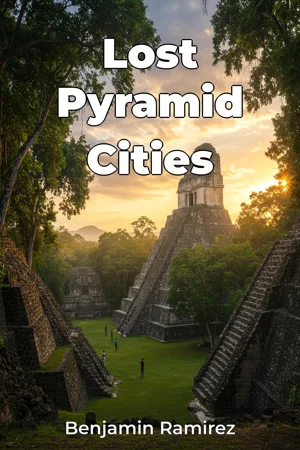
"Lost Pyramid Cities" explores the fascinating phenomenon of ancient urban centers dominated by monumental pyramids that mysteriously disappeared. It examines the architectural achievements, societal structures, and potential reasons for their abandonment, offering insights into early urban development. Uncover how these cities showcase both incredible ingenuity and vulnerabilities, providing a lens to view early forms of governance and climatology. The book investigates specific examples like Teotihuacan and the Norte Chico civilization, analyzing architectural layouts, social hierarchies, and economic systems. It delves into potential causes for their collapse, such as environmental degradation and resource depletion, or social unrest and external pressures. By drawing connections across archaeology, history, architecture, and environmental science, "Lost Pyramid Cities" provides a holistic understanding of these societies. The book progresses by first defining "pyramid cities," then examining specific examples, and concluding with a synthesis of common factors leading to their decline. This approach provides a comparative analysis that identifies patterns and unique characteristics across different continents and time periods. Ultimately, it argues that these lost civilizations offer invaluable lessons for contemporary urban planning and sustainability efforts.
Book Details
ISBN
9788233992095
Publisher
Publifye AS
Your Licenses
You don't own any licenses for this book
Purchase a license below to unlock this book and download the EPUB.
Purchase License
Select a tier to unlock this book
Need bulk licensing?
Contact us for enterprise agreements.