
About This Book
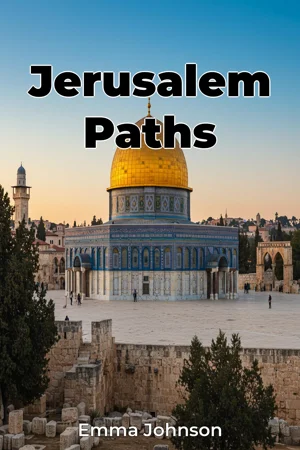
Why does a single city hold such immense significance for billions across the globe, and why does this importance perpetually fuel conflict? "Jerusalem Paths" delves into the heart of Jerusalem, a city revered as sacred by Judaism, Christianity, and Islam, examining the intricate tapestry of religious beliefs, historical events, and political tensions that have shaped its identity. This book is essential for understanding not only Jerusalem’s past but also its present role as a focal point of global religious and political dynamics. We will explore three pivotal themes: the historical evolution of Jerusalem's religious sites, the recurring conflicts that have defined its narrative, and the enduring traditions that sustain its diverse communities. Understanding these themes is crucial to grasp how Jerusalem became, and remains, a nexus of faith and contention. This requires navigating centuries of conquests, theological interpretations, and shifting demographics, recognizing that each element has profoundly influenced the city’s complex character. "Jerusalem Paths" presents a meticulously researched account of Jerusalem's story, arguing that the city's unique spiritual magnetism is inextricably linked to its history of division and strife. Rather than offering simple solutions, this book aims to illuminate the underlying causes of the ongoing tensions, providing readers with a deeper understanding of the challenges and opportunities facing Jerusalem today. The book begins by tracing the origins of Jerusalem’s sacred status in each of the Abrahamic faiths. It examines the construction of the First and Second Temples, the life and teachings of Jesus, and the Prophet Muhammad's Night Journey, explaining how these events solidified Jerusalem's central position in religious consciousness. The narrative then progresses through the Roman, Byzantine, and early Islamic periods, highlighting the transformations of the city's religious landscape. Moving forward, the book analyzes the Crusades, Mamluk rule, and Ottoman era, detailing the power struggles that shaped Jerusalem’s physical and social structure. The final sections focus on the British Mandate, the Arab-Israeli conflict, and the modern challenges of governance and coexistence. In doing so, it provides a comprehensive overview of the key events and figures that have influenced Jerusalem's destiny. The arguments are supported by a wealth of historical sources, including archaeological findings, ancient texts, religious documents, and modern scholarship. We analyze primary sources to reconstruct past events and offer a balanced interpretation of conflicting narratives. Additionally, the research incorporates insights from theology, political science, and sociology to provide a multidisciplinary perspective on Jerusalem. "Jerusalem Paths" intersects with fields such as archaeology, political science, and comparative religion. Its exploration of ancient ruins and religious artifacts provides valuable insights for archaeologists. Its analysis of political power struggles and international relations informs political scientists. Finally, its examination of diverse religious traditions enhances the understanding of comparative religion scholars. These connections strengthen the book’s analysis, offering a holistic view of Jerusalem. This book adopts a balanced and objective approach, presenting diverse perspectives and interpretations of Jerusalem’s history. It avoids taking sides in ongoing debates, instead providing readers with the information needed to form their own informed opinions. The tone is accessible and engaging, making complex historical and religious concepts understandable to a wide audience. The target audience includes readers interested in religion, history, and Middle Eastern studies, as well as anyone seeking a deeper understanding of one of the world’s most important and contested cities. The book’s comprehensive coverage and accessible style make it suitable for both academic and general readers. As a work of non-fiction, "Jerusalem Paths" emphasizes factual accuracy, rigorous research, and objective analysis. It adheres to the conventions of historical writing, providing clear citations and avoiding speculative claims. While focusing on the major themes and events that have shaped Jerusalem, the book acknowledges the limitations of historical knowledge and the complexities of interpreting the past. The understanding of Jerusalem's past and present controversies can be applied to contemporary challenges in conflict resolution, interfaith dialogue, and international relations. By examining the historical roots of the ongoing tensions in Jerusalem, this book offers valuable insights for policymakers, religious leaders, and anyone working to promote peace and understanding in the region. "Jerusalem Paths" addresses various ongoing debates surrounding Jerusalem, including the question of sovereignty, the status of religious sites, and the rights of different communities. By presenting a range of perspectives and interpretations, the book encourages readers to engage critically with these issues. It will spark conversations about the future of Jerusalem, its role in global affairs, and the possibilities for peaceful coexistence.
Why does a single city hold such immense significance for billions across the globe, and why does this importance perpetually fuel conflict? "Jerusalem Paths" delves into the heart of Jerusalem, a city revered as sacred by Judaism, Christianity, and Islam, examining the intricate tapestry of religious beliefs, historical events, and political tensions that have shaped its identity. This book is essential for understanding not only Jerusalem’s past but also its present role as a focal point of global religious and political dynamics. We will explore three pivotal themes: the historical evolution of Jerusalem's religious sites, the recurring conflicts that have defined its narrative, and the enduring traditions that sustain its diverse communities. Understanding these themes is crucial to grasp how Jerusalem became, and remains, a nexus of faith and contention. This requires navigating centuries of conquests, theological interpretations, and shifting demographics, recognizing that each element has profoundly influenced the city’s complex character. "Jerusalem Paths" presents a meticulously researched account of Jerusalem's story, arguing that the city's unique spiritual magnetism is inextricably linked to its history of division and strife. Rather than offering simple solutions, this book aims to illuminate the underlying causes of the ongoing tensions, providing readers with a deeper understanding of the challenges and opportunities facing Jerusalem today. The book begins by tracing the origins of Jerusalem’s sacred status in each of the Abrahamic faiths. It examines the construction of the First and Second Temples, the life and teachings of Jesus, and the Prophet Muhammad's Night Journey, explaining how these events solidified Jerusalem's central position in religious consciousness. The narrative then progresses through the Roman, Byzantine, and early Islamic periods, highlighting the transformations of the city's religious landscape. Moving forward, the book analyzes the Crusades, Mamluk rule, and Ottoman era, detailing the power struggles that shaped Jerusalem’s physical and social structure. The final sections focus on the British Mandate, the Arab-Israeli conflict, and the modern challenges of governance and coexistence. In doing so, it provides a comprehensive overview of the key events and figures that have influenced Jerusalem's destiny. The arguments are supported by a wealth of historical sources, including archaeological findings, ancient texts, religious documents, and modern scholarship. We analyze primary sources to reconstruct past events and offer a balanced interpretation of conflicting narratives. Additionally, the research incorporates insights from theology, political science, and sociology to provide a multidisciplinary perspective on Jerusalem. "Jerusalem Paths" intersects with fields such as archaeology, political science, and comparative religion. Its exploration of ancient ruins and religious artifacts provides valuable insights for archaeologists. Its analysis of political power struggles and international relations informs political scientists. Finally, its examination of diverse religious traditions enhances the understanding of comparative religion scholars. These connections strengthen the book’s analysis, offering a holistic view of Jerusalem. This book adopts a balanced and objective approach, presenting diverse perspectives and interpretations of Jerusalem’s history. It avoids taking sides in ongoing debates, instead providing readers with the information needed to form their own informed opinions. The tone is accessible and engaging, making complex historical and religious concepts understandable to a wide audience. The target audience includes readers interested in religion, history, and Middle Eastern studies, as well as anyone seeking a deeper understanding of one of the world’s most important and contested cities. The book’s comprehensive coverage and accessible style make it suitable for both academic and general readers. As a work of non-fiction, "Jerusalem Paths" emphasizes factual accuracy, rigorous research, and objective analysis. It adheres to the conventions of historical writing, providing clear citations and avoiding speculative claims. While focusing on the major themes and events that have shaped Jerusalem, the book acknowledges the limitations of historical knowledge and the complexities of interpreting the past. The understanding of Jerusalem's past and present controversies can be applied to contemporary challenges in conflict resolution, interfaith dialogue, and international relations. By examining the historical roots of the ongoing tensions in Jerusalem, this book offers valuable insights for policymakers, religious leaders, and anyone working to promote peace and understanding in the region. "Jerusalem Paths" addresses various ongoing debates surrounding Jerusalem, including the question of sovereignty, the status of religious sites, and the rights of different communities. By presenting a range of perspectives and interpretations, the book encourages readers to engage critically with these issues. It will spark conversations about the future of Jerusalem, its role in global affairs, and the possibilities for peaceful coexistence.
Jerusalem, a city of immense religious and historical significance, is explored in "Jerusalem Paths," a book that examines the convergence of Judaism, Christianity, and Islam within its walls. The narrative delves into the city's evolution, highlighting the construction of the First and Second Temples and the Prophet Muhammad's Night Journey, which solidified Jerusalem's central position in religious consciousness. This exploration reveals how Jerusalem became a nexus of faith, conflict, and political tensions, influencing its role in current global dynamics. The book navigates centuries of conquests and shifting demographics, presenting a balanced account of Jerusalem's story. It progresses chronologically through key periods, from the Roman and Byzantine eras to the British Mandate and the Arab-Israeli conflict. By analyzing archaeological findings, religious documents, and modern scholarship, "Jerusalem Paths" provides a comprehensive overview, offering readers a deeper understanding of the challenges and opportunities facing this pivotal city.
Book Details
ISBN
9788233992071
Publisher
Publifye AS
Your Licenses
You don't own any licenses for this book
Purchase a license below to unlock this book and download the EPUB.
Purchase License
Select a tier to unlock this book
Need bulk licensing?
Contact us for enterprise agreements.