
About This Book
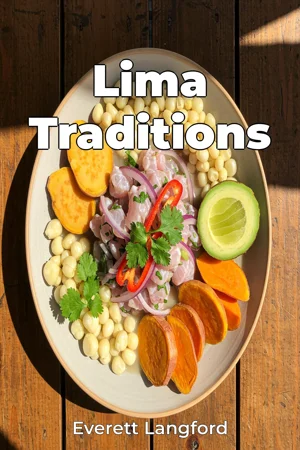
What if the story of a city could be told through its cuisine and cobblestone streets? "Lima Traditions" invites you on a journey to uncover the multifaceted identity of Lima, Peru, delving deep into its pre-Columbian roots, the enduring influence of Spanish colonialism, and the vibrant food scene that collectively defines Peruvian culture. This is not just a history book or a cookbook; it's an exploration of how these elements intertwine to shape a unique sense of place. This book argues that Lima serves as a microcosm of Peruvian identity, revealing how layers of history, cultural exchange, and culinary innovation have created a distinctive urban landscape. Lima’s story is Peru’s story, a narrative of resilience, adaptation, and the constant negotiation between tradition and modernity. Understanding Lima is crucial to understanding Peru. Its historical importance as the capital city and its ongoing role as a cultural and economic hub make it essential to analyzing Peruvian identity. "Lima Traditions" unfolds in three major sections. First, we explore Lima's pre-Columbian history, focusing on the civilizations that thrived long before the arrival of the Spanish. We will examine archaeological evidence, including the huacas (sacred sites), to understand the religious, social, and agricultural practices of these early inhabitants. Second, the book details the Spanish colonial period, examining the political, social, and religious institutions that were established and their impact on the indigenous population and the development of a new Creole society. This section will analyze the architecture, art, and literature of the era, providing vital insights into the clash and fusion of cultures. Finally, we immerse ourselves in Lima's renowned food scene, tracing the origins of iconic dishes like ceviche and lomo saltado, exploring the influence of indigenous ingredients, Spanish culinary traditions, and later migrations from Asia and beyond. We will explore markets, restaurants, and home kitchens to understand how food serves as a living embodiment of Lima's complex history. The book draws upon a variety of sources: archaeological reports, colonial-era documents, historical cookbooks, interviews with chefs and food historians, and ethnographic studies of contemporary Lima. This multi-disciplinary approach provides a rich and nuanced understanding of Lima's traditions. We analyze census data, travel journals, and architectural surveys to substantiate claims and offer a comprehensive view. The book connects to fields such as anthropology, sociology, and urban studies. By examining the ways in which food shapes social identities and architectural choices reflect power dynamics. By adopting a culinary lens to examine historical events and the lasting impact of cultural exchange, "Lima Traditions" provides an innovative perspective. Written in an accessible and engaging style, "Lima Traditions" aims to appeal to a broad audience, including food enthusiasts, history buffs, travelers, and anyone interested in learning more about Peruvian culture. The book provides valuable insights for those planning a trip to Lima, as well as those seeking a deeper understanding of global culinary traditions. While "Lima Traditions" focuses specifically on the city of Lima, it serves as a case study for understanding broader trends in Peruvian history and culture. We do not attempt to cover every aspect of Peruvian history, but rather use Lima as a lens through which to view the larger narrative. The recipes and culinary insights can be applied to home cooking, allowing readers to recreate the flavors of Lima in their own kitchens. The historical and cultural context adds depth to the dining experience, encouraging readers to appreciate the stories behind the food. Ultimately, "Lima Traditions" seeks to illuminate the rich tapestry of Lima's past and present, celebrating the traditions that make this city a unique and captivating place. By exploring its pre-Columbian heritage, colonial legacy, and vibrant food scene, the book offers a comprehensive portrait of Peruvian culture.
What if the story of a city could be told through its cuisine and cobblestone streets? "Lima Traditions" invites you on a journey to uncover the multifaceted identity of Lima, Peru, delving deep into its pre-Columbian roots, the enduring influence of Spanish colonialism, and the vibrant food scene that collectively defines Peruvian culture. This is not just a history book or a cookbook; it's an exploration of how these elements intertwine to shape a unique sense of place. This book argues that Lima serves as a microcosm of Peruvian identity, revealing how layers of history, cultural exchange, and culinary innovation have created a distinctive urban landscape. Lima’s story is Peru’s story, a narrative of resilience, adaptation, and the constant negotiation between tradition and modernity. Understanding Lima is crucial to understanding Peru. Its historical importance as the capital city and its ongoing role as a cultural and economic hub make it essential to analyzing Peruvian identity. "Lima Traditions" unfolds in three major sections. First, we explore Lima's pre-Columbian history, focusing on the civilizations that thrived long before the arrival of the Spanish. We will examine archaeological evidence, including the huacas (sacred sites), to understand the religious, social, and agricultural practices of these early inhabitants. Second, the book details the Spanish colonial period, examining the political, social, and religious institutions that were established and their impact on the indigenous population and the development of a new Creole society. This section will analyze the architecture, art, and literature of the era, providing vital insights into the clash and fusion of cultures. Finally, we immerse ourselves in Lima's renowned food scene, tracing the origins of iconic dishes like ceviche and lomo saltado, exploring the influence of indigenous ingredients, Spanish culinary traditions, and later migrations from Asia and beyond. We will explore markets, restaurants, and home kitchens to understand how food serves as a living embodiment of Lima's complex history. The book draws upon a variety of sources: archaeological reports, colonial-era documents, historical cookbooks, interviews with chefs and food historians, and ethnographic studies of contemporary Lima. This multi-disciplinary approach provides a rich and nuanced understanding of Lima's traditions. We analyze census data, travel journals, and architectural surveys to substantiate claims and offer a comprehensive view. The book connects to fields such as anthropology, sociology, and urban studies. By examining the ways in which food shapes social identities and architectural choices reflect power dynamics. By adopting a culinary lens to examine historical events and the lasting impact of cultural exchange, "Lima Traditions" provides an innovative perspective. Written in an accessible and engaging style, "Lima Traditions" aims to appeal to a broad audience, including food enthusiasts, history buffs, travelers, and anyone interested in learning more about Peruvian culture. The book provides valuable insights for those planning a trip to Lima, as well as those seeking a deeper understanding of global culinary traditions. While "Lima Traditions" focuses specifically on the city of Lima, it serves as a case study for understanding broader trends in Peruvian history and culture. We do not attempt to cover every aspect of Peruvian history, but rather use Lima as a lens through which to view the larger narrative. The recipes and culinary insights can be applied to home cooking, allowing readers to recreate the flavors of Lima in their own kitchens. The historical and cultural context adds depth to the dining experience, encouraging readers to appreciate the stories behind the food. Ultimately, "Lima Traditions" seeks to illuminate the rich tapestry of Lima's past and present, celebrating the traditions that make this city a unique and captivating place. By exploring its pre-Columbian heritage, colonial legacy, and vibrant food scene, the book offers a comprehensive portrait of Peruvian culture.
"Lima Traditions" explores the vibrant history and culture of Lima, Peru, through the lens of its cuisine and historical landmarks. It argues that Lima's story is essentially Peru's story, revealing how pre-Columbian civilizations, Spanish colonialism, and a dynamic food scene have shaped its unique identity. The book illustrates how culinary traditions, like ceviche and lomo saltado, reflect a fusion of indigenous ingredients, Spanish influences, and later Asian migrations. The book unfolds chronologically, beginning with Lima's pre-Columbian history, examining archaeological sites like huacas to understand early inhabitants' practices. It then delves into the Spanish colonial period, analyzing its impact on the indigenous population and the rise of Creole society, highlighting the fusion of cultures in art and architecture. Finally, it immerses readers in Lima's contemporary food scene, showcasing how markets, restaurants, and home kitchens embody the city's complex historical narrative.
Book Details
ISBN
9788233992040
Publisher
Publifye AS
Your Licenses
You don't own any licenses for this book
Purchase a license below to unlock this book and download the EPUB.
Purchase License
Select a tier to unlock this book
Need bulk licensing?
Contact us for enterprise agreements.