
About This Book
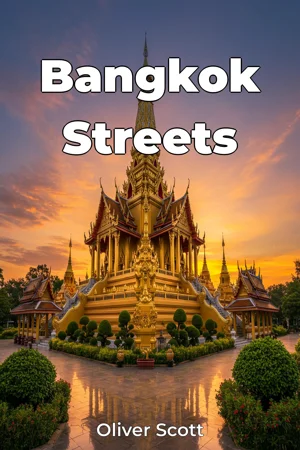
What is it about Bangkok that simultaneously overwhelms and captivates? "Bangkok Streets" delves into this enduring question, exploring the multifaceted nature of Thailand's capital city through the interwoven lenses of its history, bustling present, and complex social fabric. This book offers a comprehensive exploration of Bangkok's evolution, navigating its chaotic charm, iconic floating markets, resplendent Buddhist temples, and the striking blend of tradition and modernity that defines it. Three core themes anchor our investigation: the historical forces shaping Bangkok’s urban development, the impact of globalization on its cultural identity, and the lived experiences of its diverse inhabitants. Understanding these themes is crucial for grasping not only Bangkok's unique character but also the broader dynamics of urbanization and cultural change in Southeast Asia. To fully appreciate Bangkok's present, we must first understand its past. From its humble beginnings as a small trading post to its rise as the capital of Siam, Bangkok's history is etched into its streets and canals. The book explores the city's founding, the impact of royal patronage, the influence of Western colonialism, and the turbulent periods of political upheaval that have shaped its modern identity. We examine the social hierarchies, economic shifts, and political ideologies that have molded Bangkok into the metropolis it is today. "Bangkok Streets" argues that Bangkok's identity is not a fixed entity but a dynamic process constantly negotiated between tradition and modernity, local and global influences. This negotiation manifests in various aspects of city life, from the preservation of ancient temples amidst towering skyscrapers to the adaptation of traditional crafts to contemporary markets. The book unfolds in three major sections. The first section introduces Bangkok's historical roots, tracing its development from the Ayutthaya period to the present day. The second section examines the city's contemporary landscape, focusing on its economic engines, social inequalities, cultural expressions, and political dynamics. The third section delves into the everyday lives of Bangkok's residents, exploring their experiences with work, family, community, and the challenges and opportunities of urban life. It culminates by highlighting the ongoing contest between preserving cultural heritage while embracing progress, which defines Bangkok's unique identity. The analysis presented draws upon diverse sources, including archival documents, historical maps, urban planning reports, ethnographic studies, and interviews with Bangkok residents from various backgrounds. The inclusion of first-person accounts offers an intimate glimpse into the city's heart. This book also connects with fields such as urban studies, anthropology, and Southeast Asian studies. Urban studies provide theoretical frameworks for understanding Bangkok's urban sprawl and infrastructural challenges, while anthropology offers tools for interpreting its complex social relations and cultural practices. Connections to Southeast Asian studies broaden our understanding of the regional context and shared experiences with neighboring countries. "Bangkok Streets" offers a unique perspective by combining historical analysis with contemporary observation, highlighting the interplay of global forces and local adaptations. It moves beyond stereotypical portrayals of Bangkok to explore the complexities and contradictions that make it such a fascinating subject of study. The writing style aims for accessibility while maintaining scholarly rigor. The book adopts a narrative non-fiction approach, weaving together historical facts, urban analysis, and personal stories to create an engaging and informative reading experience. The intended audience includes students, researchers, travelers, and anyone interested in urban history, Southeast Asian culture, and the dynamics of globalization. The book's value lies in its comprehensive and nuanced portrayal of Bangkok, offering insights into its past, present, and future. As a work of travel and world history, the book adheres to the genre's conventions of clear, concise language, thorough research, and engaging storytelling. It aims to provide an accurate and insightful account of Bangkok's history, culture, and urban landscape. The scope of the book focuses primarily on the Bangkok Metropolitan Region, with occasional references to other parts of Thailand to provide context. It does not attempt to cover all aspects of Thai history or culture but rather focuses on the specific dynamics of Bangkok as a case study. The insights found within "Bangkok Streets" has real-world applications for those interested in urban planning, cultural preservation, and sustainable development. One of the ongoing debates in the field concerns the impact of tourism on Bangkok's cultural identity. The book engages with this debate by exploring both the positive and negative effects of tourism on the city's economy, environment, and social fabric. "Bangkok Streets" offers a journey through time and space, revealing the intricate layers of Bangkok's identity and inviting readers to engage with its captivating story.
What is it about Bangkok that simultaneously overwhelms and captivates? "Bangkok Streets" delves into this enduring question, exploring the multifaceted nature of Thailand's capital city through the interwoven lenses of its history, bustling present, and complex social fabric. This book offers a comprehensive exploration of Bangkok's evolution, navigating its chaotic charm, iconic floating markets, resplendent Buddhist temples, and the striking blend of tradition and modernity that defines it. Three core themes anchor our investigation: the historical forces shaping Bangkok’s urban development, the impact of globalization on its cultural identity, and the lived experiences of its diverse inhabitants. Understanding these themes is crucial for grasping not only Bangkok's unique character but also the broader dynamics of urbanization and cultural change in Southeast Asia. To fully appreciate Bangkok's present, we must first understand its past. From its humble beginnings as a small trading post to its rise as the capital of Siam, Bangkok's history is etched into its streets and canals. The book explores the city's founding, the impact of royal patronage, the influence of Western colonialism, and the turbulent periods of political upheaval that have shaped its modern identity. We examine the social hierarchies, economic shifts, and political ideologies that have molded Bangkok into the metropolis it is today. "Bangkok Streets" argues that Bangkok's identity is not a fixed entity but a dynamic process constantly negotiated between tradition and modernity, local and global influences. This negotiation manifests in various aspects of city life, from the preservation of ancient temples amidst towering skyscrapers to the adaptation of traditional crafts to contemporary markets. The book unfolds in three major sections. The first section introduces Bangkok's historical roots, tracing its development from the Ayutthaya period to the present day. The second section examines the city's contemporary landscape, focusing on its economic engines, social inequalities, cultural expressions, and political dynamics. The third section delves into the everyday lives of Bangkok's residents, exploring their experiences with work, family, community, and the challenges and opportunities of urban life. It culminates by highlighting the ongoing contest between preserving cultural heritage while embracing progress, which defines Bangkok's unique identity. The analysis presented draws upon diverse sources, including archival documents, historical maps, urban planning reports, ethnographic studies, and interviews with Bangkok residents from various backgrounds. The inclusion of first-person accounts offers an intimate glimpse into the city's heart. This book also connects with fields such as urban studies, anthropology, and Southeast Asian studies. Urban studies provide theoretical frameworks for understanding Bangkok's urban sprawl and infrastructural challenges, while anthropology offers tools for interpreting its complex social relations and cultural practices. Connections to Southeast Asian studies broaden our understanding of the regional context and shared experiences with neighboring countries. "Bangkok Streets" offers a unique perspective by combining historical analysis with contemporary observation, highlighting the interplay of global forces and local adaptations. It moves beyond stereotypical portrayals of Bangkok to explore the complexities and contradictions that make it such a fascinating subject of study. The writing style aims for accessibility while maintaining scholarly rigor. The book adopts a narrative non-fiction approach, weaving together historical facts, urban analysis, and personal stories to create an engaging and informative reading experience. The intended audience includes students, researchers, travelers, and anyone interested in urban history, Southeast Asian culture, and the dynamics of globalization. The book's value lies in its comprehensive and nuanced portrayal of Bangkok, offering insights into its past, present, and future. As a work of travel and world history, the book adheres to the genre's conventions of clear, concise language, thorough research, and engaging storytelling. It aims to provide an accurate and insightful account of Bangkok's history, culture, and urban landscape. The scope of the book focuses primarily on the Bangkok Metropolitan Region, with occasional references to other parts of Thailand to provide context. It does not attempt to cover all aspects of Thai history or culture but rather focuses on the specific dynamics of Bangkok as a case study. The insights found within "Bangkok Streets" has real-world applications for those interested in urban planning, cultural preservation, and sustainable development. One of the ongoing debates in the field concerns the impact of tourism on Bangkok's cultural identity. The book engages with this debate by exploring both the positive and negative effects of tourism on the city's economy, environment, and social fabric. "Bangkok Streets" offers a journey through time and space, revealing the intricate layers of Bangkok's identity and inviting readers to engage with its captivating story.
"Bangkok Streets" vividly explores Thailand's capital, revealing its evolution through history, globalization's impact, and the lives of its residents. The book navigates Bangkok's chaotic charm, blending iconic temples with modern skyscrapers, and traditional crafts with contemporary markets. From its humble beginnings as a trading post to its current status, Bangkok's story is etched into its streets, shaped by royal patronage, western influences, and political shifts. The book argues that Bangkok's identity is a dynamic negotiation between tradition and modernity. It unfolds across three sections: historical roots, contemporary landscape, and the everyday lives of Bangkok's residents. Through diverse sources, including archival documents and personal interviews, "Bangkok Streets" offers an intimate glimpse into the city's heart, making it valuable for those interested in urban history, Southeast Asian culture, and the dynamics of globalization.
Book Details
ISBN
9788233992002
Publisher
Publifye AS
Your Licenses
You don't own any licenses for this book
Purchase a license below to unlock this book and download the EPUB.
Purchase License
Select a tier to unlock this book
Need bulk licensing?
Contact us for enterprise agreements.