
About This Book
Amsterdam: a city etched in the global consciousness as a beacon of trade, tolerance, and artistic innovation. But how did this relatively small settlement transform itself into a world power, a "golden age" metropolis, and a lasting symbol of liberal ideals? "Amsterdam Tales" seeks to answer this question, diving deep into the city's captivating history, its intricate canal system, its vibrant artistic heritage, and the unique set of circumstances that allowed it to flourish. This book argues that Amsterdam's rise to prominence was not accidental, but rather the result of a confluence of factors: strategic geographical positioning, innovative economic policies, a culture of relative religious tolerance that attracted diverse populations, and a pragmatic, forward-thinking approach to governance. Understanding Amsterdam's historical trajectory provides insights into the dynamics of globalization, the challenges of multiculturalism, and the enduring power of liberal values in a complex world. "Amsterdam Tales" unfolds in a chronological narrative, beginning with Amsterdam's humble origins as a fishing village and its gradual ascent as a crucial trading hub within the Hanseatic League. It explores the pivotal period of the Dutch Revolt against Spanish rule, examining how Amsterdam emerged as a center of resistance and, ultimately, as the capital of the newly independent Dutch Republic. The book then delves into the Dutch Golden Age of the 17th century, dedicating significant attention to Amsterdam's central role in global trade, especially through the Dutch East India Company (VOC) and the Dutch West India Company (GWC). It analyzes the impact of this unprecedented economic growth on Amsterdam's social structure, its cultural landscape, and its urban development, including the creation of its iconic canal system. Attention is given to the way Amsterdam became a haven for intellectuals, artists, and religious refugees, fostering an environment of intellectual and artistic ferment. The book features analysis of primary source materials, including merchant ledgers, city council records, personal letters, and pamphlets, to reveal the inner workings of Amsterdam's society and economy. It draws upon recent scholarship in economic history, urban studies, art history, and political science to present a nuanced and comprehensive picture of Amsterdam's past. "Amsterdam Tales" intersects with fields such as economics, exploring the intricacies of early capitalism and international trade; political science, examining the development of republican governance and its impact on civil liberties; and sociology, analyzing the complexities of social cohesion and cultural exchange in a diverse urban environment. This book offers a fresh perspective by synthesizing historical narratives with contemporary analyses. Rather than simply recounting events, it seeks to understand the underlying forces that shaped Amsterdam's destiny. The tone is scholarly yet accessible, designed to engage both academic readers and general audiences interested in history and urban culture. "Amsterdam Tales" is aimed at readers with an interest in history, urban development, and European culture. It will also appeal to students and scholars in related fields, as well as travelers seeking a deeper understanding of Amsterdam's rich history. As a work of historical non-fiction, it adheres to the conventions of rigorous research, accurate sourcing, and balanced presentation. The book's scope is primarily focused on the period from Amsterdam's early beginnings to the end of the Dutch Golden Age, though it also provides some overview of later periods. While it acknowledges the global reach of Amsterdam's influence, it mainly focuses on the city itself and its immediate surroundings. The lessons learned from Amsterdam's history have practical applications for understanding the challenges of globalization, managing cultural diversity, and promoting economic opportunity in the present day. The book also examines debates surrounding the legacy of the Dutch colonial empire and its impact on both Amsterdam and the colonized lands.
Amsterdam: a city etched in the global consciousness as a beacon of trade, tolerance, and artistic innovation. But how did this relatively small settlement transform itself into a world power, a "golden age" metropolis, and a lasting symbol of liberal ideals? "Amsterdam Tales" seeks to answer this question, diving deep into the city's captivating history, its intricate canal system, its vibrant artistic heritage, and the unique set of circumstances that allowed it to flourish. This book argues that Amsterdam's rise to prominence was not accidental, but rather the result of a confluence of factors: strategic geographical positioning, innovative economic policies, a culture of relative religious tolerance that attracted diverse populations, and a pragmatic, forward-thinking approach to governance. Understanding Amsterdam's historical trajectory provides insights into the dynamics of globalization, the challenges of multiculturalism, and the enduring power of liberal values in a complex world. "Amsterdam Tales" unfolds in a chronological narrative, beginning with Amsterdam's humble origins as a fishing village and its gradual ascent as a crucial trading hub within the Hanseatic League. It explores the pivotal period of the Dutch Revolt against Spanish rule, examining how Amsterdam emerged as a center of resistance and, ultimately, as the capital of the newly independent Dutch Republic. The book then delves into the Dutch Golden Age of the 17th century, dedicating significant attention to Amsterdam's central role in global trade, especially through the Dutch East India Company (VOC) and the Dutch West India Company (GWC). It analyzes the impact of this unprecedented economic growth on Amsterdam's social structure, its cultural landscape, and its urban development, including the creation of its iconic canal system. Attention is given to the way Amsterdam became a haven for intellectuals, artists, and religious refugees, fostering an environment of intellectual and artistic ferment. The book features analysis of primary source materials, including merchant ledgers, city council records, personal letters, and pamphlets, to reveal the inner workings of Amsterdam's society and economy. It draws upon recent scholarship in economic history, urban studies, art history, and political science to present a nuanced and comprehensive picture of Amsterdam's past. "Amsterdam Tales" intersects with fields such as economics, exploring the intricacies of early capitalism and international trade; political science, examining the development of republican governance and its impact on civil liberties; and sociology, analyzing the complexities of social cohesion and cultural exchange in a diverse urban environment. This book offers a fresh perspective by synthesizing historical narratives with contemporary analyses. Rather than simply recounting events, it seeks to understand the underlying forces that shaped Amsterdam's destiny. The tone is scholarly yet accessible, designed to engage both academic readers and general audiences interested in history and urban culture. "Amsterdam Tales" is aimed at readers with an interest in history, urban development, and European culture. It will also appeal to students and scholars in related fields, as well as travelers seeking a deeper understanding of Amsterdam's rich history. As a work of historical non-fiction, it adheres to the conventions of rigorous research, accurate sourcing, and balanced presentation. The book's scope is primarily focused on the period from Amsterdam's early beginnings to the end of the Dutch Golden Age, though it also provides some overview of later periods. While it acknowledges the global reach of Amsterdam's influence, it mainly focuses on the city itself and its immediate surroundings. The lessons learned from Amsterdam's history have practical applications for understanding the challenges of globalization, managing cultural diversity, and promoting economic opportunity in the present day. The book also examines debates surrounding the legacy of the Dutch colonial empire and its impact on both Amsterdam and the colonized lands.
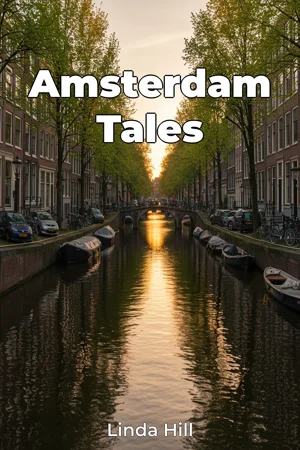
"Amsterdam Tales" explores the remarkable ascent of Amsterdam from a modest settlement to a global powerhouse, focusing on its Dutch Golden Age. The book attributes this transformation to strategic location, innovative economic policies, and a culture of tolerance that attracted diverse populations. Amsterdam's intricate canal system, for instance, wasn't just for aesthetic appeal; it was a carefully engineered network that facilitated trade and transport, crucial for its economic success. The book emphasizes that Amsterdam's story offers valuable lessons on globalization and the power of liberal values. The book progresses chronologically, starting with Amsterdam's origins and its role in the Hanseatic League. It then delves into the Dutch Revolt and the city's emergence as the capital of the Dutch Republic. A significant portion is dedicated to the Dutch East India Company (VOC) and its impact on Amsterdam's growth, highlighting how the city became a haven for intellectuals and artists. Through primary sources and contemporary analysis, "Amsterdam Tales" reveals the inner workings of Amsterdam's society and economy.
Book Details
ISBN
9788233991814
Publisher
Publifye AS
Your Licenses
You don't own any licenses for this book
Purchase a license below to unlock this book and download the EPUB.
Purchase License
Select a tier to unlock this book
Need bulk licensing?
Contact us for enterprise agreements.