
About This Book
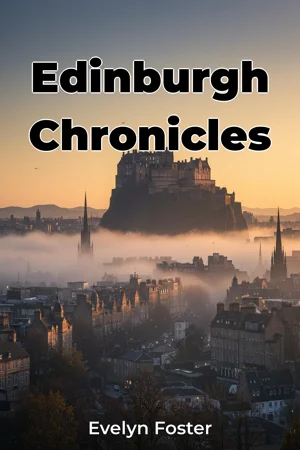
Have you ever wondered how a single city can embody both grim history and enduring enchantment? "Edinburgh Chronicles" delves into the heart of Scotland’s capital, exploring its multifaceted identity through the ages. This book examines Edinburgh’s development by intertwining its medieval foundations, literary heritage, and ethereal ghost stories, always viewed through the lens of its iconic castle, which stands as a silent witness to centuries of change. These interwoven themes reveal Edinburgh's evolution from a fortified stronghold to a vibrant cultural center. The central argument of "Edinburgh Chronicles" asserts that Edinburgh's unique character arises from the constant interplay between its imposing physical presence, particularly the castle and the Old Town's architecture, and the intangible narratives woven into its fabric – legends, literature, and the persistent whispers of the past. This argument is crucial for understanding not only Edinburgh but also how cities cultivate unique identities that resonate through generations. This book unfolds in a structured manner, beginning with an exploration of Edinburgh Castle’s strategic importance, tracing its role from a defensive fortress to a symbol of Scottish identity. Following this initial grounding, the narrative transitions to the labyrinthine streets of the Old Town, unraveling its medieval origins and the daily lives of its inhabitants. A dedicated section then illuminates Edinburgh’s literary history, showcasing figures like Sir Walter Scott and Robert Louis Stevenson and their contributions to shaping the city's image. Subsequently, the book ventures into the realm of ghost stories and folklore, examining how these tales reflect the city’s darker aspects and the enduring power of oral tradition. Finally, the book consolidates these individual strands, illustrating how they converge to create Edinburgh’s singular identity, offering insights into urban development, cultural preservation, and the power of storytelling. "Edinburgh Chronicles" draws upon a diverse range of sources, including historical documents, architectural surveys, literary analyses, and collections of folklore. Archaeological findings and cartographic records are employed to reconstruct the physical evolution of the city. The book also incorporates anecdotes and eyewitness accounts gleaned from personal journals and public archives, adding depth and authenticity to the narrative. This exploration of Edinburgh’s past connects to broader fields such as urban studies by examining city planning and social geography by analyzing population shifts and cultural interactions within Edinburgh. Furthermore, the analysis of literary works intersects with cultural studies, revealing how literature reinforces and challenges societal norms which provides context to this chronicles. "Edinburgh Chronicles" stands out by adopting an interdisciplinary approach, weaving together historical, literary, and folkloric perspectives to paint a comprehensive portrait of Edinburgh. Unlike traditional historical accounts that focus solely on political events or architectural details, this book emphasizes the symbiotic relationship between the city's physical environment and its cultural output. Written in a clear and accessible style, "Edinburgh Chronicles" aims to engage both academic researchers and general readers with an interest in history, literature, and Scottish culture. The tone is informative and engaging, avoiding overly technical jargon while maintaining scholarly rigor. Targeted towards history enthusiasts, literary scholars, and travelers seeking a deeper understanding of Edinburgh, this book provides a valuable resource for anyone interested in the cultural and historical forces that have shaped this iconic city. It appeals to those looking to move beyond typical travel guides and delve into the true character of Edinburgh. As a work of non-fiction in the Travel and History genres, "Edinburgh Chronicles" adheres to the conventions of accuracy and factual representation. While encompassing a broad range of topics related to Edinburgh, the book focuses primarily on the period from the medieval era to the early 20th century, recognizing that a comprehensive treatment of the city's contemporary developments would necessitate a separate volume. The insights presented in "Edinburgh Chronicles" can be applied to the study of other historic cities, providing a framework for understanding how urban environments shape and are shaped by cultural narratives. Moreover, the book offers practical guidance for travelers interested in exploring Edinburgh’s historical and literary landmarks, enhancing their appreciation of the city's cultural heritage. While this book strives for objectivity, it acknowledges the ongoing debates surrounding the interpretation of historical events and the authenticity of certain ghost stories. By presenting a balanced perspective and citing credible sources, "Edinburgh Chronicles" contributes to a nuanced understanding of Edinburgh’s past and its enduring legacy.
Have you ever wondered how a single city can embody both grim history and enduring enchantment? "Edinburgh Chronicles" delves into the heart of Scotland’s capital, exploring its multifaceted identity through the ages. This book examines Edinburgh’s development by intertwining its medieval foundations, literary heritage, and ethereal ghost stories, always viewed through the lens of its iconic castle, which stands as a silent witness to centuries of change. These interwoven themes reveal Edinburgh's evolution from a fortified stronghold to a vibrant cultural center. The central argument of "Edinburgh Chronicles" asserts that Edinburgh's unique character arises from the constant interplay between its imposing physical presence, particularly the castle and the Old Town's architecture, and the intangible narratives woven into its fabric – legends, literature, and the persistent whispers of the past. This argument is crucial for understanding not only Edinburgh but also how cities cultivate unique identities that resonate through generations. This book unfolds in a structured manner, beginning with an exploration of Edinburgh Castle’s strategic importance, tracing its role from a defensive fortress to a symbol of Scottish identity. Following this initial grounding, the narrative transitions to the labyrinthine streets of the Old Town, unraveling its medieval origins and the daily lives of its inhabitants. A dedicated section then illuminates Edinburgh’s literary history, showcasing figures like Sir Walter Scott and Robert Louis Stevenson and their contributions to shaping the city's image. Subsequently, the book ventures into the realm of ghost stories and folklore, examining how these tales reflect the city’s darker aspects and the enduring power of oral tradition. Finally, the book consolidates these individual strands, illustrating how they converge to create Edinburgh’s singular identity, offering insights into urban development, cultural preservation, and the power of storytelling. "Edinburgh Chronicles" draws upon a diverse range of sources, including historical documents, architectural surveys, literary analyses, and collections of folklore. Archaeological findings and cartographic records are employed to reconstruct the physical evolution of the city. The book also incorporates anecdotes and eyewitness accounts gleaned from personal journals and public archives, adding depth and authenticity to the narrative. This exploration of Edinburgh’s past connects to broader fields such as urban studies by examining city planning and social geography by analyzing population shifts and cultural interactions within Edinburgh. Furthermore, the analysis of literary works intersects with cultural studies, revealing how literature reinforces and challenges societal norms which provides context to this chronicles. "Edinburgh Chronicles" stands out by adopting an interdisciplinary approach, weaving together historical, literary, and folkloric perspectives to paint a comprehensive portrait of Edinburgh. Unlike traditional historical accounts that focus solely on political events or architectural details, this book emphasizes the symbiotic relationship between the city's physical environment and its cultural output. Written in a clear and accessible style, "Edinburgh Chronicles" aims to engage both academic researchers and general readers with an interest in history, literature, and Scottish culture. The tone is informative and engaging, avoiding overly technical jargon while maintaining scholarly rigor. Targeted towards history enthusiasts, literary scholars, and travelers seeking a deeper understanding of Edinburgh, this book provides a valuable resource for anyone interested in the cultural and historical forces that have shaped this iconic city. It appeals to those looking to move beyond typical travel guides and delve into the true character of Edinburgh. As a work of non-fiction in the Travel and History genres, "Edinburgh Chronicles" adheres to the conventions of accuracy and factual representation. While encompassing a broad range of topics related to Edinburgh, the book focuses primarily on the period from the medieval era to the early 20th century, recognizing that a comprehensive treatment of the city's contemporary developments would necessitate a separate volume. The insights presented in "Edinburgh Chronicles" can be applied to the study of other historic cities, providing a framework for understanding how urban environments shape and are shaped by cultural narratives. Moreover, the book offers practical guidance for travelers interested in exploring Edinburgh’s historical and literary landmarks, enhancing their appreciation of the city's cultural heritage. While this book strives for objectivity, it acknowledges the ongoing debates surrounding the interpretation of historical events and the authenticity of certain ghost stories. By presenting a balanced perspective and citing credible sources, "Edinburgh Chronicles" contributes to a nuanced understanding of Edinburgh’s past and its enduring legacy.
"Edinburgh Chronicles" explores the rich tapestry of Scotland's capital, revealing how its historical, literary, and folkloric elements intertwine to define its unique identity. From its medieval origins to its status as a cultural hub, Edinburgh's story is one of constant evolution, shaped by its imposing physical presence and the intangible narratives woven into its fabric. The book highlights how the city's iconic castle, initially a defensive fortress, became a powerful symbol of Scottish identity, witnessing centuries of transformation. Intriguingly, the persistent ghost stories and folklore reflect the city's darker aspects, showcasing the enduring power of oral tradition in shaping its cultural landscape. The book progresses systematically, starting with the strategic importance of Edinburgh Castle and then ventures into the maze-like streets of the Old Town, exploring its medieval roots and the daily lives of its inhabitants. A dedicated section showcases Edinburgh's literary history, focusing on figures like Sir Walter Scott and Robert Louis Stevenson, and their contributions to shaping the city's image. By weaving together historical documents, literary analyses, and folklore, "Edinburgh Chronicles" offers a comprehensive portrait of Edinburgh, emphasizing the symbiotic relationship between the city's physical environment and its cultural output.
Book Details
ISBN
9788233991753
Publisher
Publifye AS
Your Licenses
You don't own any licenses for this book
Purchase a license below to unlock this book and download the EPUB.
Purchase License
Select a tier to unlock this book
Need bulk licensing?
Contact us for enterprise agreements.