
About This Book
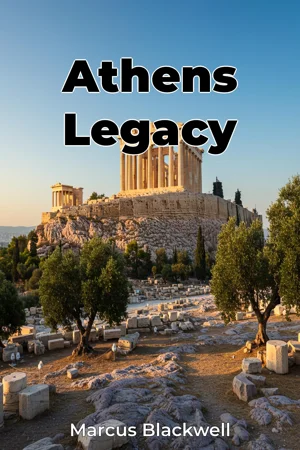
What if the foundations of modern thought and society were built not just on stone, but on a specific convergence of philosophy, athleticism, and civic duty? This book, 'Athens Legacy', delves into the multifaceted heritage of Athens, exploring its profound impact on history, philosophy, and the enduring traditions that continue to resonate in contemporary Greece and beyond. The primary focus of this work lies in three central themes: the evolution of Athenian philosophy, the origins and significance of the Olympic Games, and the development of Athenian democracy and its lasting influence. These themes are crucial because they represent the cornerstones of Western civilization, shaping our understanding of ethics, competition, and governance. To fully appreciate Athens' Legacy, one must understand the historical context of ancient Greece, particularly the period from the Archaic age through the Hellenistic period. Prior knowledge of Greek mythology, the Peloponnesian War, and the major philosophical schools (e.g., Stoicism, Epicureanism) will enrich the reading experience, though the book provides sufficient background information. 'Athens Legacy' argues that the Athenian experiment – the unique blending of intellectual inquiry, physical prowess, and civic engagement – created a cultural and intellectual environment that indelibly shaped the course of Western history. Athens was not simply a city-state; it was a crucible where ideas were forged, tested, and disseminated, leaving an enduring legacy that continues to inspire and challenge us. The book is structured to systematically explore this legacy. First, it introduces the pre-Socratic philosophers and the socio-political conditions that fostered intellectual inquiry. Next, it examines the rise of Athenian democracy, its institutions, and the key figures who shaped its development. The book then transitions to the Olympic Games, exploring their religious and cultural significance, and their role in fostering a sense of pan-Hellenic identity. The core argument is developed across chapters that analyze the works of Plato and Aristotle, the impact of Athenian drama, and the city's architectural achievements. The book culminates by tracing the influence of Athenian ideals on subsequent civilizations, including the Roman Empire, the Renaissance, and the modern world, analyzing both successes and failures in their adoption. The evidence presented in this book draws upon a wide range of primary sources, including the writings of Plato, Aristotle, Thucydides, and Herodotus. Archaeological findings, inscriptions, and artistic representations further substantiate the claims made. The book also utilizes contemporary scholarship in classics, philosophy, and history to provide a balanced and nuanced perspective. 'Athens Legacy' connects to other fields, such as political science (through the study of democracy), sports history (through the analysis of the Olympic Games), and architectural history (through the examination of Athenian monuments). These interdisciplinary connections enrich the book's argument by demonstrating the multifaceted nature of Athens' influence. The book offers a distinctive perspective by examining the interrelationship between Athenian philosophy, athletics, and democracy. It highlights how these seemingly disparate aspects of Athenian life were deeply intertwined, creating a unique cultural synergy. The tone of the book is informative and analytical, aiming to provide a balanced and objective assessment of Athens' legacy. The writing style is accessible to a broad audience while maintaining scholarly rigor. The target audience includes students of history, philosophy, and classical studies, as well as anyone interested in the origins of Western civilization. This book will be valuable to them because it provides a comprehensive and engaging overview of Athens' enduring contribution to human thought and culture. As a work of history, political history and philosophy, 'Athens Legacy' adheres to the conventions of these genres by presenting well-researched arguments, supported by primary and secondary sources, and presented in a clear and organized manner. The scope of the book is limited to exploring the key aspects of Athens' legacy, from approximately 800 BCE to the Hellenistic period. It does not delve into every aspect of ancient Greek history or culture but focuses specifically on the Athenian contribution. The information presented can be applied practically by providing a deeper understanding of the roots of democratic governance, ethical principles, and the pursuit of excellence which are still relevant today. While celebrating Athens' achievements, the book also acknowledges controversies and debates surrounding Athenian society, such as the institution of slavery, the exclusion of women from political life, and the limitations of Athenian democracy.
What if the foundations of modern thought and society were built not just on stone, but on a specific convergence of philosophy, athleticism, and civic duty? This book, 'Athens Legacy', delves into the multifaceted heritage of Athens, exploring its profound impact on history, philosophy, and the enduring traditions that continue to resonate in contemporary Greece and beyond. The primary focus of this work lies in three central themes: the evolution of Athenian philosophy, the origins and significance of the Olympic Games, and the development of Athenian democracy and its lasting influence. These themes are crucial because they represent the cornerstones of Western civilization, shaping our understanding of ethics, competition, and governance. To fully appreciate Athens' Legacy, one must understand the historical context of ancient Greece, particularly the period from the Archaic age through the Hellenistic period. Prior knowledge of Greek mythology, the Peloponnesian War, and the major philosophical schools (e.g., Stoicism, Epicureanism) will enrich the reading experience, though the book provides sufficient background information. 'Athens Legacy' argues that the Athenian experiment – the unique blending of intellectual inquiry, physical prowess, and civic engagement – created a cultural and intellectual environment that indelibly shaped the course of Western history. Athens was not simply a city-state; it was a crucible where ideas were forged, tested, and disseminated, leaving an enduring legacy that continues to inspire and challenge us. The book is structured to systematically explore this legacy. First, it introduces the pre-Socratic philosophers and the socio-political conditions that fostered intellectual inquiry. Next, it examines the rise of Athenian democracy, its institutions, and the key figures who shaped its development. The book then transitions to the Olympic Games, exploring their religious and cultural significance, and their role in fostering a sense of pan-Hellenic identity. The core argument is developed across chapters that analyze the works of Plato and Aristotle, the impact of Athenian drama, and the city's architectural achievements. The book culminates by tracing the influence of Athenian ideals on subsequent civilizations, including the Roman Empire, the Renaissance, and the modern world, analyzing both successes and failures in their adoption. The evidence presented in this book draws upon a wide range of primary sources, including the writings of Plato, Aristotle, Thucydides, and Herodotus. Archaeological findings, inscriptions, and artistic representations further substantiate the claims made. The book also utilizes contemporary scholarship in classics, philosophy, and history to provide a balanced and nuanced perspective. 'Athens Legacy' connects to other fields, such as political science (through the study of democracy), sports history (through the analysis of the Olympic Games), and architectural history (through the examination of Athenian monuments). These interdisciplinary connections enrich the book's argument by demonstrating the multifaceted nature of Athens' influence. The book offers a distinctive perspective by examining the interrelationship between Athenian philosophy, athletics, and democracy. It highlights how these seemingly disparate aspects of Athenian life were deeply intertwined, creating a unique cultural synergy. The tone of the book is informative and analytical, aiming to provide a balanced and objective assessment of Athens' legacy. The writing style is accessible to a broad audience while maintaining scholarly rigor. The target audience includes students of history, philosophy, and classical studies, as well as anyone interested in the origins of Western civilization. This book will be valuable to them because it provides a comprehensive and engaging overview of Athens' enduring contribution to human thought and culture. As a work of history, political history and philosophy, 'Athens Legacy' adheres to the conventions of these genres by presenting well-researched arguments, supported by primary and secondary sources, and presented in a clear and organized manner. The scope of the book is limited to exploring the key aspects of Athens' legacy, from approximately 800 BCE to the Hellenistic period. It does not delve into every aspect of ancient Greek history or culture but focuses specifically on the Athenian contribution. The information presented can be applied practically by providing a deeper understanding of the roots of democratic governance, ethical principles, and the pursuit of excellence which are still relevant today. While celebrating Athens' achievements, the book also acknowledges controversies and debates surrounding Athenian society, such as the institution of slavery, the exclusion of women from political life, and the limitations of Athenian democracy.
"Athens Legacy" explores the profound impact of Athens on Western civilization, focusing on Athenian philosophy, the Olympic Games, and Athenian democracy. It argues that Athens uniquely blended intellectual inquiry, physical prowess, and civic engagement. The book highlights how the Olympic Games were not just athletic competitions, but also religious and cultural events fostering a pan-Hellenic identity. Similarly, the evolution of Athenian democracy, while groundbreaking, also presented limitations, such as the exclusion of women from political life. The book systematically progresses from pre-Socratic philosophers to the rise of Athenian democracy, then to the Olympic Games, analyzing the works of Plato and Aristotle, Athenian drama, and architecture. By drawing on primary sources like Plato and Aristotle, along with archaeological findings, it provides a balanced assessment of Athens' enduring contribution. The book culminates by tracing the influence of Athenian ideals on subsequent civilizations, examining both successes and failures in their adoption which makes it valuable to those interested in Philosophy, History World, and World History.
Book Details
ISBN
9788233991586
Publisher
Publifye AS
Your Licenses
You don't own any licenses for this book
Purchase a license below to unlock this book and download the EPUB.
Purchase License
Select a tier to unlock this book
Need bulk licensing?
Contact us for enterprise agreements.