
About This Book
How did a small republic in Italy rise to become the dominant power of the ancient world, leaving an indelible mark on law, language, and culture? "Rome Stories" delves into the captivating history of Rome, exploring the key elements that shaped its unparalleled influence and continue to resonate today. This book examines Roman history not as a mere sequence of events, but as a dynamic interplay of political ambition, architectural innovation, artistic expression, and culinary traditions. We explore three central themes: the evolution of Roman governance, from republic to empire and its lasting impact on modern political structures; Rome’s groundbreaking advancements in architecture and engineering, exemplified by iconic structures like the Colosseum and aqueducts; and the development of Roman culture, including its diverse art forms, sophisticated cuisine, and the gladiatorial games that defined its spectacles. These themes are important because they illuminate how Rome's practical innovations intertwined with its cultural identity to forge a civilization whose influence is still present. Understanding Roman history requires considering its geographical context, the societal structures that defined its citizens' roles, and the military strategies that enabled its expansion. While prior knowledge of ancient history is helpful, it is not essential; "Rome Stories" provides the necessary foundation for understanding Rome's ascent. The central argument of "Rome Stories" is that Rome’s enduring legacy stems from its capacity to assimilate, adapt, and innovate across diverse fields. Roman law, for example, provides the basis for many legal systems across the world. The engineering prowess of the Romans allowed them to construct buildings that still stand today. This book stresses that Rome’s impact on law, architecture, engineering, art, and even food continues to fashion the world, offering a deeper understanding of our links to antiquity. "Rome Stories" unfolds systematically. It begins with the origins of Rome, tracing its transition from a small village to a republic. The book then examines the rise of powerful figures, such as Julius Caesar, and the subsequent transformation into an empire under Augustus. Key chapters delve into architectural marvels, such as the Pantheon and Roman roads, showcasing the engineering principles behind their construction. The exploration of Roman culture includes discussions of mythology, literature, philosophy, and the culinary innovations that defined Roman feasts. The book culminates by assessing Rome’s decline and fall and also its continuation through Byzantium, and its lasting impact on Western civilization, including its influences on governance, law, and language. The narratives within "Rome Stories" are supported by archaeological evidence, primary source accounts from Roman writers, and analyses of surviving art and artifacts. The evidence shows that Rome's innovations were not always original but refined and applied on a grand scale. "Rome Stories" draws connections between history and other disciplines such as political science, urban planning, and culinary arts. These connections enhance the book's central argument by illustrating the multifaceted legacy of Rome and its continued relevance today. "Rome Stories" offers a fresh perspective by going beyond the traditional political and military narratives. It looks at Roman life through the lens of its architectural achievements, artistic expression, and culinary traditions. The book adopts a narrative non-fiction style, presenting complex information accessible to a broad audience. "Rome Stories" is intended for anyone interested in history, architecture, or the cultural foundations of Western civilization. It will appeal to students, travelers, and general readers seeking a comprehensive and engaging exploration of Rome's rich heritage. As a work of history, "Rome Stories" adheres to standards of accuracy, objectivity, and evidence-based analysis. The scope of "Rome Stories" covers the period from the founding of Rome to the fall of the Western Roman Empire, with selective glances into its impact on the world. The insights from "Rome Stories" can be applied to understanding modern urban planning, political systems, and cultural trends. The book encourages readers to see connections between the past and the present, fostering a deeper appreciation of our inherited world. "Rome Stories" touches upon ongoing debates surrounding the reasons for Rome’s decline, acknowledging different perspectives.
How did a small republic in Italy rise to become the dominant power of the ancient world, leaving an indelible mark on law, language, and culture? "Rome Stories" delves into the captivating history of Rome, exploring the key elements that shaped its unparalleled influence and continue to resonate today. This book examines Roman history not as a mere sequence of events, but as a dynamic interplay of political ambition, architectural innovation, artistic expression, and culinary traditions. We explore three central themes: the evolution of Roman governance, from republic to empire and its lasting impact on modern political structures; Rome’s groundbreaking advancements in architecture and engineering, exemplified by iconic structures like the Colosseum and aqueducts; and the development of Roman culture, including its diverse art forms, sophisticated cuisine, and the gladiatorial games that defined its spectacles. These themes are important because they illuminate how Rome's practical innovations intertwined with its cultural identity to forge a civilization whose influence is still present. Understanding Roman history requires considering its geographical context, the societal structures that defined its citizens' roles, and the military strategies that enabled its expansion. While prior knowledge of ancient history is helpful, it is not essential; "Rome Stories" provides the necessary foundation for understanding Rome's ascent. The central argument of "Rome Stories" is that Rome’s enduring legacy stems from its capacity to assimilate, adapt, and innovate across diverse fields. Roman law, for example, provides the basis for many legal systems across the world. The engineering prowess of the Romans allowed them to construct buildings that still stand today. This book stresses that Rome’s impact on law, architecture, engineering, art, and even food continues to fashion the world, offering a deeper understanding of our links to antiquity. "Rome Stories" unfolds systematically. It begins with the origins of Rome, tracing its transition from a small village to a republic. The book then examines the rise of powerful figures, such as Julius Caesar, and the subsequent transformation into an empire under Augustus. Key chapters delve into architectural marvels, such as the Pantheon and Roman roads, showcasing the engineering principles behind their construction. The exploration of Roman culture includes discussions of mythology, literature, philosophy, and the culinary innovations that defined Roman feasts. The book culminates by assessing Rome’s decline and fall and also its continuation through Byzantium, and its lasting impact on Western civilization, including its influences on governance, law, and language. The narratives within "Rome Stories" are supported by archaeological evidence, primary source accounts from Roman writers, and analyses of surviving art and artifacts. The evidence shows that Rome's innovations were not always original but refined and applied on a grand scale. "Rome Stories" draws connections between history and other disciplines such as political science, urban planning, and culinary arts. These connections enhance the book's central argument by illustrating the multifaceted legacy of Rome and its continued relevance today. "Rome Stories" offers a fresh perspective by going beyond the traditional political and military narratives. It looks at Roman life through the lens of its architectural achievements, artistic expression, and culinary traditions. The book adopts a narrative non-fiction style, presenting complex information accessible to a broad audience. "Rome Stories" is intended for anyone interested in history, architecture, or the cultural foundations of Western civilization. It will appeal to students, travelers, and general readers seeking a comprehensive and engaging exploration of Rome's rich heritage. As a work of history, "Rome Stories" adheres to standards of accuracy, objectivity, and evidence-based analysis. The scope of "Rome Stories" covers the period from the founding of Rome to the fall of the Western Roman Empire, with selective glances into its impact on the world. The insights from "Rome Stories" can be applied to understanding modern urban planning, political systems, and cultural trends. The book encourages readers to see connections between the past and the present, fostering a deeper appreciation of our inherited world. "Rome Stories" touches upon ongoing debates surrounding the reasons for Rome’s decline, acknowledging different perspectives.
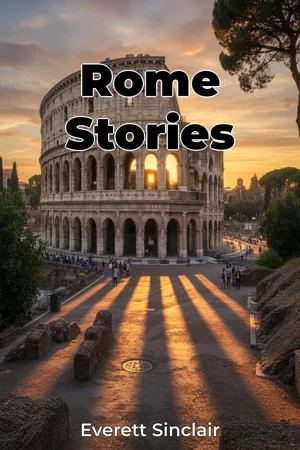
"Rome Stories" explores the fascinating history of Rome, detailing its transformation from a small republic to the dominant power of the ancient world. This book examines how Rome's political ambition, architectural innovation, artistic expression, and culinary traditions shaped its enduring influence. Discover how Roman law provides the basis for many legal systems across the world, and how Roman engineering allowed them to construct buildings that still stand today. The book unfolds systematically, starting with the origins of Rome and its transition to a republic, then examining the rise of figures like Julius Caesar and the subsequent empire under Augustus. Key chapters delve into architectural marvels like the Pantheon and Roman roads, showcasing Roman Architecture and engineering principles. The exploration of Roman culture includes discussions of mythology, literature, philosophy, and culinary innovations.
Book Details
ISBN
9788233991524
Publisher
Publifye AS
Your Licenses
You don't own any licenses for this book
Purchase a license below to unlock this book and download the EPUB.
Purchase License
Select a tier to unlock this book
Need bulk licensing?
Contact us for enterprise agreements.