
About This Book
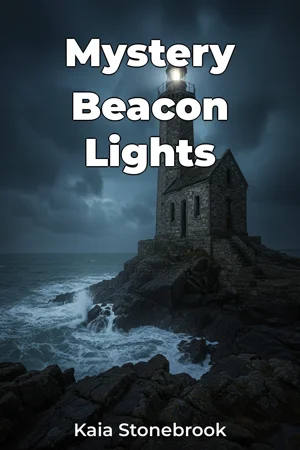
Imagine a cold, dark night. A lone lighthouse, long since decommissioned, stands sentinel against the crashing waves. But then, a light flickers—a beacon where no beacon should be. Are these simply tricks of the eye, or is there something more to these spectral illuminations? "Mystery Beacon Lights" delves into precisely this question: the persistent phenomenon of unexplained lights observed emanating from abandoned lighthouses, blending historical investigation with scientific inquiry to unravel the enigma. This book investigates two pivotal topics: the documented history of lighthouse operation and abandonment, and the scientific possibilities behind the reported lights. The historical context is crucial; understanding when and why a light was abandoned establishes a timeline against which to assess the plausibility of the unexplained lights. The scientific examination explores potential natural phenomena, such as atmospheric conditions, bioluminescence, or geological activity, that might mimic artificial light. The central argument of "Mystery Beacon Lights" is that while many reported sightings can be attributed to misidentification, folklore, or environmental factors, a residue of cases remains stubbornly unexplained, warranting serious interdisciplinary investigation. This argument is important because it challenges assumptions about the completeness of our understanding of coastal phenomena and highlights the potential for new discoveries at the intersection of history and science. The book begins by laying the groundwork: defining what constitutes a "lighthouse," tracing the history of their use, and detailing the specific technologies employed to create their beams. It then transitions to the core of the investigation: a systematic examination of documented sightings of unexplained lights at abandoned lighthouses. This is achieved through several key sections. First, a catalog of cases, detailing the location, date, and characteristics of the observed lights. Second, an analysis of potential explanations, ranging from simple misidentification to more complex environmental phenomena. Third, consideration of the psychological and sociological aspects of these sightings, including the role of folklore and local legends. Evidence presented in the book draws from diverse sources: official lighthouse records, historical newspapers and journals, eyewitness accounts collected through interviews and surveys, and scientific data on atmospheric conditions, geological surveys, and marine biology. A unique aspect of the research is the use of predictive modeling to simulate atmospheric conditions at the time of reported sightings, allowing for a more rigorous assessment of potential natural causes. "Mystery Beacon Lights" connects to several other fields. Maritime history provides the context for understanding the role of lighthouses in navigation and coastal communities. Atmospheric science offers tools for analyzing weather patterns and light refraction. Psychology sheds light on the reliability of eyewitness testimony and the influence of expectation bias. This book adopts a fact-based, analytical approach, avoiding sensationalism in favor of rigorous investigation. The tone is measured and objective, presenting evidence fairly and acknowledging the limits of current knowledge. The target audience includes history enthusiasts, science buffs, maritime scholars, and anyone intrigued by unexplained phenomena. The book offers them a unique blend of historical narrative and scientific investigation, providing a fresh perspective on a long-standing mystery. As a work of non-fiction, "Mystery Beacon Lights" prioritizes accuracy and evidence-based arguments, adhering to the standards of historical and scientific research. While the book aims to be comprehensive in its investigation of documented sightings, it acknowledges the inherent limitations of relying on anecdotal evidence and historical records. It is not a work of paranormal investigation, and it does not propose supernatural explanations for the observed lights. The information in this book can be applied practically to improve coastal safety protocols, inform the preservation of historical lighthouses, and promote a deeper understanding of the complex interplay between human perception and the natural world. Furthermore, it can serve as a case study for interdisciplinary research into other unexplained phenomena. The debates surrounding the interpretation of historical evidence and the reliability of eyewitness accounts in the field are addressed by systematically analyzing the data. In conclusion, "Mystery Beacon Lights" offers a comprehensive and insightful exploration of a captivating mystery. By combining rigorous historical research with cutting-edge scientific analysis, this book seeks to illuminate the truth behind the unexplained lights of abandoned lighthouses, enriching our understanding of both the past and the present.
Imagine a cold, dark night. A lone lighthouse, long since decommissioned, stands sentinel against the crashing waves. But then, a light flickers—a beacon where no beacon should be. Are these simply tricks of the eye, or is there something more to these spectral illuminations? "Mystery Beacon Lights" delves into precisely this question: the persistent phenomenon of unexplained lights observed emanating from abandoned lighthouses, blending historical investigation with scientific inquiry to unravel the enigma. This book investigates two pivotal topics: the documented history of lighthouse operation and abandonment, and the scientific possibilities behind the reported lights. The historical context is crucial; understanding when and why a light was abandoned establishes a timeline against which to assess the plausibility of the unexplained lights. The scientific examination explores potential natural phenomena, such as atmospheric conditions, bioluminescence, or geological activity, that might mimic artificial light. The central argument of "Mystery Beacon Lights" is that while many reported sightings can be attributed to misidentification, folklore, or environmental factors, a residue of cases remains stubbornly unexplained, warranting serious interdisciplinary investigation. This argument is important because it challenges assumptions about the completeness of our understanding of coastal phenomena and highlights the potential for new discoveries at the intersection of history and science. The book begins by laying the groundwork: defining what constitutes a "lighthouse," tracing the history of their use, and detailing the specific technologies employed to create their beams. It then transitions to the core of the investigation: a systematic examination of documented sightings of unexplained lights at abandoned lighthouses. This is achieved through several key sections. First, a catalog of cases, detailing the location, date, and characteristics of the observed lights. Second, an analysis of potential explanations, ranging from simple misidentification to more complex environmental phenomena. Third, consideration of the psychological and sociological aspects of these sightings, including the role of folklore and local legends. Evidence presented in the book draws from diverse sources: official lighthouse records, historical newspapers and journals, eyewitness accounts collected through interviews and surveys, and scientific data on atmospheric conditions, geological surveys, and marine biology. A unique aspect of the research is the use of predictive modeling to simulate atmospheric conditions at the time of reported sightings, allowing for a more rigorous assessment of potential natural causes. "Mystery Beacon Lights" connects to several other fields. Maritime history provides the context for understanding the role of lighthouses in navigation and coastal communities. Atmospheric science offers tools for analyzing weather patterns and light refraction. Psychology sheds light on the reliability of eyewitness testimony and the influence of expectation bias. This book adopts a fact-based, analytical approach, avoiding sensationalism in favor of rigorous investigation. The tone is measured and objective, presenting evidence fairly and acknowledging the limits of current knowledge. The target audience includes history enthusiasts, science buffs, maritime scholars, and anyone intrigued by unexplained phenomena. The book offers them a unique blend of historical narrative and scientific investigation, providing a fresh perspective on a long-standing mystery. As a work of non-fiction, "Mystery Beacon Lights" prioritizes accuracy and evidence-based arguments, adhering to the standards of historical and scientific research. While the book aims to be comprehensive in its investigation of documented sightings, it acknowledges the inherent limitations of relying on anecdotal evidence and historical records. It is not a work of paranormal investigation, and it does not propose supernatural explanations for the observed lights. The information in this book can be applied practically to improve coastal safety protocols, inform the preservation of historical lighthouses, and promote a deeper understanding of the complex interplay between human perception and the natural world. Furthermore, it can serve as a case study for interdisciplinary research into other unexplained phenomena. The debates surrounding the interpretation of historical evidence and the reliability of eyewitness accounts in the field are addressed by systematically analyzing the data. In conclusion, "Mystery Beacon Lights" offers a comprehensive and insightful exploration of a captivating mystery. By combining rigorous historical research with cutting-edge scientific analysis, this book seeks to illuminate the truth behind the unexplained lights of abandoned lighthouses, enriching our understanding of both the past and the present.
"Mystery Beacon Lights" explores the captivating enigma of unexplained lights appearing at abandoned lighthouses. It blends historical investigation with scientific inquiry, seeking to understand these coastal phenomena. The book addresses the persistent question of whether these lights are mere illusions or something more tangible, analyzing eyewitness accounts and delving into lighthouse history to separate fact from folklore. Consider, for example, how atmospheric conditions might mimic artificial light, or how geological activity could produce similar effects. The book meticulously examines documented sightings, considering factors like atmospheric science and potential misidentification. It progresses from establishing the historical context of lighthouses and their technologies to cataloging specific cases of unexplained lights. It then analyzes possible explanations, including psychological and sociological aspects, such as the influence of local legends. By using predictive modeling to simulate atmospheric conditions at the time of sightings, "Mystery Beacon Lights" offers a rigorous assessment of potential natural causes. This book uniquely combines maritime history and science to provide a fresh perspective on a long-standing mystery. It avoids sensationalism, instead adopting a fact-based approach. The target audience, including history enthusiasts and science buffs, will find the blend of historical narrative and scientific investigation both informative and intriguing, enriching their understanding of both science and history.
Book Details
ISBN
9788233991401
Publisher
Publifye AS
Your Licenses
You don't own any licenses for this book
Purchase a license below to unlock this book and download the EPUB.
Purchase License
Select a tier to unlock this book
Need bulk licensing?
Contact us for enterprise agreements.