
About This Book
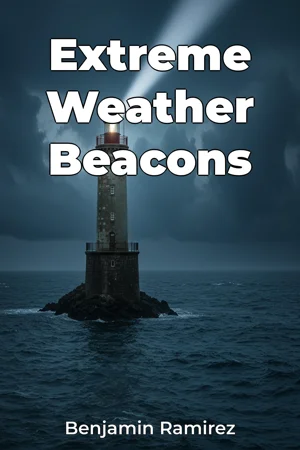
Have you ever considered the ingenuity required to construct a building designed not only to guide ships safely but also to withstand the most ferocious forces of nature? "Extreme Weather Beacons" explores the history, architecture, and engineering marvels of lighthouses built to endure hurricanes, tsunamis, and freezing polar storms. This book delves into the crucial role these structures have played in maritime history and the innovative designs that allowed them to stand firm against the elements. Lighthouses are more than just navigational aids; they are testaments to human resilience and engineering innovation. This book examines the architectural principles applied to lighthouse construction. It scrutinizes the historical context in which these structures were conceived and built, often during periods of intense maritime activity and global exploration. We explore the design adaptations necessary to protect these vital beacons from specific weather phenomena, analyzing how engineers anticipated and countered threats like storm surges, ice floes, and high winds. These topics are important because they showcase the intersection of human ingenuity and the raw power of nature, reminding us of the constant need to adapt and innovate in the face of environmental challenges. The central argument of "Extreme Weather Beacons" is that the evolution of lighthouse design reflects a continuously improving understanding of extreme weather events and the creative application of engineering principles to mitigate their impact. This argument is significant because it highlights the crucial role of observation, experimentation, and incremental improvement in the development of resilient infrastructure – lessons that remain relevant in an era of increasing climate volatility. The book begins by introducing the fundamental principles of lighthouse design and the historical context of their construction. It highlights the importance of lighthouses in maritime navigation and global trade. The narrative then progresses through several key sections. First, the book dissects the architectural adaptations employed to withstand hurricane-force winds, including the use of specific structural geometries, materials, and foundation techniques. Second, it examines the unique challenges posed by tsunamis, focusing on lighthouse designs that minimize wave impact and prevent structural collapse. Third, the book explores the methods used to protect lighthouses in freezing polar regions, including insulation techniques, ice-breaking features, and structural reinforcement to resist ice pressure. Finally, it culminates in a discussion of modern lighthouse preservation efforts and the lessons learned from historical designs that can be applied to contemporary coastal infrastructure projects. The research presented in this book draws upon a range of sources, including historical records, architectural drawings, engineering reports, and firsthand accounts from lighthouse keepers. Unique data sources include archival documents from maritime organizations and geological surveys. These sources provide detailed insights into the design, construction, and performance of lighthouses under extreme weather conditions. "Extreme Weather Beacons" connects to several other fields of study, including maritime history, civil engineering, and climate science. Its connections enhance the book's argument by providing a broader understanding of the historical, technical, and environmental factors that have shaped lighthouse design. This book offers a unique perspective by focusing specifically on the architectural and engineering adaptations that enable lighthouses to withstand extreme weather. Rather than simply presenting a historical overview of lighthouses, it delves into the technical details of their construction and the scientific principles that underpin their resilience. The tone and writing style are both informative and accessible, blending technical details with engaging historical narratives to appeal to a broad audience. The target audience includes readers interested in architecture, engineering, maritime history, and weather phenomena. This book would be valuable to them because it offers a comprehensive and engaging exploration of a topic that is both fascinating and relevant to contemporary challenges in coastal resilience. As a work of non-fiction, "Extreme Weather Beacons" adheres to the genre's focus on factual accuracy, evidence-based arguments, and clear presentation of information. It avoids speculation and prioritizes the use of credible sources to support its claims. The scope of the book is limited to lighthouses that have been specifically designed or adapted to withstand extreme weather conditions. It does not cover every lighthouse in the world but focuses on those that represent significant architectural or engineering achievements in the face of environmental challenges. The information presented in "Extreme Weather Beacons" can be applied practically by readers interested in coastal engineering, disaster preparedness, and historic preservation. It provides valuable insights into the design principles and construction techniques that can be used to create more resilient coastal structures and protect vulnerable communities from the impacts of extreme weather events. While the fundamental principles of lighthouse design are generally well-established, ongoing debates exist regarding the best methods for preserving and adapting historical lighthouses to meet modern needs. The book addresses these controversies by presenting a balanced overview of different perspectives and highlighting the challenges involved in balancing historical integrity with contemporary safety standards.
Have you ever considered the ingenuity required to construct a building designed not only to guide ships safely but also to withstand the most ferocious forces of nature? "Extreme Weather Beacons" explores the history, architecture, and engineering marvels of lighthouses built to endure hurricanes, tsunamis, and freezing polar storms. This book delves into the crucial role these structures have played in maritime history and the innovative designs that allowed them to stand firm against the elements. Lighthouses are more than just navigational aids; they are testaments to human resilience and engineering innovation. This book examines the architectural principles applied to lighthouse construction. It scrutinizes the historical context in which these structures were conceived and built, often during periods of intense maritime activity and global exploration. We explore the design adaptations necessary to protect these vital beacons from specific weather phenomena, analyzing how engineers anticipated and countered threats like storm surges, ice floes, and high winds. These topics are important because they showcase the intersection of human ingenuity and the raw power of nature, reminding us of the constant need to adapt and innovate in the face of environmental challenges. The central argument of "Extreme Weather Beacons" is that the evolution of lighthouse design reflects a continuously improving understanding of extreme weather events and the creative application of engineering principles to mitigate their impact. This argument is significant because it highlights the crucial role of observation, experimentation, and incremental improvement in the development of resilient infrastructure – lessons that remain relevant in an era of increasing climate volatility. The book begins by introducing the fundamental principles of lighthouse design and the historical context of their construction. It highlights the importance of lighthouses in maritime navigation and global trade. The narrative then progresses through several key sections. First, the book dissects the architectural adaptations employed to withstand hurricane-force winds, including the use of specific structural geometries, materials, and foundation techniques. Second, it examines the unique challenges posed by tsunamis, focusing on lighthouse designs that minimize wave impact and prevent structural collapse. Third, the book explores the methods used to protect lighthouses in freezing polar regions, including insulation techniques, ice-breaking features, and structural reinforcement to resist ice pressure. Finally, it culminates in a discussion of modern lighthouse preservation efforts and the lessons learned from historical designs that can be applied to contemporary coastal infrastructure projects. The research presented in this book draws upon a range of sources, including historical records, architectural drawings, engineering reports, and firsthand accounts from lighthouse keepers. Unique data sources include archival documents from maritime organizations and geological surveys. These sources provide detailed insights into the design, construction, and performance of lighthouses under extreme weather conditions. "Extreme Weather Beacons" connects to several other fields of study, including maritime history, civil engineering, and climate science. Its connections enhance the book's argument by providing a broader understanding of the historical, technical, and environmental factors that have shaped lighthouse design. This book offers a unique perspective by focusing specifically on the architectural and engineering adaptations that enable lighthouses to withstand extreme weather. Rather than simply presenting a historical overview of lighthouses, it delves into the technical details of their construction and the scientific principles that underpin their resilience. The tone and writing style are both informative and accessible, blending technical details with engaging historical narratives to appeal to a broad audience. The target audience includes readers interested in architecture, engineering, maritime history, and weather phenomena. This book would be valuable to them because it offers a comprehensive and engaging exploration of a topic that is both fascinating and relevant to contemporary challenges in coastal resilience. As a work of non-fiction, "Extreme Weather Beacons" adheres to the genre's focus on factual accuracy, evidence-based arguments, and clear presentation of information. It avoids speculation and prioritizes the use of credible sources to support its claims. The scope of the book is limited to lighthouses that have been specifically designed or adapted to withstand extreme weather conditions. It does not cover every lighthouse in the world but focuses on those that represent significant architectural or engineering achievements in the face of environmental challenges. The information presented in "Extreme Weather Beacons" can be applied practically by readers interested in coastal engineering, disaster preparedness, and historic preservation. It provides valuable insights into the design principles and construction techniques that can be used to create more resilient coastal structures and protect vulnerable communities from the impacts of extreme weather events. While the fundamental principles of lighthouse design are generally well-established, ongoing debates exist regarding the best methods for preserving and adapting historical lighthouses to meet modern needs. The book addresses these controversies by presenting a balanced overview of different perspectives and highlighting the challenges involved in balancing historical integrity with contemporary safety standards.
"Extreme Weather Beacons" explores the remarkable history and architectural engineering behind lighthouses, those steadfast guardians of the sea. These structures, vital for maritime navigation, showcase incredible coastal resilience and innovative design to combat extreme weather. The book highlights how these beacons have evolved to withstand some of nature’s fiercest challenges, from hurricane resistance to tsunami protection, thus representing a blend of historical architecture and engineering innovation. The book delves into the architectural adaptations that enable lighthouses to endure. The use of specific structural geometries is discussed, as well as materials that defy immense forces, and the use of unique foundation techniques. The book examines how maritime history and polar storms have influenced lighthouse design, and how historical records and engineering reports provide insight into their construction and performance. Beginning with the basics of lighthouse design and their historical significance, "Extreme Weather Beacons" progresses through how they combat hurricane-force winds, withstand the impact of tsunamis, and endure freezing polar conditions. It concludes with modern preservation efforts, offering valuable lessons applicable to contemporary coastal infrastructure and beacon preservation.
Book Details
ISBN
9788233991142
Publisher
Publifye AS
Your Licenses
You don't own any licenses for this book
Purchase a license below to unlock this book and download the EPUB.
Purchase License
Select a tier to unlock this book
Need bulk licensing?
Contact us for enterprise agreements.