
About This Book
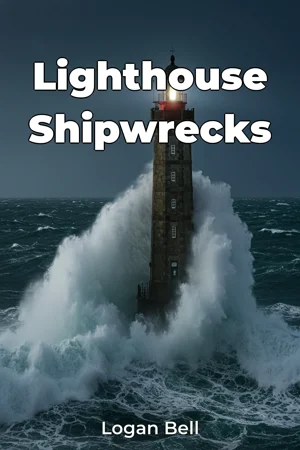
Why do ships, guided by the unwavering beams of lighthouses, still succumb to the perils of the sea? "Lighthouse Shipwrecks" delves into this compelling question, exploring some of history's most perplexing maritime disasters that occurred despite the presence of these vital navigational aids. This book examines the circumstances surrounding these wrecks, the mysteries they present, and the lessons they offer about the complex interplay of human error, environmental factors, and technological limitations at sea. This book will primarily address the history of maritime disasters that occurred within sight of or despite the presence of lighthouses, and the evolution of navigational technology and its impact on maritime safety. It will examine the role of lighthouses in the broader context of maritime travel and their significance as symbols of safety and guidance. Understanding these events requires familiarity with basic navigational principles, historical weather patterns, and the socio-economic context of maritime trade during the periods examined. The central argument of "Lighthouse Shipwrecks" is that while lighthouses have undoubtedly saved countless lives and vessels, their presence alone is insufficient to guarantee maritime safety. The book will explore incidents where human factors, such as misjudgment, fatigue, or inadequate training, combined with unpredictable natural events like sudden storms, rogue waves, or dense fog, led to tragic outcomes, even with the lighthouse acting as a warning beacon. This argument is important because it challenges the often-unquestioned assumption of lighthouses' infallibility and highlights the need for a more nuanced understanding of maritime risk management. The book begins by establishing the historical context of lighthouses, tracing their development from ancient signal fires to modern automated systems. It then delves into specific case studies of famous shipwrecks, analyzing each event through the lens of navigational technology, human factors, and environmental conditions. Some chapter examples include: prominent disasters close to lighthouses, analysis of what went wrong, preventative measures that were not enough, evolution of lighthouse tech/operations, and exploration of the most mysterious cases with lessons learned. The book culminates with a discussion of the lessons learned from these disasters and their relevance to contemporary maritime safety practices. The evidence presented will draw from a variety of sources, including official inquiry reports, survivor testimonies, nautical charts, meteorological data, and archival records from lighthouse authorities and maritime insurance companies. The research methodology involves a careful analysis of these primary sources, combined with secondary research on maritime history, navigational technology, and human factors in maritime accidents. "Lighthouse Shipwrecks" connects to several other fields, including meteorology (understanding weather's impact), engineering (lighthouse design and maintenance), and sociology (human error and decision-making under pressure). These connections enhance the book’s argument by providing a more holistic understanding of the factors contributing to maritime disasters. The book takes a unique approach by focusing specifically on shipwrecks that occurred *despite* the presence of lighthouses, offering a counterpoint to the more common narrative of lighthouses as solely symbols of safety and guidance. It highlights the limitations of technology and the persistent role of human factors in maritime accidents. The tone and writing style will be accessible narrative non-fiction, blending historical accounts with technical explanations in a way that is both informative and engaging for general readers. The target audience includes maritime history enthusiasts, recreational sailors, students of naval architecture and maritime engineering, and anyone interested in the intersection of technology, human behavior, and the power of the sea. The book offers valuable insights into the complexities of maritime safety and the enduring challenges of navigating the world's oceans. As a work of history, "Lighthouse Shipwrecks" will adhere to the genre's conventions of accuracy, objectivity, and thorough sourcing. It will present a balanced account of each event, acknowledging the perspectives of all involved and avoiding sensationalism. The scope of the book is limited to shipwrecks that occurred within reasonable proximity to lighthouses, excluding those caused by acts of war or deliberate sabotage. The focus is on accidents stemming from navigational errors, environmental factors, or mechanical failures. The information in "Lighthouse Shipwrecks" can be applied practically by readers involved in maritime professions, helping them to understand the importance of continuous training, maintaining situational awareness, and respecting the limitations of technology. It also provides valuable lessons for recreational sailors and anyone interested in learning more about the inherent risks of maritime travel. The book will touch upon ongoing debates regarding the role of automation in maritime navigation, particularly the potential for over-reliance on technology and the erosion of traditional seamanship skills. It will present a balanced view of these issues, acknowledging both the benefits and the potential drawbacks of increasing automation.
Why do ships, guided by the unwavering beams of lighthouses, still succumb to the perils of the sea? "Lighthouse Shipwrecks" delves into this compelling question, exploring some of history's most perplexing maritime disasters that occurred despite the presence of these vital navigational aids. This book examines the circumstances surrounding these wrecks, the mysteries they present, and the lessons they offer about the complex interplay of human error, environmental factors, and technological limitations at sea. This book will primarily address the history of maritime disasters that occurred within sight of or despite the presence of lighthouses, and the evolution of navigational technology and its impact on maritime safety. It will examine the role of lighthouses in the broader context of maritime travel and their significance as symbols of safety and guidance. Understanding these events requires familiarity with basic navigational principles, historical weather patterns, and the socio-economic context of maritime trade during the periods examined. The central argument of "Lighthouse Shipwrecks" is that while lighthouses have undoubtedly saved countless lives and vessels, their presence alone is insufficient to guarantee maritime safety. The book will explore incidents where human factors, such as misjudgment, fatigue, or inadequate training, combined with unpredictable natural events like sudden storms, rogue waves, or dense fog, led to tragic outcomes, even with the lighthouse acting as a warning beacon. This argument is important because it challenges the often-unquestioned assumption of lighthouses' infallibility and highlights the need for a more nuanced understanding of maritime risk management. The book begins by establishing the historical context of lighthouses, tracing their development from ancient signal fires to modern automated systems. It then delves into specific case studies of famous shipwrecks, analyzing each event through the lens of navigational technology, human factors, and environmental conditions. Some chapter examples include: prominent disasters close to lighthouses, analysis of what went wrong, preventative measures that were not enough, evolution of lighthouse tech/operations, and exploration of the most mysterious cases with lessons learned. The book culminates with a discussion of the lessons learned from these disasters and their relevance to contemporary maritime safety practices. The evidence presented will draw from a variety of sources, including official inquiry reports, survivor testimonies, nautical charts, meteorological data, and archival records from lighthouse authorities and maritime insurance companies. The research methodology involves a careful analysis of these primary sources, combined with secondary research on maritime history, navigational technology, and human factors in maritime accidents. "Lighthouse Shipwrecks" connects to several other fields, including meteorology (understanding weather's impact), engineering (lighthouse design and maintenance), and sociology (human error and decision-making under pressure). These connections enhance the book’s argument by providing a more holistic understanding of the factors contributing to maritime disasters. The book takes a unique approach by focusing specifically on shipwrecks that occurred *despite* the presence of lighthouses, offering a counterpoint to the more common narrative of lighthouses as solely symbols of safety and guidance. It highlights the limitations of technology and the persistent role of human factors in maritime accidents. The tone and writing style will be accessible narrative non-fiction, blending historical accounts with technical explanations in a way that is both informative and engaging for general readers. The target audience includes maritime history enthusiasts, recreational sailors, students of naval architecture and maritime engineering, and anyone interested in the intersection of technology, human behavior, and the power of the sea. The book offers valuable insights into the complexities of maritime safety and the enduring challenges of navigating the world's oceans. As a work of history, "Lighthouse Shipwrecks" will adhere to the genre's conventions of accuracy, objectivity, and thorough sourcing. It will present a balanced account of each event, acknowledging the perspectives of all involved and avoiding sensationalism. The scope of the book is limited to shipwrecks that occurred within reasonable proximity to lighthouses, excluding those caused by acts of war or deliberate sabotage. The focus is on accidents stemming from navigational errors, environmental factors, or mechanical failures. The information in "Lighthouse Shipwrecks" can be applied practically by readers involved in maritime professions, helping them to understand the importance of continuous training, maintaining situational awareness, and respecting the limitations of technology. It also provides valuable lessons for recreational sailors and anyone interested in learning more about the inherent risks of maritime travel. The book will touch upon ongoing debates regarding the role of automation in maritime navigation, particularly the potential for over-reliance on technology and the erosion of traditional seamanship skills. It will present a balanced view of these issues, acknowledging both the benefits and the potential drawbacks of increasing automation.
"Lighthouse Shipwrecks" explores the paradox of maritime disasters occurring even with the guidance of lighthouses, those stalwart beacons of the sea. Rather than focusing solely on lighthouses as symbols of safety, this book investigates instances where human error, environmental factors, and technological limits converged to cause tragedy. One intriguing fact is that even with advancements in navigational technology, unpredictable events like rogue waves and sudden storms could still overwhelm ships. Another insight reveals how misjudgment or fatigue among crew members often played a critical role in these disasters. The book begins by tracing the evolution of lighthouses and then delves into specific case studies, analyzing each wreck through the lens of navigation, human factors, and environmental conditions. Examples of chapters include examinations of disasters near lighthouses, analyses of failures, and explorations of mysterious cases, all offering lessons from the past. By examining inquiry reports, survivor accounts, and nautical charts, the book reveals the complex interplay of factors that led to maritime accidents near these supposed safeguards. It challenges the assumption of lighthouses' infallibility and emphasizes the need for a nuanced understanding of maritime risk management.
Book Details
ISBN
9788233991067
Publisher
Publifye AS
Your Licenses
You don't own any licenses for this book
Purchase a license below to unlock this book and download the EPUB.
Purchase License
Select a tier to unlock this book
Need bulk licensing?
Contact us for enterprise agreements.