
About This Book
Can the devastation wrought by aerial bombardment truly be quantified, or are the numbers merely a shadow of the human cost? "Air Raid Facts" delves into the heart of history's most destructive air raids, dissecting their profound impact on cities and civilian populations. This book provides a detailed, fact-based analysis of aerial warfare, offering a comprehensive understanding of its evolution, execution, and consequences. The central themes of this book revolve around three core concepts: the strategic and tactical development of air raids, the immediate and long-term effects on urban environments, and the psychological and societal repercussions for civilians caught in the crossfire. These topics are vital because they shed light on a significant aspect of modern warfare, influencing military strategy, urban planning, and international humanitarian law. To fully grasp the gravity of these events, we'll explore the historical context, starting with the early uses of air power in World War I and tracing its progression through World War II, the Korean War, the Vietnam War, and subsequent conflicts. Understanding the technological advancements in aircraft and weaponry is crucial. No prior knowledge beyond a general awareness of 20th and 21st-century history is strictly needed. The central argument of "Air Raid Facts" is that the effectiveness of air raids, when measured solely by military objectives, often obscures the disproportionate and frequently devastating impact on civilian lives and urban infrastructure. This argument is important as it challenges traditional narratives of military history and demands a more nuanced ethical consideration of aerial warfare. This book is structured to first introduce the fundamental principles of air raid strategy and technology. We’ll then examine case studies of major air raids – from the Blitz in London and the firebombing of Dresden to the strategic bombing campaigns in Vietnam and the Persian Gulf War. Each case study will analyze the military objectives, the methods employed, the immediate destruction, and the long-term social, economic, and environmental consequences. The book will culminate in an analysis of the evolving legal and ethical frameworks surrounding aerial warfare and consider the implications for future conflicts. The evidence presented is drawn from a variety of sources, including official military records, eyewitness accounts, photographic archives, and statistical data on casualties and property damage. Unique data includes comparative analyses of bombing effectiveness across different theaters of war and detailed assessments of urban reconstruction efforts. "Air Raid Facts" connects to several other fields of study. Firstly, it intersects with urban planning and architecture, examining how cities are designed and rebuilt in the face of aerial bombardment. Secondly, political science and international relations are crucial for understanding the geopolitical context and the evolution of international laws governing warfare. Thirdly, sociology and psychology provide insights into the impact of trauma and displacement on civilian populations. This book offers a unique perspective by combining rigorous historical analysis with a critical evaluation of the ethical implications of air raids. It avoids glorifying military achievements and puts the human cost at the forefront. The tone is factual, analytical, and objective, with an emphasis on clarity and precision. While dealing with sensitive subject matter, the writing strives to be respectful and empathetic to the victims of aerial warfare. The target audience includes military historians, political scientists, students of international relations, urban planners, and anyone interested in gaining a deeper understanding of the realities of modern warfare. The book offers value by providing a comprehensive, unbiased, and accessible account of a complex and often misunderstood topic. As a work of military history, it adheres to the genre's emphasis on detailed documentation, strategic analysis, and objective reporting. The scope of this book is limited to air raids conducted with the intention of causing strategic or tactical damage to enemy targets. It does not cover every instance of aerial combat or reconnaissance. The information in this book can be applied practically in several ways. For military strategists, it offers insights into the effectiveness and limitations of aerial warfare. For urban planners, it provides valuable lessons on designing resilient cities. For policymakers, it highlights the importance of upholding international humanitarian law and minimizing civilian casualties, as well as informing public discourse. "Air Raid Facts" addresses ongoing debates surrounding the proportionality of force in warfare, the definition of legitimate military targets, and the responsibility of states to protect civilian populations during armed conflict. By presenting a balanced analysis of these issues, this book aims to contribute to a more informed and ethical discussion about the future of warfare.
Can the devastation wrought by aerial bombardment truly be quantified, or are the numbers merely a shadow of the human cost? "Air Raid Facts" delves into the heart of history's most destructive air raids, dissecting their profound impact on cities and civilian populations. This book provides a detailed, fact-based analysis of aerial warfare, offering a comprehensive understanding of its evolution, execution, and consequences. The central themes of this book revolve around three core concepts: the strategic and tactical development of air raids, the immediate and long-term effects on urban environments, and the psychological and societal repercussions for civilians caught in the crossfire. These topics are vital because they shed light on a significant aspect of modern warfare, influencing military strategy, urban planning, and international humanitarian law. To fully grasp the gravity of these events, we'll explore the historical context, starting with the early uses of air power in World War I and tracing its progression through World War II, the Korean War, the Vietnam War, and subsequent conflicts. Understanding the technological advancements in aircraft and weaponry is crucial. No prior knowledge beyond a general awareness of 20th and 21st-century history is strictly needed. The central argument of "Air Raid Facts" is that the effectiveness of air raids, when measured solely by military objectives, often obscures the disproportionate and frequently devastating impact on civilian lives and urban infrastructure. This argument is important as it challenges traditional narratives of military history and demands a more nuanced ethical consideration of aerial warfare. This book is structured to first introduce the fundamental principles of air raid strategy and technology. We’ll then examine case studies of major air raids – from the Blitz in London and the firebombing of Dresden to the strategic bombing campaigns in Vietnam and the Persian Gulf War. Each case study will analyze the military objectives, the methods employed, the immediate destruction, and the long-term social, economic, and environmental consequences. The book will culminate in an analysis of the evolving legal and ethical frameworks surrounding aerial warfare and consider the implications for future conflicts. The evidence presented is drawn from a variety of sources, including official military records, eyewitness accounts, photographic archives, and statistical data on casualties and property damage. Unique data includes comparative analyses of bombing effectiveness across different theaters of war and detailed assessments of urban reconstruction efforts. "Air Raid Facts" connects to several other fields of study. Firstly, it intersects with urban planning and architecture, examining how cities are designed and rebuilt in the face of aerial bombardment. Secondly, political science and international relations are crucial for understanding the geopolitical context and the evolution of international laws governing warfare. Thirdly, sociology and psychology provide insights into the impact of trauma and displacement on civilian populations. This book offers a unique perspective by combining rigorous historical analysis with a critical evaluation of the ethical implications of air raids. It avoids glorifying military achievements and puts the human cost at the forefront. The tone is factual, analytical, and objective, with an emphasis on clarity and precision. While dealing with sensitive subject matter, the writing strives to be respectful and empathetic to the victims of aerial warfare. The target audience includes military historians, political scientists, students of international relations, urban planners, and anyone interested in gaining a deeper understanding of the realities of modern warfare. The book offers value by providing a comprehensive, unbiased, and accessible account of a complex and often misunderstood topic. As a work of military history, it adheres to the genre's emphasis on detailed documentation, strategic analysis, and objective reporting. The scope of this book is limited to air raids conducted with the intention of causing strategic or tactical damage to enemy targets. It does not cover every instance of aerial combat or reconnaissance. The information in this book can be applied practically in several ways. For military strategists, it offers insights into the effectiveness and limitations of aerial warfare. For urban planners, it provides valuable lessons on designing resilient cities. For policymakers, it highlights the importance of upholding international humanitarian law and minimizing civilian casualties, as well as informing public discourse. "Air Raid Facts" addresses ongoing debates surrounding the proportionality of force in warfare, the definition of legitimate military targets, and the responsibility of states to protect civilian populations during armed conflict. By presenting a balanced analysis of these issues, this book aims to contribute to a more informed and ethical discussion about the future of warfare.
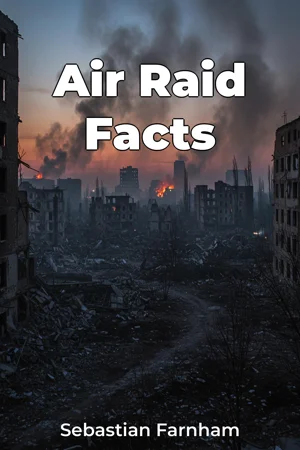
"Air Raid Facts" explores the multifaceted impacts of aerial warfare on urban environments and civilian populations, offering a comprehensive analysis of its historical evolution and ethical considerations. The book examines the strategic and tactical development of air raids, highlighting how military objectives often overshadow the devastating consequences for non-combatants. Readers will gain insight into the psychological and societal repercussions experienced by those caught in the crossfire, as well as the lasting effects on urban infrastructure. The book's approach involves a detailed examination of case studies, ranging from the Blitz in London to strategic bombing campaigns in Vietnam and the Persian Gulf War, providing a historical analysis of each event. Each case study dissects the military objectives, methods employed, the immediate destruction, and the long-term social, economic, and environmental consequences. Through careful use of official military records, eyewitness accounts, and statistical data, the book challenges traditional narratives of military history and pushes for a more nuanced ethical consideration of aerial warfare. The book progresses by first introducing the fundamental principles of air raid strategy and technology, then transitions into specific historical events, concluding with an analysis of the evolving legal and ethical frameworks surrounding aerial warfare. This journey provides readers with a deeper understanding of the realities of modern warfare and the ongoing debates surrounding the proportionality of force and the protection of civilian populations.
Book Details
ISBN
9788233990824
Publisher
Publifye AS
Your Licenses
You don't own any licenses for this book
Purchase a license below to unlock this book and download the EPUB.
Purchase License
Select a tier to unlock this book
Need bulk licensing?
Contact us for enterprise agreements.