
About This Book
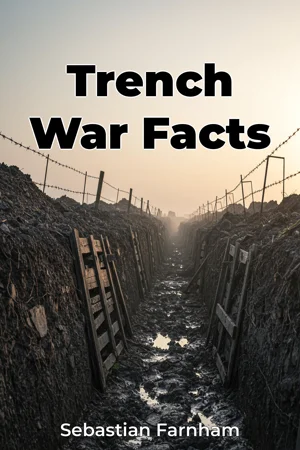
Imagine living in a world where survival meant enduring relentless artillery barrages, constant fear of disease, and the ever-present threat of a sudden, violent death. "Trench War Facts" delves into this brutal reality, offering a comprehensive examination of trench warfare during World War I, its strategic implications, and its lasting impact on military history. This book explores the intricate details of a conflict that redefined warfare and left an indelible mark on the 20th century. Three central themes permeate this exploration: the physical and psychological conditions within the trenches, the evolution of military strategies adapted to this unique environment, and the technological advancements that both shaped and were shaped by trench warfare. These topics are critical because they illuminate not only the horrors faced by soldiers but also the innovative—and often desperate—measures taken by military leaders to break the stalemate. Understanding these facets of trench warfare provides insight into the broader context of World War I and its enduring consequences. To fully appreciate the significance of trench warfare, a foundational understanding of late 19th and early 20th-century European history is helpful. This includes familiarity with the complex web of alliances, the rise of nationalism, and the arms race that preceded the war. Furthermore, basic knowledge of military tactics and technology of the era will enhance comprehension of the strategies employed in the trenches. "Trench War Facts" argues that trench warfare, while seemingly a static and brutal form of conflict, was a catalyst for significant military and technological innovation and profoundly impacted the psychological landscape of warfare. This argument is crucial because it challenges the simplistic view of trench warfare as merely a period of stagnation and highlights its role in shaping modern military doctrine. The book's structure is designed to provide a clear and comprehensive understanding of the subject. It begins by introducing the historical context leading to the development of trench warfare, examining the initial failures of offensive strategies, and detailing the gradual entrenchment of armies along the Western Front. The subsequent sections delve into the specifics of life and death within the trenches. These chapters explore the appalling living conditions, the constant threat of disease (such as trench foot), the psychological toll on soldiers, and the various coping mechanisms they employed. Primary source accounts, including letters, diaries, and memoirs, are used extensively to illustrate the soldiers' experiences. The book also dedicates significant attention to the evolution of military strategies and tactics in response to the trench warfare stalemate. It analyzes various offensive operations, such as the Battle of the Somme and the Battle of Verdun, highlighting the costly failures and the gradual development of new approaches, including the use of creeping barrages and infiltration tactics. The role of technological innovations, such as tanks, poison gas, and improved artillery, is also examined in detail. Finally, the book culminates by assessing the long-term impact of trench warfare on military thinking, technological development, and the collective memory of World War I. It explores how the lessons learned (and often mislearned) from the trenches influenced subsequent conflicts and how the experience shaped the cultural and psychological landscape of the 20th century. The evidence presented in "Trench War Facts" is drawn from a wide range of primary and secondary sources. These include official military records, personal accounts from soldiers and officers, contemporary newspaper reports, and scholarly analyses of the conflict. The book utilizes statistical data to quantify the scale of the casualties and the material costs of trench warfare. The book connects to other fields of study, including sociology (examining the impact of war on society), psychology (analyzing the psychological effects of combat), and technology studies (assessing the role of technological innovation in warfare). These interdisciplinary connections enrich the understanding of trench warfare and its broader implications. "Trench War Facts" adopts a factual and analytical tone, presenting information clearly and concisely. The writing style is designed to be accessible to a broad audience while maintaining scholarly rigor. The intended readership includes students of military history, general readers interested in World War I, and anyone seeking a deeper understanding of the realities of modern warfare. This book offers a comprehensive overview of trench warfare, focusing primarily on the Western Front. While it acknowledges the existence of trench warfare in other theaters of World War I, its primary focus remains on the conditions and strategies employed in France and Belgium. The information presented in this book can be applied practically by readers seeking to understand the complexities of modern warfare, the psychological impact of conflict, and the importance of technological adaptation. It also provides valuable insights into leadership, logistics, and the human cost of strategic decisions. "Trench War Facts" addresses ongoing debates within the field of military history, such as the effectiveness of various offensive strategies, the role of individual agency in the face of overwhelming circumstances, and the ethical implications of technological warfare. By presenting multiple perspectives and critically evaluating the available evidence, this book encourages readers to form their own informed opinions on these complex issues.
Imagine living in a world where survival meant enduring relentless artillery barrages, constant fear of disease, and the ever-present threat of a sudden, violent death. "Trench War Facts" delves into this brutal reality, offering a comprehensive examination of trench warfare during World War I, its strategic implications, and its lasting impact on military history. This book explores the intricate details of a conflict that redefined warfare and left an indelible mark on the 20th century. Three central themes permeate this exploration: the physical and psychological conditions within the trenches, the evolution of military strategies adapted to this unique environment, and the technological advancements that both shaped and were shaped by trench warfare. These topics are critical because they illuminate not only the horrors faced by soldiers but also the innovative—and often desperate—measures taken by military leaders to break the stalemate. Understanding these facets of trench warfare provides insight into the broader context of World War I and its enduring consequences. To fully appreciate the significance of trench warfare, a foundational understanding of late 19th and early 20th-century European history is helpful. This includes familiarity with the complex web of alliances, the rise of nationalism, and the arms race that preceded the war. Furthermore, basic knowledge of military tactics and technology of the era will enhance comprehension of the strategies employed in the trenches. "Trench War Facts" argues that trench warfare, while seemingly a static and brutal form of conflict, was a catalyst for significant military and technological innovation and profoundly impacted the psychological landscape of warfare. This argument is crucial because it challenges the simplistic view of trench warfare as merely a period of stagnation and highlights its role in shaping modern military doctrine. The book's structure is designed to provide a clear and comprehensive understanding of the subject. It begins by introducing the historical context leading to the development of trench warfare, examining the initial failures of offensive strategies, and detailing the gradual entrenchment of armies along the Western Front. The subsequent sections delve into the specifics of life and death within the trenches. These chapters explore the appalling living conditions, the constant threat of disease (such as trench foot), the psychological toll on soldiers, and the various coping mechanisms they employed. Primary source accounts, including letters, diaries, and memoirs, are used extensively to illustrate the soldiers' experiences. The book also dedicates significant attention to the evolution of military strategies and tactics in response to the trench warfare stalemate. It analyzes various offensive operations, such as the Battle of the Somme and the Battle of Verdun, highlighting the costly failures and the gradual development of new approaches, including the use of creeping barrages and infiltration tactics. The role of technological innovations, such as tanks, poison gas, and improved artillery, is also examined in detail. Finally, the book culminates by assessing the long-term impact of trench warfare on military thinking, technological development, and the collective memory of World War I. It explores how the lessons learned (and often mislearned) from the trenches influenced subsequent conflicts and how the experience shaped the cultural and psychological landscape of the 20th century. The evidence presented in "Trench War Facts" is drawn from a wide range of primary and secondary sources. These include official military records, personal accounts from soldiers and officers, contemporary newspaper reports, and scholarly analyses of the conflict. The book utilizes statistical data to quantify the scale of the casualties and the material costs of trench warfare. The book connects to other fields of study, including sociology (examining the impact of war on society), psychology (analyzing the psychological effects of combat), and technology studies (assessing the role of technological innovation in warfare). These interdisciplinary connections enrich the understanding of trench warfare and its broader implications. "Trench War Facts" adopts a factual and analytical tone, presenting information clearly and concisely. The writing style is designed to be accessible to a broad audience while maintaining scholarly rigor. The intended readership includes students of military history, general readers interested in World War I, and anyone seeking a deeper understanding of the realities of modern warfare. This book offers a comprehensive overview of trench warfare, focusing primarily on the Western Front. While it acknowledges the existence of trench warfare in other theaters of World War I, its primary focus remains on the conditions and strategies employed in France and Belgium. The information presented in this book can be applied practically by readers seeking to understand the complexities of modern warfare, the psychological impact of conflict, and the importance of technological adaptation. It also provides valuable insights into leadership, logistics, and the human cost of strategic decisions. "Trench War Facts" addresses ongoing debates within the field of military history, such as the effectiveness of various offensive strategies, the role of individual agency in the face of overwhelming circumstances, and the ethical implications of technological warfare. By presenting multiple perspectives and critically evaluating the available evidence, this book encourages readers to form their own informed opinions on these complex issues.
"Trench War Facts" offers a stark and detailed exploration into the brutal realities of trench warfare during World War I, primarily focusing on the Western Front. The book meticulously examines the physical and psychological conditions endured by soldiers, such as the constant threat of diseases like trench foot, alongside the evolution of military strategies and technological advancements designed to break the stalemate. Readers gain insights into the desperate measures employed by military leaders and the innovative tactics that emerged from this static yet devastating form of conflict. The book progresses systematically, starting with the historical context that led to trench warfare and the initial failures of offensive operations. Subsequent chapters delve into the specifics of life and death within the trenches, utilizing primary source accounts to vividly illustrate the soldiers' experiences. The analysis extends to the evolution of military strategies, the impact of technological innovations like tanks and poison gas, and culminates with an assessment of trench warfare's long-term impact on military thinking and the collective memory of World War I. This approach highlights how trench warfare acted as a catalyst for significant military and technological innovation, challenging simplistic views of stagnation.
Book Details
ISBN
9788233990787
Publisher
Publifye AS
Your Licenses
You don't own any licenses for this book
Purchase a license below to unlock this book and download the EPUB.
Purchase License
Select a tier to unlock this book
Need bulk licensing?
Contact us for enterprise agreements.