
About This Book
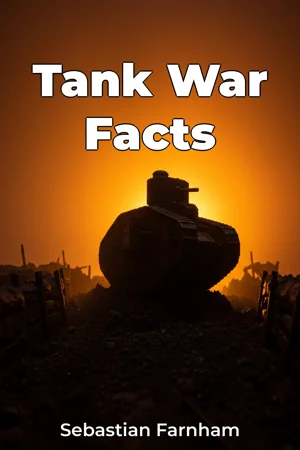
How did a lumbering, unreliable machine transform into a decisive weapon of modern warfare? "Tank War Facts" explores this evolution, charting the tank's journey from its rudimentary beginnings to its pivotal role in contemporary military conflicts. This book examines the multifaceted impact of tanks on military strategy, technological advancement, and the very nature of battlefield engagement. The core of "Tank War Facts" revolves around three key themes: the technological evolution of the tank, the strategic doctrines governing its use, and its socio-political impact on warfare. Understanding the tank's technological development, from the slow, mechanically flawed Mark I to the sophisticated main battle tanks of today, is crucial for grasping its increasing battlefield dominance. Examining the evolving doctrines – from early theories of infantry support to the blitzkrieg tactics of World War II and modern combined arms operations – reveals how military thought adapted to exploit the tank's potential. Finally, analyzing the tank's socio-political impact illuminates its influence on arms races, military spending, and international power dynamics. This book provides a comprehensive historical context, tracing the tank's invention during World War I to break the stalemate of trench warfare. No prior technical or military knowledge is required; "Tank War Facts" introduces all necessary concepts in a clear and accessible manner. The central argument of "Tank War Facts" is that the tank's history is not merely one of technological progress, but a complex interplay of technological innovation, strategic adaptation, and socio-political factors that have fundamentally reshaped the landscape of modern warfare. This book presents the argument that the importance of the tank is not just its destructive power, but how it has shaped military thought and geopolitical strategies. "Tank War Facts" is structured around a chronological and thematic framework. It begins by introducing the technological and strategic context of the tank's emergence. It then proceeds through key periods, demonstrating how tanks were vital in World War II, the Cold War, and post-Cold War conflicts. The book culminates in an analysis of the tank's current status and future prospects in an era of rapidly evolving military technology. The book's arguments are supported by extensive research, drawing upon primary sources such as military archives, technical manuals, and firsthand accounts from tank crewmen and military strategists. Secondary sources, including academic studies, military journals, and defense industry reports, provide additional context and analysis. "Tank War Facts" connects to several other fields of study, including engineering (examining the mechanical and technological aspects of tank design), political science (analyzing the role of tanks in international relations and arms races), and sociology (assessing the social impact of tank warfare on soldiers and civilians). These interdisciplinary connections enhance the book's argument by providing a more comprehensive understanding of the tank's broader significance. This book offers a unique perspective by integrating technological, strategic, and socio-political analyses into a single, cohesive narrative. It moves beyond a purely technical or military history to explore the tank's multifaceted impact on modern warfare. The tone of "Tank War Facts" is factual and analytical, presenting information in a clear, concise, and objective manner. The writing style is accessible and engaging, suitable for a broad audience of readers interested in military history and technology. The target audience for "Tank War Facts" includes military history enthusiasts, students of military science, defense professionals, and anyone interested in the technological and strategic aspects of modern warfare. The book offers valuable insights into the tank's past, present, and future, making it an essential resource for understanding this iconic weapon system. As a work of military history, "Tank War Facts" adheres to the genre's conventions of accuracy, objectivity, and thorough documentation. All claims are supported by evidence and properly cited, ensuring the book's credibility and reliability. The scope of "Tank War Facts" encompasses the global history of tank warfare, with a focus on major conflicts and technological developments. It does not delve into the specific details of individual tank battles, but instead provides a broad overview of the tank's evolution and impact. The information in "Tank War Facts" can be applied to various real-world contexts, including military training, defense planning, and policy analysis. Understanding the tank's capabilities and limitations is essential for developing effective military strategies and force structures. "Tank War Facts" addresses several ongoing debates in the field of military history, such as the future of the tank in an era of asymmetric warfare and the relative importance of tanks versus other weapon systems. By presenting different perspectives and analyzing the available evidence, the book encourages readers to form their own informed opinions on these complex issues.
How did a lumbering, unreliable machine transform into a decisive weapon of modern warfare? "Tank War Facts" explores this evolution, charting the tank's journey from its rudimentary beginnings to its pivotal role in contemporary military conflicts. This book examines the multifaceted impact of tanks on military strategy, technological advancement, and the very nature of battlefield engagement. The core of "Tank War Facts" revolves around three key themes: the technological evolution of the tank, the strategic doctrines governing its use, and its socio-political impact on warfare. Understanding the tank's technological development, from the slow, mechanically flawed Mark I to the sophisticated main battle tanks of today, is crucial for grasping its increasing battlefield dominance. Examining the evolving doctrines – from early theories of infantry support to the blitzkrieg tactics of World War II and modern combined arms operations – reveals how military thought adapted to exploit the tank's potential. Finally, analyzing the tank's socio-political impact illuminates its influence on arms races, military spending, and international power dynamics. This book provides a comprehensive historical context, tracing the tank's invention during World War I to break the stalemate of trench warfare. No prior technical or military knowledge is required; "Tank War Facts" introduces all necessary concepts in a clear and accessible manner. The central argument of "Tank War Facts" is that the tank's history is not merely one of technological progress, but a complex interplay of technological innovation, strategic adaptation, and socio-political factors that have fundamentally reshaped the landscape of modern warfare. This book presents the argument that the importance of the tank is not just its destructive power, but how it has shaped military thought and geopolitical strategies. "Tank War Facts" is structured around a chronological and thematic framework. It begins by introducing the technological and strategic context of the tank's emergence. It then proceeds through key periods, demonstrating how tanks were vital in World War II, the Cold War, and post-Cold War conflicts. The book culminates in an analysis of the tank's current status and future prospects in an era of rapidly evolving military technology. The book's arguments are supported by extensive research, drawing upon primary sources such as military archives, technical manuals, and firsthand accounts from tank crewmen and military strategists. Secondary sources, including academic studies, military journals, and defense industry reports, provide additional context and analysis. "Tank War Facts" connects to several other fields of study, including engineering (examining the mechanical and technological aspects of tank design), political science (analyzing the role of tanks in international relations and arms races), and sociology (assessing the social impact of tank warfare on soldiers and civilians). These interdisciplinary connections enhance the book's argument by providing a more comprehensive understanding of the tank's broader significance. This book offers a unique perspective by integrating technological, strategic, and socio-political analyses into a single, cohesive narrative. It moves beyond a purely technical or military history to explore the tank's multifaceted impact on modern warfare. The tone of "Tank War Facts" is factual and analytical, presenting information in a clear, concise, and objective manner. The writing style is accessible and engaging, suitable for a broad audience of readers interested in military history and technology. The target audience for "Tank War Facts" includes military history enthusiasts, students of military science, defense professionals, and anyone interested in the technological and strategic aspects of modern warfare. The book offers valuable insights into the tank's past, present, and future, making it an essential resource for understanding this iconic weapon system. As a work of military history, "Tank War Facts" adheres to the genre's conventions of accuracy, objectivity, and thorough documentation. All claims are supported by evidence and properly cited, ensuring the book's credibility and reliability. The scope of "Tank War Facts" encompasses the global history of tank warfare, with a focus on major conflicts and technological developments. It does not delve into the specific details of individual tank battles, but instead provides a broad overview of the tank's evolution and impact. The information in "Tank War Facts" can be applied to various real-world contexts, including military training, defense planning, and policy analysis. Understanding the tank's capabilities and limitations is essential for developing effective military strategies and force structures. "Tank War Facts" addresses several ongoing debates in the field of military history, such as the future of the tank in an era of asymmetric warfare and the relative importance of tanks versus other weapon systems. By presenting different perspectives and analyzing the available evidence, the book encourages readers to form their own informed opinions on these complex issues.
"Tank War Facts" explores the remarkable evolution of the tank, from its early, unreliable designs to its crucial role in modern military conflicts. This journey highlights the tank's impact on military strategy, technological advancement, and the very nature of battlefield engagement. Early tanks, initially conceived to break the trench warfare stalemate of World War I, faced numerous mechanical challenges. Yet, through continuous innovation, tanks became a cornerstone of military operations, influencing everything from arms races to geopolitical strategies. The book charts this progress chronologically and thematically, beginning with the tank's emergence and tracing its development through pivotal periods like World War II and the Cold War. The focus is on the interplay of technological innovation, strategic adaptation, and socio-political factors. For instance, the blitzkrieg tactics of World War II showcased the tank's potential for rapid, coordinated attacks. Understanding the tank's evolution provides insights into broader trends in modern warfare. The analysis culminates in an examination of the tank's current status and future prospects, offering a comprehensive understanding of this iconic weapon system. By integrating technological, strategic, and socio-political perspectives, "Tank War Facts" offers a unique and valuable resource for military history enthusiasts and defense professionals alike.
Book Details
ISBN
9788233990732
Publisher
Publifye AS
Your Licenses
You don't own any licenses for this book
Purchase a license below to unlock this book and download the EPUB.
Purchase License
Select a tier to unlock this book
Need bulk licensing?
Contact us for enterprise agreements.