
About This Book
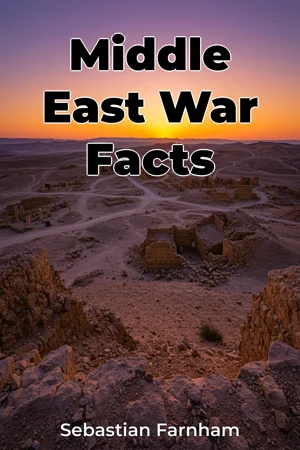
How have centuries of conflict forged the modern Middle East? This book, "Middle East War Facts," delves into the intricate tapestry of wars that have shaped the political landscape of this vital region, providing a fact-based, comprehensive analysis that reveals the deep-seated historical roots of contemporary geopolitics. We embark on a journey through time, examining not just the battles themselves, but the underlying causes, consequences, and lasting legacies that continue to resonate today. This book focuses on three key areas: the pre-modern conflicts that laid the groundwork for later instability, the impact of colonialism and the World Wars, and the post-colonial wars that define the modern Middle East. Understanding these periods is crucial because they reveal how ancient rivalries, external interference, and the struggle for resources have consistently fueled conflict, preventing lasting peace and stability. To provide context, "Middle East War Facts" begins by tracing the region's history from the Ottoman Empire's decline through the rise of European powers and the redrawing of borders after World War I. This historical backdrop sets the stage for understanding the complexities of nationalism, religious sectarianism, and the competition for resources, especially oil, that have driven much of the conflict. Our central argument is that the ongoing instability in the Middle East is not a recent phenomenon, but rather the result of centuries of accumulated conflicts, exacerbated by external interventions and unresolved internal tensions. By meticulously examining the historical record, we aim to demonstrate how past wars have directly shaped the political, social, and economic realities of the region today. "Middle East War Facts" is structured to systematically explore this argument. First, we introduce the key concepts of state formation, resource competition, and the role of external actors. Then, we delve into specific periods and conflicts, such as the Arab-Israeli wars, the Iran-Iraq War, and the Gulf Wars, analyzing their causes, key events, and long-term consequences. Finally, we culminate with an assessment of the current state of the Middle East, highlighting the enduring impact of past conflicts and offering insights into potential future trajectories. The book relies heavily on primary source materials, including historical documents, military reports, and firsthand accounts. We also draw upon the work of leading historians and political scientists who have dedicated their careers to studying the Middle East. The analyses are supported by detailed maps, timelines, and statistical data, all carefully curated to provide a clear and accessible understanding of complex events. This book is intended for anyone interested in understanding the Middle East, including students of history, political science, and international relations, as well as policymakers, journalists, and general readers seeking a deeper understanding of this critical region. The book adopts a professional and objective tone, presenting facts and analyses in a clear and accessible manner, avoiding sensationalism or biased interpretations. While the book aims to provide a comprehensive overview of the major wars in the Middle East, it acknowledges the limitations of any single volume. We do not attempt to cover every single conflict in exhaustive detail, but rather focus on those that have had the most significant impact on the region's geopolitics. The information in "Middle East War Facts" can be applied to a variety of real-world situations. It can inform policy decisions, improve conflict analysis, and promote a more nuanced understanding of the challenges facing the Middle East today. Finally, the book addresses some of the ongoing debates surrounding the history of the Middle East, such as the role of colonialism, the impact of Western intervention, and the causes of the Arab Spring. By presenting different perspectives and weighing the available evidence, we aim to provide a balanced and nuanced account of these complex and contested issues. By exploring the long history of wars in this pivotal area, this book provides an understanding of the many factors that have shaped—and continue to influence—the destiny of the Middle East.
How have centuries of conflict forged the modern Middle East? This book, "Middle East War Facts," delves into the intricate tapestry of wars that have shaped the political landscape of this vital region, providing a fact-based, comprehensive analysis that reveals the deep-seated historical roots of contemporary geopolitics. We embark on a journey through time, examining not just the battles themselves, but the underlying causes, consequences, and lasting legacies that continue to resonate today. This book focuses on three key areas: the pre-modern conflicts that laid the groundwork for later instability, the impact of colonialism and the World Wars, and the post-colonial wars that define the modern Middle East. Understanding these periods is crucial because they reveal how ancient rivalries, external interference, and the struggle for resources have consistently fueled conflict, preventing lasting peace and stability. To provide context, "Middle East War Facts" begins by tracing the region's history from the Ottoman Empire's decline through the rise of European powers and the redrawing of borders after World War I. This historical backdrop sets the stage for understanding the complexities of nationalism, religious sectarianism, and the competition for resources, especially oil, that have driven much of the conflict. Our central argument is that the ongoing instability in the Middle East is not a recent phenomenon, but rather the result of centuries of accumulated conflicts, exacerbated by external interventions and unresolved internal tensions. By meticulously examining the historical record, we aim to demonstrate how past wars have directly shaped the political, social, and economic realities of the region today. "Middle East War Facts" is structured to systematically explore this argument. First, we introduce the key concepts of state formation, resource competition, and the role of external actors. Then, we delve into specific periods and conflicts, such as the Arab-Israeli wars, the Iran-Iraq War, and the Gulf Wars, analyzing their causes, key events, and long-term consequences. Finally, we culminate with an assessment of the current state of the Middle East, highlighting the enduring impact of past conflicts and offering insights into potential future trajectories. The book relies heavily on primary source materials, including historical documents, military reports, and firsthand accounts. We also draw upon the work of leading historians and political scientists who have dedicated their careers to studying the Middle East. The analyses are supported by detailed maps, timelines, and statistical data, all carefully curated to provide a clear and accessible understanding of complex events. This book is intended for anyone interested in understanding the Middle East, including students of history, political science, and international relations, as well as policymakers, journalists, and general readers seeking a deeper understanding of this critical region. The book adopts a professional and objective tone, presenting facts and analyses in a clear and accessible manner, avoiding sensationalism or biased interpretations. While the book aims to provide a comprehensive overview of the major wars in the Middle East, it acknowledges the limitations of any single volume. We do not attempt to cover every single conflict in exhaustive detail, but rather focus on those that have had the most significant impact on the region's geopolitics. The information in "Middle East War Facts" can be applied to a variety of real-world situations. It can inform policy decisions, improve conflict analysis, and promote a more nuanced understanding of the challenges facing the Middle East today. Finally, the book addresses some of the ongoing debates surrounding the history of the Middle East, such as the role of colonialism, the impact of Western intervention, and the causes of the Arab Spring. By presenting different perspectives and weighing the available evidence, we aim to provide a balanced and nuanced account of these complex and contested issues. By exploring the long history of wars in this pivotal area, this book provides an understanding of the many factors that have shaped—and continue to influence—the destiny of the Middle East.
"Middle East War Facts" explores how centuries of conflict have shaped the modern Middle East, offering a fact-based analysis of the region's intricate history. The book highlights the deep historical roots of contemporary geopolitics by examining key conflicts and their lasting legacies. It reveals how external interference and competition for resources, particularly oil, have fueled instability. For example, the redrawing of borders after World War I exacerbated existing tensions, contributing to ongoing conflict. The book's approach is chronological, starting with the decline of the Ottoman Empire and progressing through colonialism, the World Wars, and post-colonial conflicts like the Arab-Israeli wars and the Gulf Wars. By examining these periods, the book demonstrates that current instability is not a recent phenomenon. The book uses primary sources, military reports, and expert analysis to present a balanced and accessible account. It aims to provide readers with a deeper understanding of the region's complex history and potential future trajectories.
Book Details
ISBN
9788233990701
Publisher
Publifye AS
Your Licenses
You don't own any licenses for this book
Purchase a license below to unlock this book and download the EPUB.
Purchase License
Select a tier to unlock this book
Need bulk licensing?
Contact us for enterprise agreements.