
About This Book
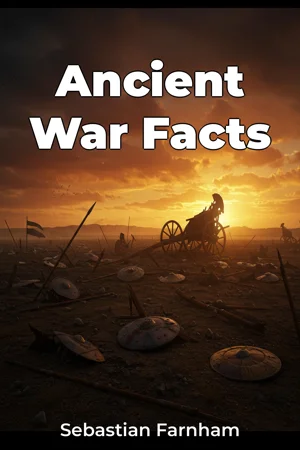
What defined victory in the ancient world, and how did empires rise and fall based on the strategic ingenuity – or catastrophic failings – of their military leaders? "Ancient War Facts" delves into the heart of ancient warfare, dissecting the pivotal battles, innovative strategies, and enduring legacies of military campaigns from Rome to China. This book examines military history, offering readers a comprehensive understanding of how warfare shaped the ancient world and continues to influence modern military thinking. This book focuses on three key areas: the evolution of military technology, the influence of strategic thought, and the societal impact of prolonged conflict. These topics are crucial because they reveal not only how wars were fought but also why they were fought and what consequences arose from victory or defeat. Understanding ancient warfare requires a grasp of the political landscapes, technological limitations, and social structures of the time. This book assumes no prior in-depth military knowledge and provides the context necessary to understand the intricacies of ancient battles, including the logistical challenges, the roles of different troop types, and the impact of terrain on strategic decisions. The central argument of "Ancient War Facts" posits that successful ancient military campaigns were not solely determined by brute force but were the result of adaptable strategies, innovative uses of technology, and a deep understanding of the socio-political context. This point is vital because it challenges the common perception of ancient warfare as simply barbaric clashes and highlights the sophisticated planning and execution behind many historical victories. "Ancient War Facts" begins by introducing fundamental concepts of ancient military organization, weaponry, and tactics. It then explores key battles and campaigns, such as the Roman conquest of Gaul, the Battle of Thermopylae, and the rise of the Qin Dynasty in China, analyzing each through the lens of strategy, technology, and societal impact. The book culminates in a discussion of the lasting influence of ancient warfare on subsequent military thought, including the development of military doctrine and the understanding of geopolitical strategy. The book draws upon diverse historical sources, including primary accounts from ancient historians, archaeological findings, and analyses of ancient military manuals. It presents maps, diagrams, and detailed descriptions of troop movements to enhance the reader's understanding of the battles. "Ancient War Facts" connects to several academic fields beyond military history, including political science (examining the relationship between war and state-building), sociology (analyzing the social impact of war), and technology (studying the evolution of weaponry). These interdisciplinary connections enrich the book's analysis and provide a more nuanced understanding of ancient warfare. This book provides a balanced and comprehensive perspective on ancient warfare, moving beyond simple battle narratives to explore the underlying strategic, technological, and social factors at play. Written in a clear and engaging style, "Ancient War Facts" aims to be accessible to a broad audience, including history enthusiasts, military buffs, and students. The book's value lies in its ability to distill complex historical events into understandable concepts. As a work of fact-based military history, "Ancient War Facts" adheres to the conventions of the genre by presenting well-researched information, citing credible sources, and analyzing events objectively. While this book covers a wide range of ancient military campaigns, it does not attempt to be an exhaustive encyclopedia. Instead, its scope is limited to the most significant and representative examples of ancient warfare. The lessons from ancient warfare remain relevant today. The principles of strategy, logistics, and leadership are timeless, and studying ancient campaigns can provide valuable insights for modern military leaders and strategists. Furthermore, understanding the societal impact of war in the ancient world can inform contemporary discussions about conflict resolution and the consequences of military action. While this book presents established historical facts, it also acknowledges ongoing scholarly debates surrounding the interpretation of certain events and strategies. It encourages readers to form their own informed opinions based on the evidence presented.
What defined victory in the ancient world, and how did empires rise and fall based on the strategic ingenuity – or catastrophic failings – of their military leaders? "Ancient War Facts" delves into the heart of ancient warfare, dissecting the pivotal battles, innovative strategies, and enduring legacies of military campaigns from Rome to China. This book examines military history, offering readers a comprehensive understanding of how warfare shaped the ancient world and continues to influence modern military thinking. This book focuses on three key areas: the evolution of military technology, the influence of strategic thought, and the societal impact of prolonged conflict. These topics are crucial because they reveal not only how wars were fought but also why they were fought and what consequences arose from victory or defeat. Understanding ancient warfare requires a grasp of the political landscapes, technological limitations, and social structures of the time. This book assumes no prior in-depth military knowledge and provides the context necessary to understand the intricacies of ancient battles, including the logistical challenges, the roles of different troop types, and the impact of terrain on strategic decisions. The central argument of "Ancient War Facts" posits that successful ancient military campaigns were not solely determined by brute force but were the result of adaptable strategies, innovative uses of technology, and a deep understanding of the socio-political context. This point is vital because it challenges the common perception of ancient warfare as simply barbaric clashes and highlights the sophisticated planning and execution behind many historical victories. "Ancient War Facts" begins by introducing fundamental concepts of ancient military organization, weaponry, and tactics. It then explores key battles and campaigns, such as the Roman conquest of Gaul, the Battle of Thermopylae, and the rise of the Qin Dynasty in China, analyzing each through the lens of strategy, technology, and societal impact. The book culminates in a discussion of the lasting influence of ancient warfare on subsequent military thought, including the development of military doctrine and the understanding of geopolitical strategy. The book draws upon diverse historical sources, including primary accounts from ancient historians, archaeological findings, and analyses of ancient military manuals. It presents maps, diagrams, and detailed descriptions of troop movements to enhance the reader's understanding of the battles. "Ancient War Facts" connects to several academic fields beyond military history, including political science (examining the relationship between war and state-building), sociology (analyzing the social impact of war), and technology (studying the evolution of weaponry). These interdisciplinary connections enrich the book's analysis and provide a more nuanced understanding of ancient warfare. This book provides a balanced and comprehensive perspective on ancient warfare, moving beyond simple battle narratives to explore the underlying strategic, technological, and social factors at play. Written in a clear and engaging style, "Ancient War Facts" aims to be accessible to a broad audience, including history enthusiasts, military buffs, and students. The book's value lies in its ability to distill complex historical events into understandable concepts. As a work of fact-based military history, "Ancient War Facts" adheres to the conventions of the genre by presenting well-researched information, citing credible sources, and analyzing events objectively. While this book covers a wide range of ancient military campaigns, it does not attempt to be an exhaustive encyclopedia. Instead, its scope is limited to the most significant and representative examples of ancient warfare. The lessons from ancient warfare remain relevant today. The principles of strategy, logistics, and leadership are timeless, and studying ancient campaigns can provide valuable insights for modern military leaders and strategists. Furthermore, understanding the societal impact of war in the ancient world can inform contemporary discussions about conflict resolution and the consequences of military action. While this book presents established historical facts, it also acknowledges ongoing scholarly debates surrounding the interpretation of certain events and strategies. It encourages readers to form their own informed opinions based on the evidence presented.
"Ancient War Facts" explores the multifaceted nature of military history in the ancient world, moving beyond simple battle descriptions to analyze the strategies, technologies, and societal impacts of warfare. From the Roman conquest to the rise of the Qin Dynasty, the book dissects how military campaigns shaped ancient empires. It highlights how adaptable strategies and innovative uses of technology were often more decisive than brute force. The book examines key battles like the Battle of Thermopylae and significant military leaders, revealing insights into ancient military technology and tactics. Readers will gain an understanding of the logistical challenges and the influence of terrain on strategic decisions. The approach is designed to be accessible, providing necessary context without assuming prior military knowledge. Beginning with fundamental concepts of ancient military organization, weaponry, and tactics, "Ancient War Facts" progresses through key battles and campaigns, culminating in a discussion of ancient warfare's lasting influence on subsequent military thought. The book's value lies in its comprehensive yet understandable exploration, making it ideal for history enthusiasts and anyone interested in military history.
Book Details
ISBN
9788233990640
Publisher
Publifye AS
Your Licenses
You don't own any licenses for this book
Purchase a license below to unlock this book and download the EPUB.
Purchase License
Select a tier to unlock this book
Need bulk licensing?
Contact us for enterprise agreements.