
About This Book
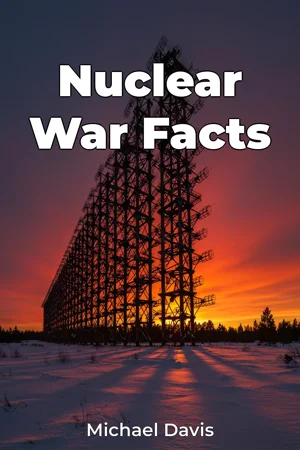
Could one single decision alter the course of human civilization forever? "Nuclear War Facts" meticulously examines the history of nuclear weapons, their multifaceted impact on global society, and the conflicts they have significantly shaped. This book delves into the complex history, providing a factual account of nuclear warfare's evolution and its ongoing relevance in today's world. This comprehensive exploration addresses three core areas. First, we chronicle the development of these weapons, from the theoretical underpinnings to the Manhattan Project and beyond. Second, the book assesses the diverse impacts of nuclear weapons, exploring their profound effects on international relations, arms control efforts, environmental concerns, and societal anxieties. Third, it analyzes specific wars and crises influenced by the existence and threat of nuclear weapons, including the Cold War, proxy wars, and contemporary geopolitical tensions. Understanding these topics is crucial for anyone seeking to comprehend the current state of global security and the potential dangers facing humanity. Prior knowledge of basic 20th-century history and international relations will provide a solid foundation for readers. We will then examine the scientific principles behind nuclear fission and fusion. "Nuclear War Facts" argues that a thorough understanding of nuclear weapons—their history, impact, and influence—is essential for informed decision-making regarding international security and the future of humanity. It stresses the importance of factual analysis over sensationalism, providing a clear-eyed assessment of both the destructive potential and the deterrent effects of nuclear arsenals. The book is structured to guide the reader through a logical progression of knowledge. It begins with an introduction to the fundamental concepts of nuclear physics and the historical context of their initial development. The subsequent sections delve into the Cold War era, analyzing the arms race, the doctrine of mutually assured destruction (MAD), and the various near-misses that threatened to escalate into full-scale nuclear conflict. Later chapters address post-Cold War proliferation challenges, the role of nuclear weapons in regional conflicts, and ongoing efforts to achieve disarmament and non-proliferation. The culmination of the argument assesses the current state of nuclear deterrence and explores potential pathways toward a more secure future. This assessment includes practical considerations for policymakers, researchers, and concerned citizens. "Nuclear War Facts" relies on a wide array of primary and secondary sources, including declassified government documents, scientific reports, military analyses, and scholarly research. It also draws upon firsthand accounts from individuals who were directly involved in the development, deployment, and control of nuclear weapons. This book’s strength lies in its objective presentation of facts, allowing readers to form their own conclusions based on credible evidence. The study of nuclear weapons inherently links to several other disciplines. Political science provides analytical frameworks for understanding international relations and strategic decision-making. Environmental science assesses the potential ecological consequences of nuclear war. Sociology studies the societal impacts of nuclear anxieties and the psychological effects of living under the constant threat of annihilation. These interdisciplinary connections enrich the book's analysis and provide a more complete understanding of the complexities involved. What sets “Nuclear War Facts” apart is its unwavering commitment to factual accuracy and its avoidance of partisan viewpoints. It presents a balanced assessment of the various perspectives on nuclear deterrence, disarmament, and arms control. The overall tone is serious and analytical, befitting the gravity of the subject matter. The writing style is accessible to a broad audience while maintaining scholarly rigor. The target audience includes students of history, political science, and international relations, as well as policymakers, journalists, and concerned citizens who want to understand the facts about nuclear weapons. This book will be particularly valuable to those seeking a comprehensive and unbiased overview of this critical issue. As a work of military history and current events analysis, "Nuclear War Facts" adheres to the genre's conventions by prioritizing accuracy, objectivity, and thorough documentation. The scope of the book is global, encompassing the nuclear arsenals and policies of all major nuclear powers. While it provides detailed coverage of the Cold War era, it also addresses contemporary challenges, such as nuclear proliferation in Iran and North Korea. However, the book intentionally limits its discussion of the ethical and moral implications of nuclear weapons, focusing instead on the factual aspects of their history, impact, and influence. Readers can apply the knowledge gained from this book in various ways. They can use it to inform their voting decisions, engage in informed discussions about nuclear policy, and advocate for responsible arms control measures. The book acknowledges the ongoing debates surrounding nuclear weapons, including the effectiveness of deterrence, the feasibility of disarmament, and the risks of proliferation. It presents a balanced overview of these controversies, allowing readers to draw their own conclusions based on the available evidence.
Could one single decision alter the course of human civilization forever? "Nuclear War Facts" meticulously examines the history of nuclear weapons, their multifaceted impact on global society, and the conflicts they have significantly shaped. This book delves into the complex history, providing a factual account of nuclear warfare's evolution and its ongoing relevance in today's world. This comprehensive exploration addresses three core areas. First, we chronicle the development of these weapons, from the theoretical underpinnings to the Manhattan Project and beyond. Second, the book assesses the diverse impacts of nuclear weapons, exploring their profound effects on international relations, arms control efforts, environmental concerns, and societal anxieties. Third, it analyzes specific wars and crises influenced by the existence and threat of nuclear weapons, including the Cold War, proxy wars, and contemporary geopolitical tensions. Understanding these topics is crucial for anyone seeking to comprehend the current state of global security and the potential dangers facing humanity. Prior knowledge of basic 20th-century history and international relations will provide a solid foundation for readers. We will then examine the scientific principles behind nuclear fission and fusion. "Nuclear War Facts" argues that a thorough understanding of nuclear weapons—their history, impact, and influence—is essential for informed decision-making regarding international security and the future of humanity. It stresses the importance of factual analysis over sensationalism, providing a clear-eyed assessment of both the destructive potential and the deterrent effects of nuclear arsenals. The book is structured to guide the reader through a logical progression of knowledge. It begins with an introduction to the fundamental concepts of nuclear physics and the historical context of their initial development. The subsequent sections delve into the Cold War era, analyzing the arms race, the doctrine of mutually assured destruction (MAD), and the various near-misses that threatened to escalate into full-scale nuclear conflict. Later chapters address post-Cold War proliferation challenges, the role of nuclear weapons in regional conflicts, and ongoing efforts to achieve disarmament and non-proliferation. The culmination of the argument assesses the current state of nuclear deterrence and explores potential pathways toward a more secure future. This assessment includes practical considerations for policymakers, researchers, and concerned citizens. "Nuclear War Facts" relies on a wide array of primary and secondary sources, including declassified government documents, scientific reports, military analyses, and scholarly research. It also draws upon firsthand accounts from individuals who were directly involved in the development, deployment, and control of nuclear weapons. This book’s strength lies in its objective presentation of facts, allowing readers to form their own conclusions based on credible evidence. The study of nuclear weapons inherently links to several other disciplines. Political science provides analytical frameworks for understanding international relations and strategic decision-making. Environmental science assesses the potential ecological consequences of nuclear war. Sociology studies the societal impacts of nuclear anxieties and the psychological effects of living under the constant threat of annihilation. These interdisciplinary connections enrich the book's analysis and provide a more complete understanding of the complexities involved. What sets “Nuclear War Facts” apart is its unwavering commitment to factual accuracy and its avoidance of partisan viewpoints. It presents a balanced assessment of the various perspectives on nuclear deterrence, disarmament, and arms control. The overall tone is serious and analytical, befitting the gravity of the subject matter. The writing style is accessible to a broad audience while maintaining scholarly rigor. The target audience includes students of history, political science, and international relations, as well as policymakers, journalists, and concerned citizens who want to understand the facts about nuclear weapons. This book will be particularly valuable to those seeking a comprehensive and unbiased overview of this critical issue. As a work of military history and current events analysis, "Nuclear War Facts" adheres to the genre's conventions by prioritizing accuracy, objectivity, and thorough documentation. The scope of the book is global, encompassing the nuclear arsenals and policies of all major nuclear powers. While it provides detailed coverage of the Cold War era, it also addresses contemporary challenges, such as nuclear proliferation in Iran and North Korea. However, the book intentionally limits its discussion of the ethical and moral implications of nuclear weapons, focusing instead on the factual aspects of their history, impact, and influence. Readers can apply the knowledge gained from this book in various ways. They can use it to inform their voting decisions, engage in informed discussions about nuclear policy, and advocate for responsible arms control measures. The book acknowledges the ongoing debates surrounding nuclear weapons, including the effectiveness of deterrence, the feasibility of disarmament, and the risks of proliferation. It presents a balanced overview of these controversies, allowing readers to draw their own conclusions based on the available evidence.
"Nuclear War Facts" offers a crucial exploration into the history, impact, and ongoing relevance of nuclear weapons, providing a factual account of their evolution and influence. It examines the development of these weapons, starting with the Manhattan Project, and assesses their effects on international relations and arms control. The book analyzes specific wars and crises, such as the Cold War and proxy wars, shaped by the existence and threat of nuclear weapons, highlighting how the doctrine of mutually assured destruction (MAD) shaped global strategy. The book progresses logically, beginning with the fundamentals of nuclear physics and the historical context of the weapons' development. It then delves into the Cold War era, analyzing the arms race and near-misses. Later chapters address post-Cold War proliferation challenges and ongoing disarmament efforts. What makes this book unique is its commitment to factual accuracy, drawing from primary and secondary sources, including declassified government documents, to present a balanced assessment of nuclear deterrence and arms control.
Book Details
ISBN
9788233990633
Publisher
Publifye AS
Your Licenses
You don't own any licenses for this book
Purchase a license below to unlock this book and download the EPUB.
Purchase License
Select a tier to unlock this book
Need bulk licensing?
Contact us for enterprise agreements.