
About This Book
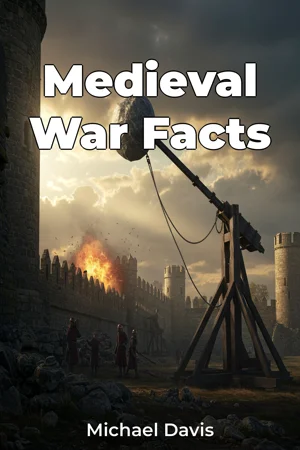
What truly defined warfare during the medieval period, and how did these conflicts shape the course of history? "Medieval War Facts" delves into the brutal realities of medieval combat, exploring the iconic elements of knights, castles, and siege weapons, and revealing the strategies, technologies, and societal impact that characterized this era. This book is important because it offers a factual understanding of this often romanticized yet violent epoch, separating myth from reality. This book will examine three core themes: the evolution of medieval military technology, the social structures that supported warfare, and the strategic doctrines that dictated battlefield tactics. Understanding these elements provides a comprehensive picture of medieval conflict. We begin by establishing the historical context of medieval warfare, from the decline of the Roman Empire to the rise of powerful kingdoms and the constant clashes between them. Readers need to understand the decentralized political landscape, the feudal system, and the religious fervor that often fueled these wars to fully appreciate the dynamics at play. The central argument of "Medieval War Facts" is that medieval warfare was not simply a chaotic series of battles, but a complex interplay of technological innovation, social organization, and strategic thinking that profoundly influenced the development of European societies. By exploring these interconnected elements, the book reveals the crucial role of conflict in shaping the political, economic, and cultural landscape of the Middle Ages. The book is structured to systematically explore these topics. First, it introduces the main participants in medieval warfare, from heavily armored knights to peasant levies, and the weapons they wielded, like swords, spears, and crossbows. Second, it analyzes the design and function of castles, the quintessential symbols of medieval power, and the siege tactics used to overcome these formidable fortifications. Finally, it examines the broader strategic context of medieval warfare, including the logistical challenges of supplying armies, the impact of terrain on battles, and the role of diplomacy in resolving conflicts. The analysis presented is grounded in extensive research, drawing upon primary sources such as chronicles, military treatises, and archaeological evidence. The book also incorporates modern scholarship in military history, archaeology, and social history to provide a balanced and nuanced perspective. "Medieval War Facts" connects to areas such as political science (examining the impact of warfare on state formation), economics (analyzing the costs and benefits of military campaigns), and sociology (exploring the social stratification of medieval armies). These interdisciplinary connections enhance the book's argument by demonstrating the broad societal relevance of medieval warfare. This book offers a unique perspective by focusing on the material realities of medieval warfare. It avoids romanticized representations, instead, it explores the practical challenges faced by soldiers, engineers, and commanders. Written in a clear and accessible style, "Medieval War Facts" is aimed at anyone interested in history, military history, or the Middle Ages. This book would be valuable to readers seeking a factual, comprehensive overview of medieval warfare without overly academic jargon. As a work of history and military history, this book adheres to standards of accurate research, balanced interpretation, and clear presentation of evidence. The book's scope is limited to warfare in Europe during the medieval period, primarily focusing on the High and Late Middle Ages (c. 1000-1500 AD). It acknowledges the diverse forms of warfare practiced in other parts of the world during this time but concentrates on the distinct characteristics of European medieval combat. The information in "Medieval War Facts" can be applied to various real-world contexts, such as understanding contemporary military strategy, analyzing the impact of technology on warfare, or even appreciating the historical context of modern political conflicts. While the book presents a comprehensive overview of medieval warfare, it also acknowledges ongoing debates among historians regarding specific battles, military technologies, and the social impact of conflict. It presents different perspectives on these topics, encouraging readers to engage critically with the material.
What truly defined warfare during the medieval period, and how did these conflicts shape the course of history? "Medieval War Facts" delves into the brutal realities of medieval combat, exploring the iconic elements of knights, castles, and siege weapons, and revealing the strategies, technologies, and societal impact that characterized this era. This book is important because it offers a factual understanding of this often romanticized yet violent epoch, separating myth from reality. This book will examine three core themes: the evolution of medieval military technology, the social structures that supported warfare, and the strategic doctrines that dictated battlefield tactics. Understanding these elements provides a comprehensive picture of medieval conflict. We begin by establishing the historical context of medieval warfare, from the decline of the Roman Empire to the rise of powerful kingdoms and the constant clashes between them. Readers need to understand the decentralized political landscape, the feudal system, and the religious fervor that often fueled these wars to fully appreciate the dynamics at play. The central argument of "Medieval War Facts" is that medieval warfare was not simply a chaotic series of battles, but a complex interplay of technological innovation, social organization, and strategic thinking that profoundly influenced the development of European societies. By exploring these interconnected elements, the book reveals the crucial role of conflict in shaping the political, economic, and cultural landscape of the Middle Ages. The book is structured to systematically explore these topics. First, it introduces the main participants in medieval warfare, from heavily armored knights to peasant levies, and the weapons they wielded, like swords, spears, and crossbows. Second, it analyzes the design and function of castles, the quintessential symbols of medieval power, and the siege tactics used to overcome these formidable fortifications. Finally, it examines the broader strategic context of medieval warfare, including the logistical challenges of supplying armies, the impact of terrain on battles, and the role of diplomacy in resolving conflicts. The analysis presented is grounded in extensive research, drawing upon primary sources such as chronicles, military treatises, and archaeological evidence. The book also incorporates modern scholarship in military history, archaeology, and social history to provide a balanced and nuanced perspective. "Medieval War Facts" connects to areas such as political science (examining the impact of warfare on state formation), economics (analyzing the costs and benefits of military campaigns), and sociology (exploring the social stratification of medieval armies). These interdisciplinary connections enhance the book's argument by demonstrating the broad societal relevance of medieval warfare. This book offers a unique perspective by focusing on the material realities of medieval warfare. It avoids romanticized representations, instead, it explores the practical challenges faced by soldiers, engineers, and commanders. Written in a clear and accessible style, "Medieval War Facts" is aimed at anyone interested in history, military history, or the Middle Ages. This book would be valuable to readers seeking a factual, comprehensive overview of medieval warfare without overly academic jargon. As a work of history and military history, this book adheres to standards of accurate research, balanced interpretation, and clear presentation of evidence. The book's scope is limited to warfare in Europe during the medieval period, primarily focusing on the High and Late Middle Ages (c. 1000-1500 AD). It acknowledges the diverse forms of warfare practiced in other parts of the world during this time but concentrates on the distinct characteristics of European medieval combat. The information in "Medieval War Facts" can be applied to various real-world contexts, such as understanding contemporary military strategy, analyzing the impact of technology on warfare, or even appreciating the historical context of modern political conflicts. While the book presents a comprehensive overview of medieval warfare, it also acknowledges ongoing debates among historians regarding specific battles, military technologies, and the social impact of conflict. It presents different perspectives on these topics, encouraging readers to engage critically with the material.
"Medieval War Facts" explores the realities of combat during the Middle Ages, moving beyond romanticized notions to examine the strategies, technologies, and societal impacts that defined this violent era. The book reveals how medieval warfare was more than just chaotic battles. For example, the development of castles wasn't merely for defense; their design and function were central to medieval power and siege tactics. Another key aspect was the feudal system, which profoundly shaped military organization and campaigns. The book examines the evolution of medieval military technology, the social structures underpinning warfare, and the strategic doctrines governing battlefield tactics. Beginning with the decline of the Roman Empire, the book progresses through the rise of kingdoms and their constant clashes. It highlights the interconnection between technological innovation, social organization, and strategic thinking, showing how warfare shaped European societies. The book systematically introduces the main participants in medieval warfare, analyzes castle designs and siege tactics, and examines the broader strategic context, offering a comprehensive overview grounded in primary sources and modern scholarship.
Book Details
ISBN
9788233990626
Publisher
Publifye AS
Your Licenses
You don't own any licenses for this book
Purchase a license below to unlock this book and download the EPUB.
Purchase License
Select a tier to unlock this book
Need bulk licensing?
Contact us for enterprise agreements.