
About This Book
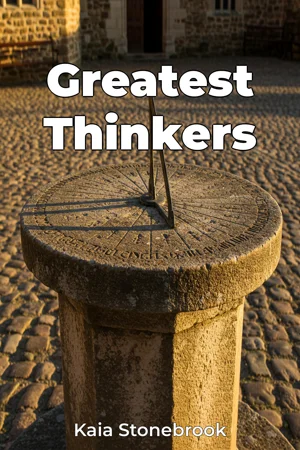
How have the thoughts of a select few shaped the world we inhabit today? "Greatest Thinkers" delves into the minds of history's most influential figures, exploring how their revolutionary ideas rippled through time and continue to resonate in modern society. This book examines the profound impact of philosophical and intellectual breakthroughs on political systems, scientific advancements, and the very fabric of our daily lives. It emphasizes the crucial role of critical thinking and intellectual curiosity in driving human progress. The book navigates three essential themes: the evolution of philosophical thought, the birth of scientific reasoning, and the influence of these ideas on societal structures. Understanding these themes is vital because they provide a framework for comprehending the intellectual history of humankind and its continued impact on present-day challenges and opportunities. Readers need no prior expertise in philosophy or history; the book provides context for grasping the fundamental concepts that shaped intellectual discourse. At its core, "Greatest Thinkers" argues that the ideas of a relatively small number of individuals have fundamentally altered the course of human history. By examining their lives, works, and the historical context in which they operated, we can gain a deeper appreciation for the power of ideas to shape our world. This argument is essential for understanding the trajectory of human civilization and the ongoing relevance of intellectual inquiry. The book is structured chronologically, beginning with the ancient Greeks and progressing through the Enlightenment to modern thinkers. It introduces the foundational concepts developed by figures such as Plato and Aristotle, then explores the scientific revolution spearheaded by individuals like Galileo and Newton. The narrative then transitions to the Enlightenment thinkers, including Locke and Rousseau. Finally, it addresses contemporary voices whose ideas continue to shape debates on ethics, politics, and technology. Each chapter examines the thinker's core ideas, their historical context, and their lasting legacy. The book culminates by exploring the practical implications of these ideas, illustrating how philosophical concepts can be applied to contemporary problems in areas such as social justice, environmental sustainability, and technological development. The analysis presented is grounded in primary source material, including the original writings of the thinkers themselves, as well as secondary scholarship from leading historians and philosophers. The book uses a comparative approach, examining how different thinkers built upon or challenged the ideas of their predecessors. "Greatest Thinkers" connects to fields such as political science, sociology, and economics, demonstrating how philosophical ideas have shaped the development of social and economic systems. It offers a unique perspective by focusing on the enduring impact of these ideas, rather than simply summarizing their content. The book adopts a narrative non-fiction style, making complex ideas accessible to a broad audience. It avoids jargon and technical language, instead focusing on clear and concise explanations. The intended audience includes students, general readers interested in intellectual history, and anyone seeking a deeper understanding of the forces that have shaped our world. This book is valuable because it provides a comprehensive and engaging introduction to the history of ideas, demonstrating their continuing relevance in the 21st century. As a work of biography and philosophy, this book adheres to the conventions of intellectual history by providing detailed accounts of the thinkers' lives and works, while also engaging with their ideas on a philosophical level. The scope of the book is limited to a selection of what are generally considered the most influential thinkers in Western thought. While acknowledging the contributions of thinkers from other traditions, the book focuses on the Western intellectual tradition. The ideas discussed within "Greatest Thinkers" offer valuable insights that can be applied in numerous ways, from improving critical thinking skills to informing ethical decision-making. Readers can use these insights to foster a more nuanced understanding of contemporary social and political challenges. The book addresses ongoing debates such as the role of reason versus intuition in human knowledge, the nature of justice, and the relationship between individual liberty and social responsibility. By presenting different perspectives on these issues, the book encourages readers to engage critically with the ideas presented and to form their own informed opinions.
How have the thoughts of a select few shaped the world we inhabit today? "Greatest Thinkers" delves into the minds of history's most influential figures, exploring how their revolutionary ideas rippled through time and continue to resonate in modern society. This book examines the profound impact of philosophical and intellectual breakthroughs on political systems, scientific advancements, and the very fabric of our daily lives. It emphasizes the crucial role of critical thinking and intellectual curiosity in driving human progress. The book navigates three essential themes: the evolution of philosophical thought, the birth of scientific reasoning, and the influence of these ideas on societal structures. Understanding these themes is vital because they provide a framework for comprehending the intellectual history of humankind and its continued impact on present-day challenges and opportunities. Readers need no prior expertise in philosophy or history; the book provides context for grasping the fundamental concepts that shaped intellectual discourse. At its core, "Greatest Thinkers" argues that the ideas of a relatively small number of individuals have fundamentally altered the course of human history. By examining their lives, works, and the historical context in which they operated, we can gain a deeper appreciation for the power of ideas to shape our world. This argument is essential for understanding the trajectory of human civilization and the ongoing relevance of intellectual inquiry. The book is structured chronologically, beginning with the ancient Greeks and progressing through the Enlightenment to modern thinkers. It introduces the foundational concepts developed by figures such as Plato and Aristotle, then explores the scientific revolution spearheaded by individuals like Galileo and Newton. The narrative then transitions to the Enlightenment thinkers, including Locke and Rousseau. Finally, it addresses contemporary voices whose ideas continue to shape debates on ethics, politics, and technology. Each chapter examines the thinker's core ideas, their historical context, and their lasting legacy. The book culminates by exploring the practical implications of these ideas, illustrating how philosophical concepts can be applied to contemporary problems in areas such as social justice, environmental sustainability, and technological development. The analysis presented is grounded in primary source material, including the original writings of the thinkers themselves, as well as secondary scholarship from leading historians and philosophers. The book uses a comparative approach, examining how different thinkers built upon or challenged the ideas of their predecessors. "Greatest Thinkers" connects to fields such as political science, sociology, and economics, demonstrating how philosophical ideas have shaped the development of social and economic systems. It offers a unique perspective by focusing on the enduring impact of these ideas, rather than simply summarizing their content. The book adopts a narrative non-fiction style, making complex ideas accessible to a broad audience. It avoids jargon and technical language, instead focusing on clear and concise explanations. The intended audience includes students, general readers interested in intellectual history, and anyone seeking a deeper understanding of the forces that have shaped our world. This book is valuable because it provides a comprehensive and engaging introduction to the history of ideas, demonstrating their continuing relevance in the 21st century. As a work of biography and philosophy, this book adheres to the conventions of intellectual history by providing detailed accounts of the thinkers' lives and works, while also engaging with their ideas on a philosophical level. The scope of the book is limited to a selection of what are generally considered the most influential thinkers in Western thought. While acknowledging the contributions of thinkers from other traditions, the book focuses on the Western intellectual tradition. The ideas discussed within "Greatest Thinkers" offer valuable insights that can be applied in numerous ways, from improving critical thinking skills to informing ethical decision-making. Readers can use these insights to foster a more nuanced understanding of contemporary social and political challenges. The book addresses ongoing debates such as the role of reason versus intuition in human knowledge, the nature of justice, and the relationship between individual liberty and social responsibility. By presenting different perspectives on these issues, the book encourages readers to engage critically with the ideas presented and to form their own informed opinions.
"Greatest Thinkers" explores the profound influence of history's most impactful figures on our modern world, delving into the evolution of philosophical thought and its lasting effect. It examines how the groundbreaking ideas of individuals like Galileo, Newton, Locke and Rousseau reshaped political systems and fueled scientific advancements. The book emphasizes the critical role of intellectual curiosity in driving human progress, revealing how a select few minds have fundamentally altered the course of history. One intriguing insight is how Enlightenment thinkers challenged existing norms, paving the way for modern concepts of liberty and government. Another compelling aspect is the book's exploration of how scientific reasoning emerged, transforming our understanding of the universe. Approaching these complex ideas through narrative non-fiction, "Greatest Thinkers" makes intellectual history accessible to a broad audience. Structured chronologically, the book begins with ancient Greek philosophers, moves through the scientific revolution, and culminates with contemporary thinkers. Each chapter analyzes a thinker's core ideas within their historical context, highlighting their enduring legacy and showcasing the practical implications of their philosophical thought on contemporary issues.
Book Details
ISBN
9788233990466
Publisher
Publifye AS
Your Licenses
You don't own any licenses for this book
Purchase a license below to unlock this book and download the EPUB.
Purchase License
Select a tier to unlock this book
Need bulk licensing?
Contact us for enterprise agreements.